Vegetable, fruit and seafood exports to flourish in early 2025, with some items earning nearly 800 million USD
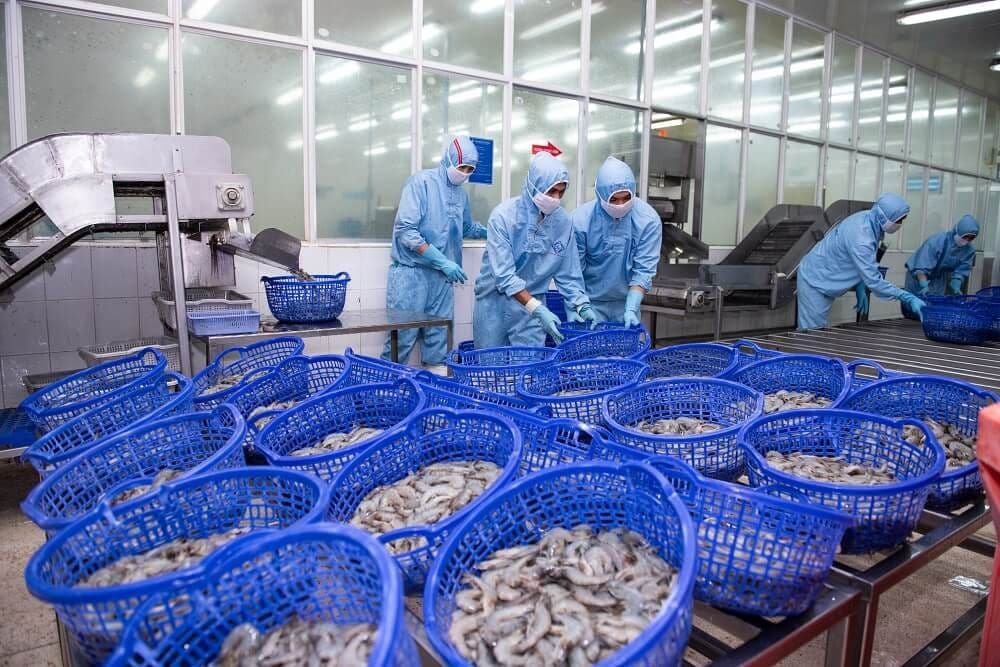
After the positive results of 2024, in early 2025, Vietnam's agricultural, forestry and fishery exports continued to reap new successes. Notably, in January 2025, Vietnam's total seafood export turnover reached 774.3 million USD, an increase of 3.3% over the same period in 2024.
Agricultural, forestry and fishery exports in January 2025 reached 5.08 billion USD
According to the Ministry of Agriculture and Rural Development, the total export turnover of agricultural, forestry and fishery products (AFF) is estimated at 62.58 billion USD (the first time agricultural product exports exceeded 60 billion USD), an increase of 18.8% compared to 2023, with 11 items continuing to maintain an export turnover value of over 1 billion USD, of which 7 items reached over 3 billion USD (forestry products 17.36 billion USD; vegetables and fruits estimated at 7.15 billion USD, rice 5.67 billion USD, coffee 5.62 billion USD, cashew nuts 4.34 billion USD, shrimp 3.87 billion USD, rubber estimated at 3.42 billion USD, seafood 10.04 billion USD).
Exports of forestry products, aquatic products, vegetables, rice, coffee, cashew nuts and pepper all had double-digit growth (pepper increased by 44.7%, coffee increased by 32.5%, vegetables increased by 27.6%, rice increased by 21.2%, forestry products increased by 20%, rubber increased by 19.6%, cashew nuts increased by 19.2%, etc.). The US with a market share of 21.9%, China with a market share of 21.5%, Japan with a market share of 6.6%, are the three largest export markets for Vietnam's NLTS products.
The estimated export value of NLTS in January 2025 reached 5.08 billion USD, down 4.9% compared to the same period in 2024. Of which, agricultural products reached 2.64 billion USD (-6.2%), livestock reached 39 million USD (-9.3%); Aquaculture reached 750 million USD (+ 0.3%); forestry products nearly 1.5 billion USD (-4.8%); production inputs reached 158 million USD (- 5.1%); salt reached 0.7 million USD (+ 82.7%).
Before and after Tet, the supply of agricultural products was relatively abundant, meeting domestic consumption demand. Some fruits in the Northern region such as oranges, grapefruits, and bananas, although their output decreased due to storms, were not seriously in short supply because the area and output of these fruits have grown quite well in recent years.
The modern distribution system and online shopping maintained operations close to, during and after Tet, so the prices of vegetables and fruits during and after Tet did not increase much, even at traditional markets. In general, the market developed according to normal rules, there was no shortage of goods, price fever, causing market instability.
Growth forecast in many commodities
In January 2025, Vietnam's total seafood export turnover reached 774.3 million USD, up 3.3% over the same period in 2024. This is a positive result compared to the same period in 2024, when the Lunar New Year fell at the end of January, significantly affecting export results.
According to the Ministry of Agriculture and Rural Development, the demand for seafood consumption and imports in 2025 is forecast to grow positively as major economies recover and emerging markets have the potential to grow such as the Middle East, Africa, and Southeast Asia.
In the US market, policies under President Donald Trump may create opportunities for Vietnam's shrimp and pangasius exports as the US may reduce imports from China and increase other alternative sources. In 2025, Vietnam's seafood exports are targeted to grow by 10-15%, equivalent to an increase of about 10 billion USD.
In addition, the forecast for fruit and vegetable exports in 2025 continues to have many advantages when a number of key fruit products have been permitted and are negotiating to be allowed to export to markets, especially the Chinese market (chili, passion fruit, durian, fresh coconut, citrus fruits, etc.).
However, in addition to meeting new technical barriers, Vietnamese fruits will have to compete with many countries, not only traditional competitors such as Thailand, Malaysia, etc., but also neighboring countries such as Laos, Cambodia, the Philippines, etc.
Regarding rice, the Ministry of Agriculture and Rural Development forecasts that in 2025, when India has lifted the ban on rice exports, Indonesia (Vietnam's second largest rice export market) will be self-sufficient in food and will only import a small amount of rice depending on the supply, which will affect Vietnam's rice exports.
Therefore, the Vietnamese rice industry needs to quickly calculate suitable production and business plans from the beginning of 2025. Regarding export markets, on the one hand, it is still necessary to focus on exporting to key markets such as the Philippines, Indonesia... It is necessary to proactively diversify markets and types of exported rice, not only focusing on Asian markets such as the Philippines, Indonesia, China... but also expanding exports to other potential markets, such as Europe, America, the Middle East, West Asia and Africa; localities need to focus on producing high-quality, high-priced rice varieties that are favored by the market such as fragrant rice, specialty rice...

Enterprises purchasing rice on the linked fields for export in An Giang. Photo: Cong Mao
The Ministry of Agriculture and Rural Development recommends that localities continue to focus resources on implementing the Project "Sustainable development of one million hectares of high-quality and low-emission rice cultivation associated with green growth in the Mekong Delta by 2030", to make Vietnam one of the pioneering countries in producing high-quality rice with emissions in line with world consumption trends, while creating greater added value for Vietnamese rice.
Currently, the rice production area is 7.0 million hectares, down 132 thousand hectares compared to 2024; Expected yield is 61.6 quintals/ha, up 0.6 quintals/ha; Estimated output is about 43.143 million tons, down about 357 thousand tons compared to 2024. Balance of commercial rice for export in 2025: Commercial rice export output is mainly concentrated in the provinces of the Mekong Delta; other regions mainly serve domestic consumption. Estimated production in 2025 in the Mekong Delta region is 3.778 million hectares, with an average yield of 63.4 quintals/ha; estimated output is 23.965 million tons.
Of which, domestic consumption for the Mekong Delta region and Ho Chi Minh City (estimated total number of rice consumers from the Mekong Delta is 28 million people, including: the population of the Mekong Delta region is about 18 million people and Ho Chi Minh City is about 10 million people) and use for seeds, animal feed, etc., the total amount of rice consumed in the region is about 8.90 million tons. Commercial rice for export is estimated at 15.085 million tons, equivalent to 7.54 million tons of commercial rice for export.
Source: Dan Viet Newspaper