Agricultural exports: Need to build barriers from the fields
Export markets are increasingly demanding, if we do not build fences and barriers from the fields, agricultural products will have difficulty traveling long distances
Don't let one bad apple spoil the barrel
As a key agricultural production area with more than 700 thousand hectares of industrial crops and fruits such as pepper, coffee, rubber, durian, etc., Mr. Nguyen Van Ha - Deputy Director of the Department of Agriculture and Rural Development of Dak Lak - said that in the recent past, the export of processed agricultural products was only about 10-15%, the rest were mainly raw products. To export products, food safety and product quality are prerequisites.
Recently, there has been a situation where some member businesses had their GlobalGAP codes stolen when exporting to the EU market, for passion fruit and dragon fruit.
Through the process of monitoring the requirements of the export market, agricultural products must be synchronized from production to preliminary processing, processing, preservation, and export. Therefore, the issue of strengthening quality control is raised. However, currently, there are still shortcomings in the production, preliminary processing, and processing stages.
Many recommendations and experiences have been given, however, according to Mr. Nguyen Van Ha, there is still a lack of "hand-holding, instructing" instructions right from the field. The control of pesticide residues lacks a set of regulations and standards for key crops.
Not only stuck in the fields, the preliminary processing and processing stages are also a problem. Our regulations are in too many documents. In the context of the export market being very interested in the processing of agricultural products, it is necessary for the authorities to have specific regulations for localities to apply.
The recent story about fake coffee produced from 10% coffee beans, the remaining 70% soybeans and 20% coffee husks has affected coffee growing areas such as Dak Lak to some extent.
According to Mr. Nguyen Van Ha, the locality currently has nearly 200 coffee processing facilities. The situation of units counterfeiting coffee also raises a big question mark about the loophole in regulations on additives or mixing agricultural products during the preliminary processing before putting them on the market. If not careful, consumers will drink soybeans instead of coffee.
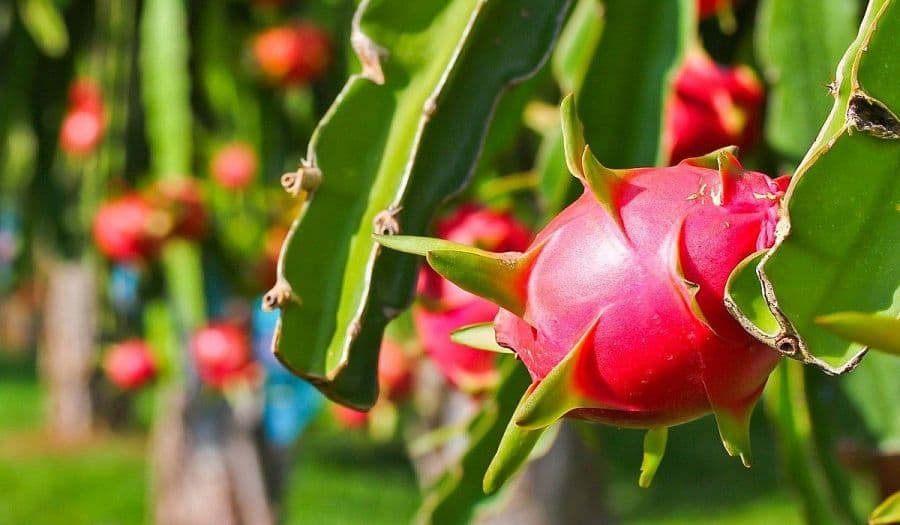
Mr. Nguyen Quoc Trinh - Chairman of the Long An Dragon Fruit Association - informed that with an area of more than 10,000 hectares of dragon fruit, most of which is red-fleshed dragon fruit. Export markets are not only the EU but also China, which are very demanding, so ensuring quality is a very important issue. However, currently, businesses are not closely working with farmers, so ensuring good quality products is very difficult.
Meanwhile, in recent years, due to the impact of the Covid-19 pandemic, farmers have had great difficulties in production, without investment from businesses, so they mainly rely on investment from fertilizer and pesticide dealers. It is very possible that these dealers provide poor quality or unsafe pesticides, which will affect product quality. When export products do not meet standards, farmers will also suffer heavy losses.
"We hope that businesses that accompany farmers and authorities not only advise farmers but also need to come down and accompany farmers, only then can Vietnamese agricultural products in general and Vietnamese fruits in particular stand firm in demanding markets," said Mr. Nguyen Quoc Trinh.
Tighten from the root of production
According to Mr. Dang Phuc Nguyen - General Secretary of the Vietnam Fruit and Vegetable Association, the issue of durian contaminated with O-yellow or Cadmium from which source currently has no specific information from the authorities. Therefore, the role of the state in building a legal corridor in controlling quality from the root is very necessary, for example, all durian orchards must have a certificate of no O-yellow or Cadmium before selling.
Because of the current situation, when businesses come to buy at the garden, the gardeners will require the businesses to cut the goods, pay, and go out to the garden before they can take samples for testing. This is safe for the gardeners but causes difficulties for businesses.
"Yellow O is now not only in the problem of dipping chemicals but can also be contaminated by pesticides. Therefore, there must be specific regulations for antifungal active ingredients,... with color must also be eliminated", Mr. Dang Phuc Nguyen suggested.
Tightening inspection from the source, making information transparent is also a way for the agricultural product industry to go the long way. Changing farming habits and regulations requiring inspection from the source of products not only protect the health of consumers and export markets but also protect the producers themselves.
Sharing the same opinion on this issue, Mr. Nguyen Van Ha said that currently, the new management work is heavy on post-inspection. Accordingly, the new authorities will inspect the facilities to collect samples to send to the analysis agencies. However, our system of testing and analysis agencies is too thin. Therefore, sending and getting the results takes a lot of time and the cost is quite high.
In response to the requirements of importing countries such as the EU, the US, ... one of the current management tools is to collect samples for testing at the source of production, there is no other way. The units performing the testing function also need to be located in large production areas, concentrated production areas for export to facilitate testing.
Mr. Dang Phuc Nguyen - General Secretary of the Vietnam Fruit and Vegetable Association - said:Recently, there has been a situation where some member enterprises had their GlobalGAP codes stolen when exporting to the EU market, for passion fruit and dragon fruit. This affects the reputation of the industry, the EU market may increase the frequency of inspections. Enterprises should be careful and handle it to avoid being impersonated.
Source: Cong Thuong Newspaper