Vietnam’s Pepper Industry: A Billion-Dollar Export Still Struggling with Seed Challenges
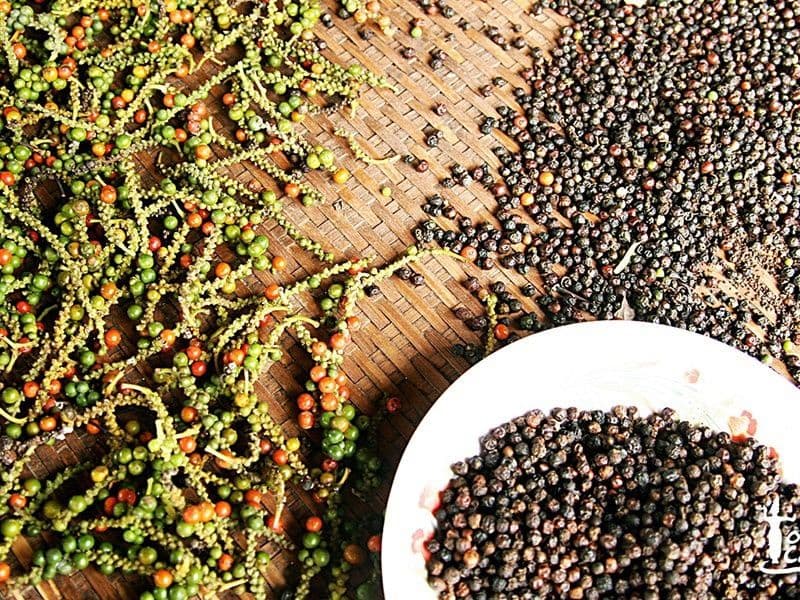
Despite soaring prices and strong export growth, seed quality remains the “weak link” in Vietnam’s pepper industry—posing a long-term threat to yield stability and product quality if not addressed through systematic investment and strict control.
Although pepper has entered Vietnam’s billion-dollar export club—with export turnover reaching nearly USD 1.3 billion in the first nine months of 2025—the sector is facing serious challenges related to seed quality. In the context of increasingly severe climate change and disease outbreaks, maintaining productivity and quality will be impossible without comprehensive investment in seed research and management.
While global supply shortages and a recovering international market are expected to keep pepper prices high in the near term, this growth in export value has not been matched by improvements in seed development. This gap remains the biggest bottleneck in the production chain—and a decisive factor for the industry’s sustainable future.
According to Dr. Phan Viet Ha, Deputy Director of the Western Highlands Agriculture and Forestry Science Institute (WASI), seed quality has become a critical issue. The demand for seedlings for new planting, replanting, and restoration is very high, yet most of the supply still comes from small, unregulated nurseries with unclear origins and unverified quality. This unmonitored trade of uncertified seedlings poses a high risk for farmers.
Pepper expert Mr. Hoang Phuoc Binh from Gia Lai added that the management of pepper seedlings remains poorly controlled. Farmers often buy seedlings through informal advertising channels, selecting varieties based on personal preference rather than scientific data or field trials. As a result, many newly planted farms fail to reach expected yields and are often attacked by diseases within the first few years of cultivation.
Explaining why, despite being a billion-dollar export commodity, high-quality pepper seeds are still scarce, Mr. Nguyen Quang Ngoc, Director of the Pepper Research and Development Center, noted that pepper is a long-term industrial crop, making breeding a lengthy process. It takes at least 15–20 years for a new variety to be officially recognized and commercially produced. The process involves crossbreeding, field trials, fruiting evaluations, and monitoring yield stability across multiple crop seasons. If a variety fails, the entire cycle must restart—an extremely time-consuming and costly process.
The center has successfully bred several promising varieties, both domestic and imported, though all remain in trial phases. One new variety has been submitted to the Department of Crop Production and Plant Protection for plant variety protection registration, expected to be approved in 2026 and ready for commercialization soon after.
Currently, the Vinh Linh variety—originating from Quang Tri Province—accounts for around 90% of Vietnam’s total pepper-growing area. However, after decades of widespread cultivation, its potential for further improvements in yield, quality, and disease resistance has diminished. Meanwhile, many farmers continue to self-propagate seedlings from their own gardens or purchase them from unverified private nurseries, creating a lack of control across the entire production chain. This poses major risks when faced with disease outbreaks or unpredictable weather.
Mr. Ngoc emphasized that to resolve this issue, Vietnam must urgently establish certified “mother gardens” for high-quality seed propagation, ensuring a reliable supply of both vine cuttings and rootstock with verified characteristics. This would help bridge the gap between laboratory research and large-scale production.
However, successful deployment also requires a shift in farmers’ mindsets. Many growers remain hesitant to use certified seedlings due to cost concerns or skepticism about visible benefits. Alongside breeding efforts, WASI is implementing sustainable cultivation solutions, such as using live support trees instead of concrete poles. Research shows that this practice can extend the lifespan of pepper gardens by 20–50%, reduce initial investment costs, stabilize yields, and improve soil ecosystem health.
In addition, intercropping models combining pepper with fruit trees such as avocado and durian have shown positive outcomes. These systems improve the microclimate, maintain soil moisture, reduce flower and fruit drop, enhance fruit set rates, and minimize the need for fertilizers and pesticides. They also contribute to greenhouse gas reduction, greater CO₂ absorption, and higher soil organic matter.
Pepper breeding in Vietnam still faces many challenges, requiring persistence, long-term investment, and consistent government policy support. While research takes years to complete, the market’s current demand has not yet generated sufficient momentum to accelerate commercialization. Without stronger incentives and a change in farmer behavior, improving seed quality—the cornerstone for sustaining Vietnam’s billion-dollar pepper industry—will remain a difficult task in the years ahead.
Source: Kinh te nong thon