Dragon fruits, chili peppers... have increased inspection frequency, the door to the EU market is getting narrower?
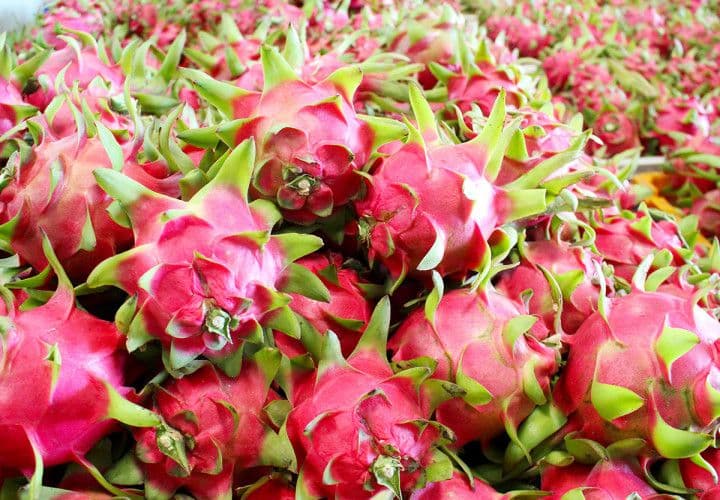
Recently, the EU decided to increase the frequency and tighten inspections for chili and dragon fruit products exported from Vietnam. This is bad news for the above two products as well as Vietnamese agricultural products in this rich market.
Specifically, the Vietnam Trade Office in Belgium and the EU said that the EU applied to increase the frequency of border inspection for dragon fruits from 20% to 30%; At the same time, accompanying the shipments is a Food Safety Certificate and analysis and testing results of pesticide residues in the products; (Dragon fruit remains in Appendix II of the Regulations and inspection frequency is increased from 20% to 30%).
Many items have increased inspection frequency
Chili products are being applied by the EU in Appendix I (inspection frequency is 50%) transferred to Appendix II of Regulation 2019/1973 with inspection frequency of 50%; At the same time, accompanying the shipments is a Food Safety Certificate and analysis and testing results of pesticide residues in the products.
EU okra products still apply a 50% inspection frequency and accompany the shipments with a Food Safety Certificate and analysis and testing results of pesticide residues in the product. Durian products remain unchanged compared to the previous review with an inspection frequency of 10%. This regulation takes effect from July 2, 2024.
To continue to export stably to the EU as well as protect the reputation of Vietnam's exports; The Trade Office recommends that businesses producing agricultural products and foodstuffs need to improve product quality management to meet EU requirements.
Regarding dragon fruit products, Mr. Bien Tan Tai, Deputy Director of Binh Thuan Department of Industry and Trade, said that this local product still depends mainly on the Chinese market. China is the main consumer market for dragon fruit in Binh Thuan and Vietnam, but it is also a country with a dragon fruit growing area equivalent to Vietnam and is continuing to expand. Dragon fruit is concentrated in provinces bordering Vietnam such as: Yunnan, Guangxi, Guangdong, Hainan... and has a harvest season from May to November; Not much different from the main harvest time of Binh Thuan dragon fruit from March to September.
Mr. Tai informed that this is also the harvest season for Chinese fruits such as oranges, tangerines, apples, pears, grapes...; So this time, Binh Thuan dragon fruit has to compete with both dragon fruit and Chinese fruits, so consumption is often slow, prices tend to decrease, and in the future consumption is forecast to be even more difficult.
Meanwhile, “promoting dragon fruit exports to the EU market is still difficult, annual output and export turnover increase slowly; Because the province's businesses mainly process or sell dragon fruits to other businesses for export, the turnover cannot be shown," said a representative of Binh Thuan Department of Industry and Trade.
Risk of stopping imports
General Secretary of the Vietnam Fruit and Vegetable Association Dang Phuc Nguyen, assessed that increasing the frequency of inspection will affect the consumption process and competitiveness of Vietnamese dragon fruit products in the EU. If businesses repeat residue problems, they may be subject to higher testing frequency, or even banned from exporting to the EU.
"When a problem occurs, it is difficult to determine which side is at fault, because anyone can be at fault in the value chain," Mr. Nguyen said.
For the EU market, Mr. Ngo Xuan Nam, Deputy Director of the Vietnam SPS Office, recommends that businesses, for products of plant origin, need to further strengthen compliance with EU regulations; especially the control of pesticide residues when many EU maximum allowable residue levels (MRLs) are at very low levels.
According to Mr. Nam, agricultural and food products that want to be imported into the EU must comply with the regulations of this market such as: Regulations on business list registration; regulations on MRLs for products of plant origin, regulations on antibiotic residue levels for products of animal origin.
Or, regulations on food additives, materials in contact with food, regulations on mixed products, regulations on disease-free zones, regulations on food safety assurance, source traceability origin for processing facilities, IUU regulations, anti-deforestation regulations (EUDR) or other related regulations...
Currently, "The EU divides imported agricultural and food products into two categories, low risk and high risk. Among them, low-risk products, based on your assessment, will not require systematic border control. On the contrary, high-risk products will need many control measures," Mr. Nam said.
Meanwhile, Mr. Luong Ngoc Quang, Plant Protection Department warned that all shipments exported to the EU must meet the requirement that the product must not be on the plant list; Plant products are banned or suspended from import into EU countries. The product is not contaminated with EU plant quarantine objects and is almost not contaminated with other pests.
Accordingly, the product must have a Plant Quarantine Certificate (PC); Except for the fruits pineapple, banana, coconut and dates, which do not require PC. In addition, wooden packaging materials must meet international standards for wooden packaging materials (ISPM-15). Pesticide residues on products exported to the EU must not exceed the maximum allowable level according to EU law.
According to: Nhat Linh - VnBusiness