Diversify exported seafood products
Vietnam's seafood industry is entering 2025 with many optimistic signals. In the first two months of the year, export turnover increased by more than 18% compared to the same period in 2024.
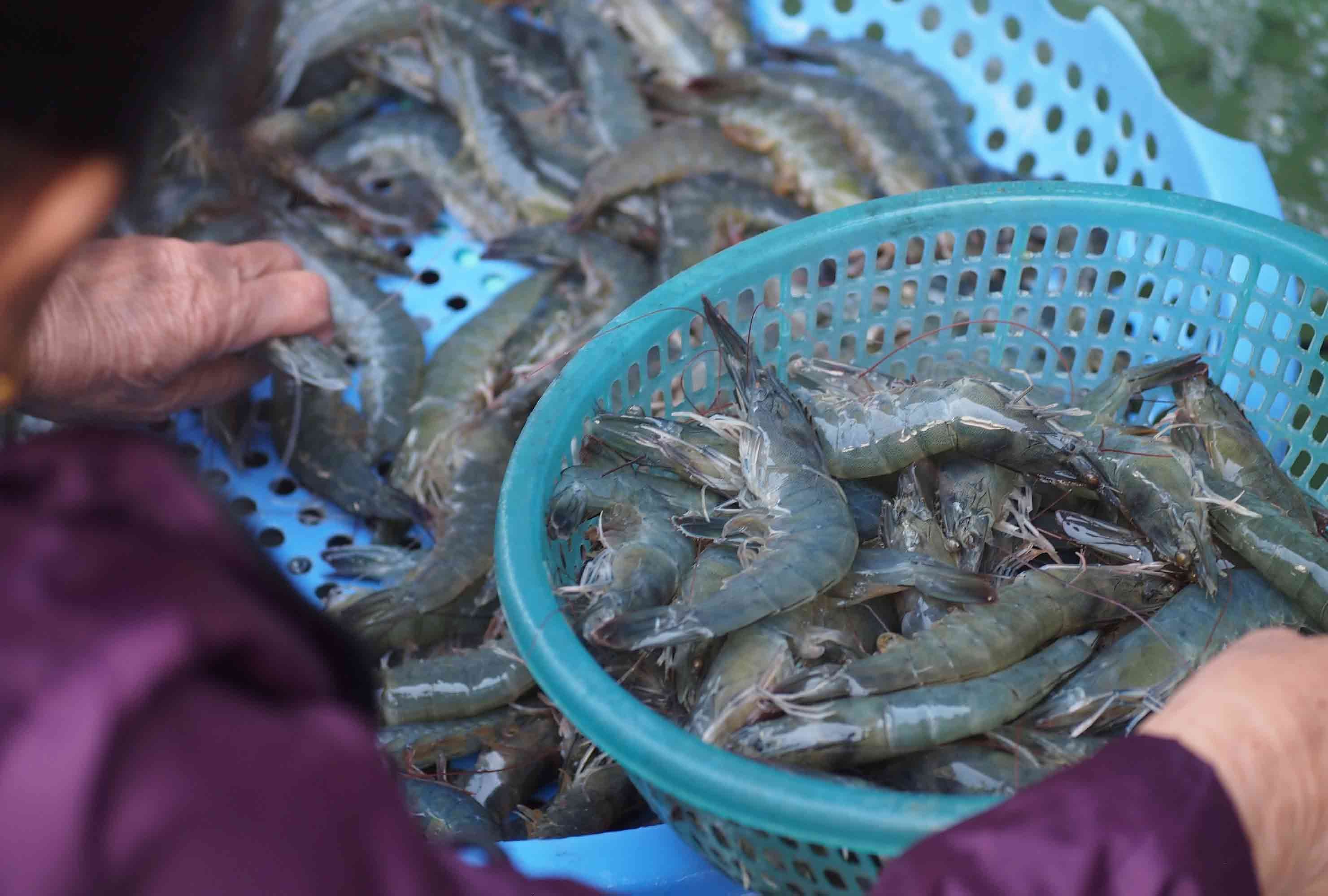
Shrimp exports in the first two months of this year increased by 30.8% compared to the same period in 2024
Fluctuations in key product lines
According to the Vietnam Association of Seafood Exporters and Producers (VASEP), in the first two months of 2025, the total seafood export turnover reached more than 1.42 billion USD, an increase of 18.2% over the same period in 2024, of which February reached 655 million USD, an increase of 42.6%. However, the export picture is uneven: shrimp continues to be the "bright star", while pangasius faces many difficulties and exploited products such as tuna, squid, and octopus are under pressure from international regulations. For sustainable development, the seafood industry is aiming to diversify products and increase added value.
The shrimp industry continues to affirm its leading position, contributing more than 542 million USD in the first 2 months of 2025, up 30.8% over the same period in 2024. The average import price increased from October 2024 and is expected to remain high throughout 2025 thanks to stable inventories, bringing confidence to both exporters and importers. VASEP commented that the shrimp industry's outlook is quite optimistic, as long as unstable factors such as the trade war under the Trump administration do not cause disruptions. The Chinese, EU and US markets - the main destinations for Vietnamese shrimp - are maintaining strong demand, especially for deeply processed products such as steamed shrimp and peeled shrimp.
In contrast, pangasius is facing many difficulties, with export turnover in the first 2 months of 2025 reaching more than 253 million USD, down 0.8% over the same period last year. Raw material prices have increased due to escalating input costs (feed, labor), combined with unfavorable tariff policies from the US - the largest market for Vietnamese pangasius. The additional 10% tax imposed on processed seafood from China has indirectly affected global trade flows, causing sluggish demand in the US and high inventories.
VASEP warned pangasius farmers to be cautious and avoid spontaneous production expansion. "Current prices may be 'virtual' and can easily plummet if supply exceeds demand," said a VASEP representative. To overcome the challenges, the pangasius industry needs to closely cooperate with businesses, apply modern farming technologies such as recirculating water systems (RAS) and focus on value-added products such as frozen pangasius fillets and smoked pangasius. This is the key to maintaining a competitive advantage against competition from countries such as India and Indonesia.
Tuna exports reached more than 126 million USD in the first 2 months of 2025, down slightly by 3.5% compared to the same period in 2024. The Japanese market - the main destination of Vietnamese tuna - maintained stable prices but at a low level. Other exploited products such as squid, octopus (101 million USD, up 13.8%) and crab (63 million USD, up 86.1%) showed great potential, especially in China. However, challenges from the EU's anti-illegal, unreported and unregulated fishing (IUU) regulations and the US Marine Mammal Protection Act (MMPA) are major barriers.
The regulation on the minimum size of skipjack tuna of 0.5m in Decree 37/2024 makes it difficult for fishermen and businesses to secure raw materials. The United States has announced that it will not recognize Vietnam as equivalent to the MMPA standard, threatening to ban the import of many seafood species from January 1, 2026 if there is no improvement. To overcome this, strong coordination between the Government, businesses and fishermen is needed to complete the legal framework, improve monitoring capacity and support compliance with international standards.

Mr. Tran Dinh Luan, Director of the Department of Fisheries - Photo: VGP/Do Huong
Need to develop marine aquaculture
According to Mr. Tran Dinh Luan, Director of the Department of Fisheries (Ministry of Agriculture and Environment): "The synchronous direction from the central to local levels has helped maximize production efficiency, ensuring abundant raw materials".
In 2024, Vietnam's seafood exports reached more than 10 billion USD - an impressive result in a difficult context. Mr. Tran Dinh Luan assessed: "This success comes from the flexibility and responsiveness of management agencies, businesses and people". The organization of production according to the chain has created an important premise for the industry to maintain growth momentum in 2025.
Although there is no mandatory requirement on emission reduction, the Department of Fisheries recognizes this as an inevitable trend to meet international standards. Improved farming models – reducing feed conversion ratio, increasing survival rate and reducing emissions – are being implemented for shrimp, pangasius and marine farming. "We are building a linkage model between businesses and innovators to improve techniques and calculate specific emissions," said Mr. Luan. The model of farming fish, mollusks and seaweed is proving to be economically and environmentally effective, and is a direction that needs to be replicated.
Instead of "wandering around" with shrimp and pangasius, the industry will not expand farming area but focus on improving quality and deep processing. New species such as eel (already with high export value), tilapia (potential in the North), oysters, seaweed, abalone and sea cucumber are being promoted. Mr. Luan emphasized: "For offshore marine farming, if the water surface beyond 6 nautical miles is handed over to businesses for large-scale investment, this will be a breakthrough strength". Exploiting the potential of reservoirs, rivers and organizing production according to a chain link is also a priority.
According to Mr. Luan, the seafood industry needs to invest in traceability, sustainability certification and fisherman training. At the same time, international cooperation should be strengthened to negotiate with the EU and the US to ensure that imports are not banned. Value-added products such as shellfish (up 121.6%) and crabs (up 86.1%) need to be exploited to the maximum, targeting the Chinese, Japanese and Korean markets.
Source: Kinh Te Nong Thon Newspaper