Canada changes trade policy: Opportunity for Vietnam to boost exports
Canada's plan to remove domestic trade barriers will help reduce costs for Vietnamese goods imported into the region, as provinces will now recognize each other for goods imported by a province...
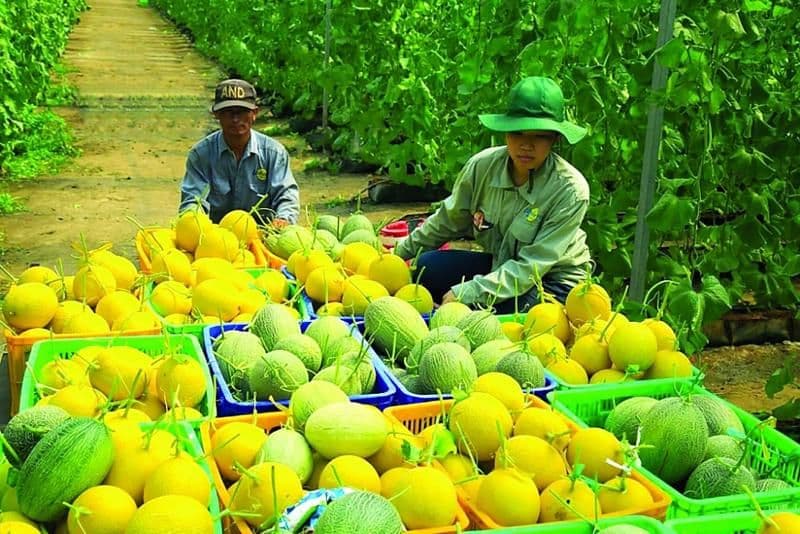
In 2024, fruit and vegetable exports to Canada will increase by 44%.
According to statistics from Vietnam Customs, Vietnam's exports to Canada in 2024 reached over 6.37 billion USD, an increase of 13.5% over the same period in 2023.
EXPORTS TO SURGE BY THE END OF 2024
Meanwhile, according to local data in 2024, Vietnam exported 10.6 billion USD worth of goods to Canada, up 8.2% over the same period last year. This is the first time Vietnam's exports have exceeded the 10 billion USD mark in its history of trade with Canada.
Also according to local data, Vietnam recorded a trade surplus of about 9.9 billion USD with Canada. According to Vietnamese data, Vietnam had a surplus of over 5.5 billion USD with Canada.
Compared to the import level in the first months of the year, in the entire fourth quarter of 2024, Vietnam's export level to the region increased dramatically (about 570-590 million USD/month), an increase of 20% on average. These are also the highest monthly import levels of Canada from Vietnam in the past two years, since September 2022.
In the top 10 trading partners of Canada, Vietnam continues to maintain its position as Canada's 7th largest import partner. Among ASEAN countries, Vietnam continues to be Canada's most important import partner, accounting for nearly 45% of Canada's total import turnover from the region.
Notably, other key export items of Vietnam have increased very strongly. Of which, reactor machinery and equipment increased by 90% compared to the same period last year, becoming the second largest export item of Vietnam to the region; computers increased by 35%. In the top 10 key export products of Vietnam to the region, many other products recorded growth again or high growth at double digits: textiles increased by 10%, footwear increased by 16%, seafood increased by 22%, wood increased by 22%...
Agricultural products also had good growth: cashew nuts increased by 21%, coffee increased by 16%, vegetables and fruits increased by 44%, confectionery and cereal products increased by 30%, pepper increased by 81%.
In 2024, it is noteworthy that iron and steel and iron and steel products also had growth again compared to 2023 (common metals increased by 25% and iron and steel products increased by 30%). The reason is due to the impact of Canada's imposition of tariffs on all iron and steel products imported from China, leading to this shift.
Regarding the above figures, Ms. Tran Thu Quynh, Trade Counselor, Vietnam Trade Office in Canada, commented that this sudden growth is very special, because it takes place during the low import period of the Canadian market every year (the peak import period is June-August and the low period is in the fourth and first quarters of each year). This shows that the Canadian market is likely to start preparing to stockpile goods, to cope with the possibility that the Trump administration will impose tariffs and the Canadian government may take similar measures. "This trend is worth noting in the coming months, as it is a sign of the market's sensitivity to fluctuations in world trade in the coming time," Ms. Quynh emphasized.
NEED TO EXPLOIT THE COMBINED ORIGIN WELL
In 2025, in addition to efforts to deal with President Donald Trump's tariffs, Canada also has a number of policy moves to improve internal trade and call on Canadians to unite, prioritize choosing products made in Canada, and reject US goods.
Ms. Quynh said that Canada's plan to remove domestic trade barriers will help Vietnamese goods imported into the area cost less, because provinces will now recognize each other for goods imported by one province without having to meet additional requirements from other provinces.
However, there is a problem to note with Vietnam's exports to this market. That is the issue of trade defense applied by Canada to imported goods from Vietnam.
Specifically, on January 31, 2025, the Canada Border Services Agency (CBSA) issued a conclusion on the review of normal value and export price for oil pipes originating or imported from a number of countries, including Vietnam. Accordingly, some Vietnamese enterprises did not provide full information as requested by CBSA, so they were subject to an anti-dumping tax of 37.4%.
Previously, on January 23, 2025, CBSA also sent a letter to Vietnam announcing the end of the review of normal value and export price for upholstered chairs originating from China and Vietnam. At the same time, it was stated that some Vietnamese enterprises did not provide full information as requested by CBSA, so they were subject to an anti-dumping tax of 179.5%.
Canada also said it would send a delegation to Vietnam in February 2025 to work with a number of Vietnamese enterprises related to the case to conclude the review with these enterprises.
In addition, the Canadian International Trade Court continued to issue a decision to impose anti-dumping duties on concrete rebar originating from the Republic of Bulgaria, the Kingdom of Thailand and the United Arab Emirates because it believed that lifting the order could potentially cause damage to Canada's manufacturing sector.
Meanwhile, concrete rebar is a product that Vietnam used to export very strongly to the Canadian market in 2021-2022, but now suddenly decreased sharply to insignificant (about 200 thousand USD/year 2024).
Notably, in January 2025, Canada amended the administrative process to review normal value and export value. Accordingly, exporters are still responsible for adjusting export prices to reflect changes in costs and market conditions. However, the CBSA review process is independent and will take place more frequently (on an annual basis, not every 3-5 years as it is now).
According to experts, in the face of changing policies in the Canadian market, this could be an opportunity for Vietnamese exports, but businesses need to be cautious about the country's trade defense measures.
In addition, Ms. Quynh said that the campaign to buy Canadian goods could also benefit Vietnam's trade and investment if we do a good job of exploiting the cumulative origin in the CPTPP Agreement.
The cumulative principle allows countries to include raw materials from other CPTPP member countries in the final goods and still consider them as intra-regional products, including cases where goods from a CPTPP country are further processed or have added value in a second country.
With the principle of cumulative origin, businesses can export to locations in the same trade agreement with a zero tax rate.
In addition, Ms. Quynh recommends that businesses increase product promotion and provide transparent information about the origin of input components to increase exports to this market.
Source: VnEconomy