Brazil rises to 3rd place in consumption of Vietnamese pangasius
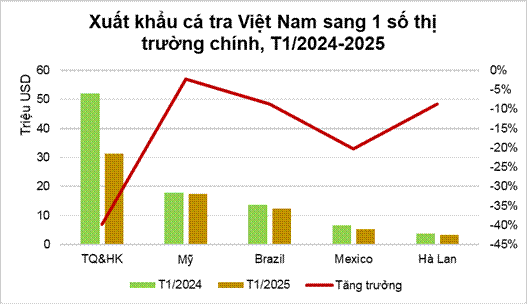
According to Vietnam Customs, Vietnam's pangasius exports to Brazil in the first month of this year reached more than 12 million USD, down 9% over the same period last year.
Despite a decrease in January due to the Lunar New Year period, Brazil is still in third place in the list of single markets that consume the most Vietnamese pangasius, accounting for 9% of total pangasius export turnover to markets.
Structure of Pangasius products imported into Brazil
A notable point is that in January 2025, Brazil continued to import only frozen pangasius fillets, while value-added products (VAT) such as breaded fish, fish cakes or fried fish balls have not yet found a foothold in this market. This stems from consumer tastes: Brazilian consumers prefer frozen fish fillets because they are easy to process and suitable for popular local dishes; Limitations in the supply chain: VAT products require a distribution chain with higher freezing capacity, which Brazil's logistics system has not really met; Strict inspection requirements: Deeply processed products must meet more import regulations than frozen fish fillets, causing difficulties for Vietnamese enterprises when they want to diversify their export products.
In January 2025, the export price of pangasius to Brazil decreased by about 12-14%. Moreover, this market is still not "interested" in VAT products. Brazil still focuses on importing frozen fish fillets, while Vietnamese enterprises want to expand their product portfolio to increase export value. In addition, competition from other sources such as tilapia from China, pollock from the US and Peru is increasingly popular in Brazil with competitive prices, creating great pressure on Vietnamese pangasius.
Opportunities from FTA between Vietnam and Mercosur
A notable factor that can open up great opportunities for Vietnamese pangasius exports to Brazil in the coming time is the Free Trade Agreement (FTA) between Vietnam and Mercosur (including Brazil, Argentina, Paraguay and Uruguay) is being negotiated.
If this FTA is signed, Vietnam can benefit from the reduction or elimination of tariffs on pangasius exported to Brazil, making the product more competitive than other imported fish. Currently, Vietnamese pangasius entering Brazil is still subject to certain tariffs, while competitors such as tilapia from China are also taking advantage of preferential trade policies in this market.
In addition, the FTA with Mercosur not only helps Vietnamese pangasius gain deeper access to Brazil but also opens up opportunities to penetrate other markets in the bloc, especially Argentina - where seafood consumption is growing strongly. This will help diversify export markets, reducing dependence on traditional markets such as the US and EU.
However, to take advantage of the opportunities from this FTA, businesses need to proactively grasp preferential terms, while improving quality standards to meet strict import requirements from Brazil and Mercosur countries. If there is a suitable strategy, Vietnamese pangasius can completely expand its market share in the South American region in the coming years.
Source: VASEP