India lifts ban on broken rice exports, putting more competitive pressure on Vietnamese rice
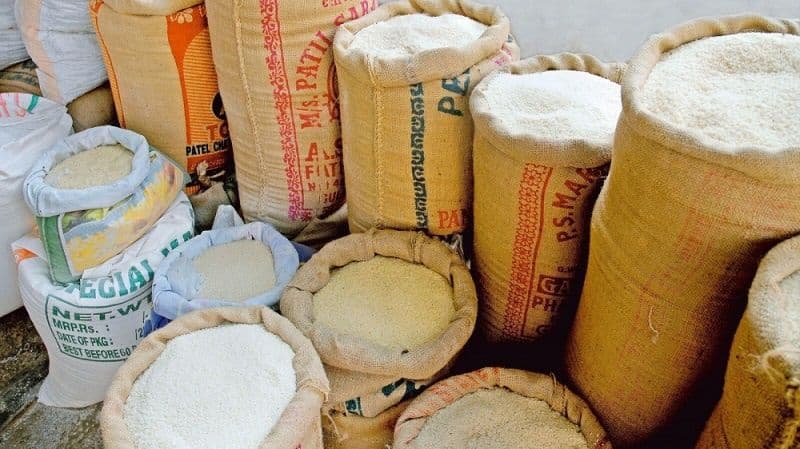
India has unexpectedly lifted a ban on exporting 100% broken rice. The move has raised concerns that global rice prices will plummet and will increase competition among major exporters, including Vietnam.
India has decided to lift the ban on 100% broken rice exports after more than two years of implementation. This move is aimed at addressing record inventories and meeting increased demand from the international market.
According to statistics, as of early February 2025, the amount of 100% broken rice in stock in India had increased nearly nine times compared to the government's target. Previously, in September 2022, India imposed an export ban on this type of rice and continued to restrict exports of other types of rice in 2023 due to concerns about a drop in output due to adverse weather. However, after the new crop achieved a record output, the supply situation improved, creating conditions for the Indian government to lift restrictions on all rice products, except 100% broken rice.
A representative of the Rice Exporters Association of India (REA) said that lifting the ban would help India export about 2 million tons of 100% broken rice by 2025. Before the ban was issued, in 2022, India exported 3.9 million tons of broken rice, mainly to China for animal feed production and African countries such as Senegal and Djibouti for consumption.
India's decision could create great competitive pressure in the world rice market. Currently, Vietnam's rice export prices are lower than those of its competitors. In particular, competition will be fiercer when Vietnam enters the winter-spring harvest - the largest crop of the year.
Exporters are concerned that despite abundant output thanks to favorable weather, rice prices will find it difficult to return to $500 per ton. Businesses are also more cautious in purchasing due to the constantly fluctuating market and slowing exports.
The Vietnam Food Association said that domestic rice prices have been falling steadily since early March, making Vietnam one of the cheapest suppliers. However, in the past two months, 80% of rice exports have been high-quality rice, which does not directly compete with India's 100% broken rice. However, pressure from India's large supply could still affect prices, especially in the low-grade rice segment.
Before India's decision to lift the ban on exporting 100% broken rice, Mr. Bui Trung Thuong, Vietnam's Trade Counselor in India, said that rice prices will continue to be maintained at the current level and will not decrease further for a number of reasons. First of all, the total global rice volume this year is forecast to increase, even up to 10 million tons, while countries have recently used rice for many different purposes, not only for daily consumption, such as ethanol production, industrial use, etc.
In addition, rice consumption demand will not change dramatically, about 50% of the world's population still has the habit of using rice in their daily meals.
Mr. Thuong also recommended that Vietnamese businesses should refer to India's method, focusing on developing high-quality rice varieties as well as the Indian Government's recent announcement of geographical indications to create a distinctive rice brand, building prestige in the world market to increase sales.
In addition, Vietnamese enterprises must diversify their markets or sales methods (expanding private channels instead of relying solely on government channels for export). In addition, Vietnamese enterprises also need to try to maintain their existing market share, even in markets and territories where rice volume or export turnover is not high.
A report from the Ministry of Agriculture and Environment shows that Vietnam faces many challenges from price competition from rice exporting countries. However, Vietnamese fragrant rice still maintains an advantage in the high-end segment thanks to deep economic integration and policies to support sustainable production. If it continues to improve quality and improve production, Vietnam can maintain a stable market share.
In this situation, the Ministry of Agriculture and Environment proposed solutions to stabilize the rice industry, including improving post-harvest preservation, expanding export markets and supporting businesses in logistics and e-commerce. In addition, businesses and farmers will be supported with preferential credit to invest in technology and agricultural infrastructure. In the long term, Vietnam needs to transform its production structure, develop rice varieties that adapt to climate change, promote deep processing and invest in logistics to move towards sustainable production.
Source: VnBusiness