Agricultural exports adapt to market fluctuations
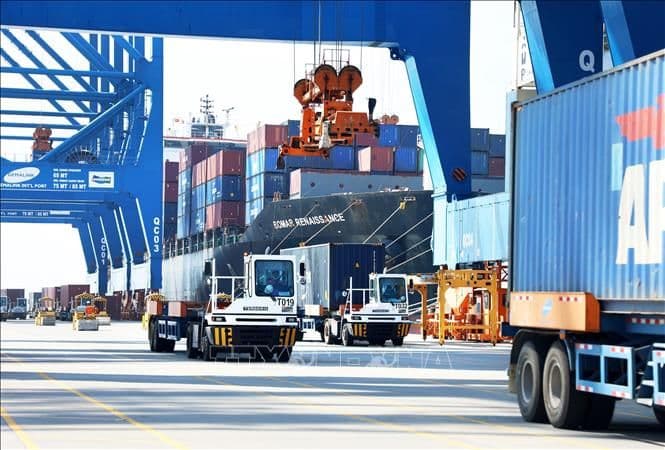
Exporting goods at Cai Mep - Thi Vai port cluster, Phu My town, Ba Ria - Vung Tau province. Illustrative photo: Hong Dat/VNA
Amidst trade "wars", meeting the requirements of partners, customers and markets is always the top factor in deciding whether an industry can maintain that market or not.
Therefore, whether favorable or difficult, Vietnamese agricultural processing and exporting enterprises are always ready to respond to maintain a sustainable market.
According to Mr. Pham Quang Vinh, former Vietnamese Ambassador to the US, the US cannot produce everything but still has to import from abroad. Vietnamese goods have great competitiveness, which is beneficial to the US. One important thing is that Vietnam is not a target or opponent that US President Donald Trump really wants to punish with tariffs, because Mr. Trump will want the two sides to reach an agreement through dialogue and negotiation.
Because of this, Vietnam negotiates with mutual benefits such as being able to buy goods that the US wants to sell and that Vietnam has a need for, suitable for its budget such as civil aircraft, liquefied gas or agricultural products... On the contrary, the US can still buy from Vietnam goods that the US does not produce; including agricultural products.
However, in relation to trade, the most important thing is not just to reduce the deficit but to emphasize transparency and fairness. The Vietnamese government has always emphasized transparency in the origin of goods and in fact has done so very seriously. The clear traceability of goods is also something that the US is very interested in.
From the perspective of Vietnamese agricultural exporters, typically fruits to the US market, Mr. Nguyen Dinh Tung, General Director of Vina T&T Group Import-Export Company, shared that the fruit and vegetable industry entering the US market is still very favorable, and there is currently nothing unusual about the import tariff issue. Fruit and vegetable products originating from Vietnam are currently strictly following the quality and preservation standards set by the US market, except when exporting units use raw materials and processing accessories originating from China, they must declare and trace their origin.
Proving the advantages of Vietnamese agricultural products entering the US market, in early February 2025, US President Donald Trump signed an executive order declaring a national emergency under the International Emergency Economic Powers Act, to impose tariffs on imported goods to address the immigration crisis and fentanyl smuggling.
Specifically, the new executive order will impose a 25% tax on imported goods from Canada and Mexico, and 10% on goods from China. Goods in the process of being transported to the US before this time will not be affected. For goods related to imported accessories from other countries, especially accessories imported from the Chinese market, it will more or less affect the export activities of enterprises.
Mr. Phung Duc Tien, Deputy Minister of Agriculture and Rural Development, shared that Vietnam and the US have a comprehensive strategic partnership, so despite the impact of the new US tax policy, the export of agricultural, forestry and fishery products from Vietnam to the US will certainly be promoted.
For example, with pangasius, at the end of January 2025, Vietnam and the US reached an important agreement, ending the long-standing dispute over anti-dumping tax on Vietnamese pangasius and basa fillets exported to the US; in which, Vinh Hoan Joint Stock Company was removed from the list of anti-dumping tax.
Similarly, the Vietnamese cashew industry has not shown any signs of difficulty when exporting to the US market. A representative of the Vietnam Cashew Association shared that Vietnam's cashew raw materials come from Africa and Cambodia, and there are no raw materials originating from countries under the US International Emergency Economic Powers Act. Therefore, the cashew industry is still considered to be in the safe zone with the new US tax laws when President Donald Trump takes office.
Despite such advantages, market fluctuations are always unpredictable. The Ministry of Agriculture and Rural Development has also prepared mentally with businesses to respond to these fluctuations. Deputy Minister of Agriculture and Rural Development Phung Duc Tien shared that the Ministry of Agriculture and Rural Development will coordinate with the Ministry of Foreign Affairs and the Ministry of Industry and Trade to promote the opening of new markets, especially the Halal market, while maintaining traditional markets well, avoiding dependence on 1 or 2 certain markets.
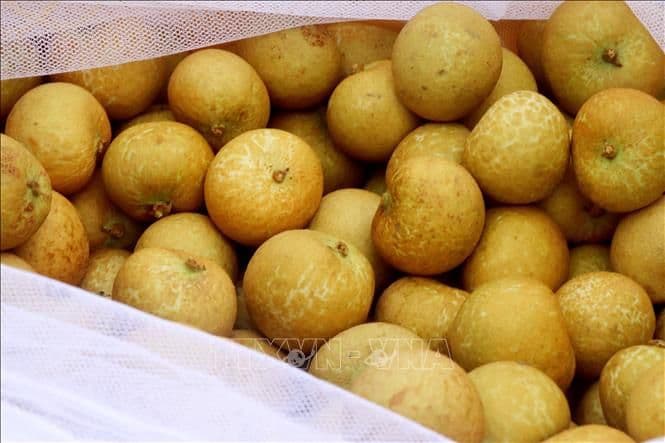
Longan fruit exported to the US market. Photo: Thu Hien/VNA
To achieve this goal, localities and enterprises producing and exporting agricultural products need to carefully prepare planting and farming areas, fully meeting food safety and traceability requirements to have transparent and clear raw material areas. Each market has its own standards and regulations, but if production meets food safety and traceability requirements, it will certainly always find opportunities. The Vietnamese agricultural sector must recognize the fact that the further out to sea, the more difficult it is, but the more difficult it is, the more efforts must be made to maintain the market on the basis of organizing good production in the direction of a green economy.
Source: Tin Tuc Newspaper