President Trump wants Europe to import American agricultural products
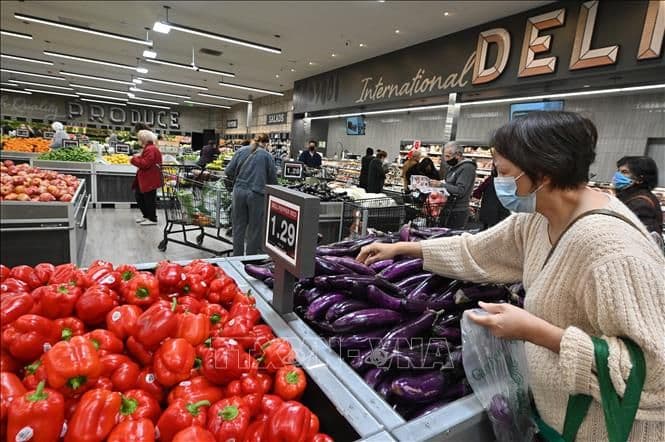
On February 25, according to Politico, US President Donald Trump is increasing pressure on the European Union (EU) to import more US agricultural products to reduce the trade deficit.
However, barriers to phytosanitary measures, food safety standards and political factors make this goal difficult to achieve.
With a protectionist trade perspective, Mr. Trump did not hesitate to criticize the 198 billion euro trade surplus that the EU has with the US. After imposing a 25% tariff on steel and aluminum from Europe, he continued to demand that the bloc increase purchases of items such as cars, fossil fuels, weapons, pharmaceuticals and especially food from the US. In a speech in Florida, he said that the EU imported too few US agricultural products while exporting a large amount of food to the US. He emphasized the trade imbalance when the US agricultural sector is running a deficit of 18 billion euros compared to the EU.
Although some areas can be adjusted to improve the trade balance, the issue of agricultural imports is a completely different story. Barriers to phytosanitary measures and food safety standards make accessing the European market extremely difficult.
Differences in food regulation are a major barrier. The EU uses a precautionary principle, requiring products to be proven safe before they can be marketed, while the US uses a risk assessment system – products are only banned if there is clear evidence of harm. This approach has led to strict regulations in Europe that many US agricultural products find difficult to meet.
US beef is restricted in import due to the use of growth hormones, with a quota of just 35,000 tonnes per year. US poultry is virtually banned because of antimicrobial treatments not accepted by the EU. Genetically modified grains – one of the US’s main exports – have to go through a lengthy licensing process and strict labelling requirements, which has raised concerns among European consumers. Meanwhile, more than 70 pesticides banned by the EU are still widely used in US agriculture, including chlorpyrifos, which has been linked to brain damage in children, and paraquat, which is linked to Parkinson's disease. These regulations make it difficult for many US agricultural products to access the European market, despite pressure from Washington.
Not only are there differences in regulations, but consumer tastes are also an important factor. While Americans prefer processed foods and cheap agricultural products, Europeans tend to consume higher-value items such as wine, olive oil and cheese. American food is often judged to be too fatty, too salty, too sweet or high in alcohol for European tastes.
This difference reflects differences in the two regions' agriculture. The US, with its large-scale farms, focuses on producing raw agricultural commodities, while the EU has developed a value-added agricultural model, relying on the geographical indication (GI) protection system, helping farmers turn agricultural products into high-end goods.
In addition, political factors have also made importing US agricultural products into Europe more complicated. Over the past year, many EU countries have witnessed large-scale protests by farmers against cheap food imports from Ukraine and South America. Concerns about unfair competition, lower production standards and cheaper agricultural land in exporting countries are making European governments more cautious in agricultural trade policies.
The European Commission is considering adopting "equivalence regulations", requiring imported products to meet the same standards as domestic products in terms of animal husbandry and pesticide use. This makes it even more difficult for US agricultural products to penetrate the EU market. With key elections in many European countries such as France, Italy, Spain and Poland due in the next two years, EU governments may be tempted to avoid making decisions that could harm their domestic agricultural sectors.
The Trump administration once benefited from poor harvests in Brazil and Argentina, forcing the EU to import US soybeans to feed its livestock sector. But that has changed. Brazil and Ukraine are increasing their oilseed production, giving the EU more options outside the US. Meanwhile, the EU’s protein strategy is encouraging domestic production to reduce its dependence on foreign supplies. Along with the trend of consuming less red meat in Europe, the demand for imported US agricultural products is also decreasing.
Source: Tin Tuc Newspaper