Toan Phat Irradiation and Toan Phat Cold Storage recognized as qualified cold storage facilities for preserving frozen seafood exported to the EU (EU CODE)
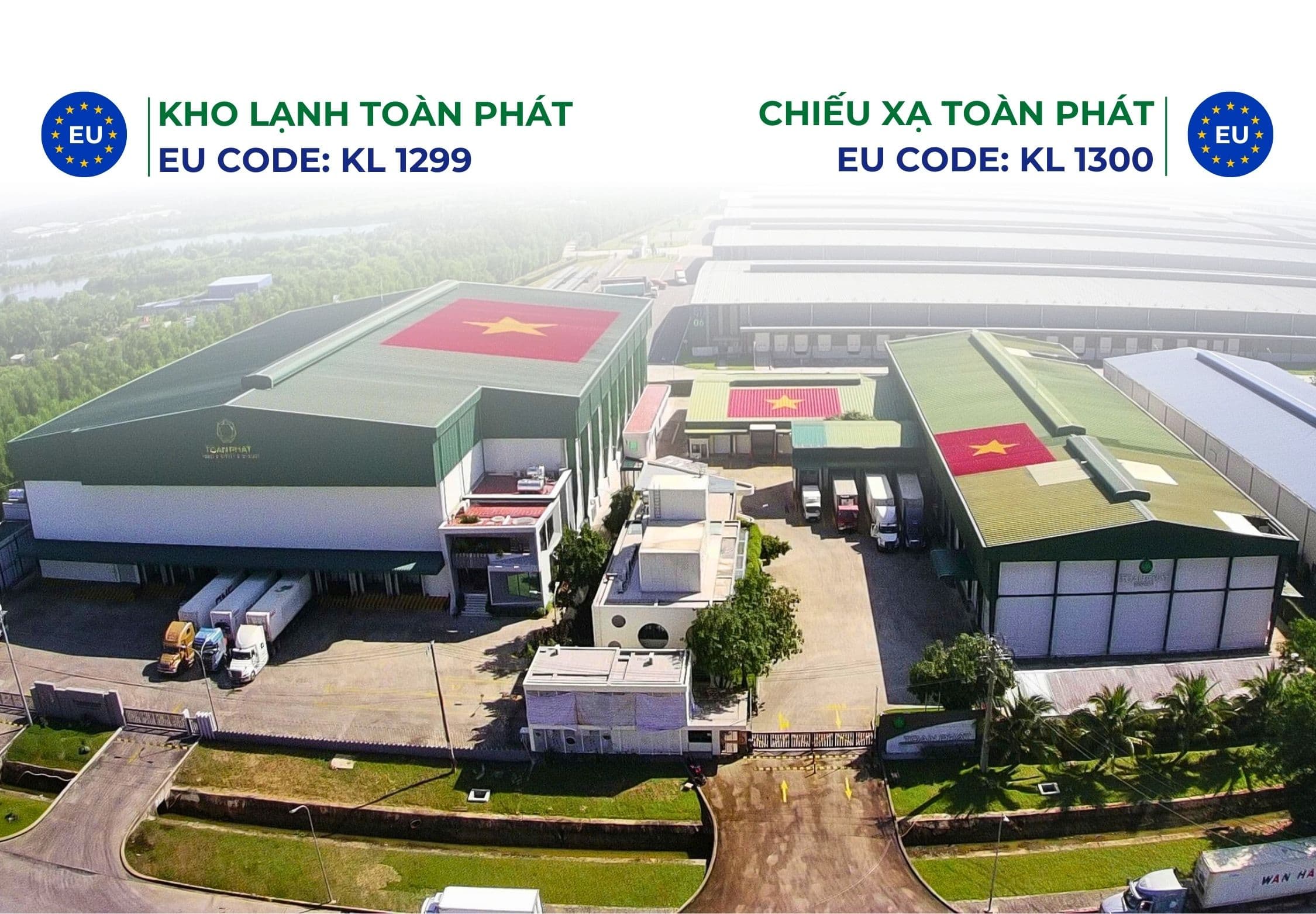
As Vietnamese food products increasingly gain a clearer presence on the global trade map, the nature of competition is also gradually changing. In international markets, competition is shifting toward quality, food safety, and the consistency of supply chains.
In this race, every logistics stage—from post-harvest handling to storage and transportation—can become either a competitive advantage or a barrier. The fact that the frozen seafood cold storage systems of both Toan Phat Irradiation Plant (TPI) and Toan Phat Cold Storage (TPL) have simultaneously obtained EU Code certification is not only a quality milestone, but also a clear demonstration of the Mekong Logistics Hub’s orientation as an integrated complex capable of complying with international standards at every storage facility. This achievement reflects a unified standardization strategy across the entire post-harvest logistics chain, while continuing to affirm its role as a reliable partner for enterprises exporting frozen seafood to the EU, supporting Vietnamese food products in their journey toward sustainable global expansion.
EU Code – A standard for cold storage facilities preserving frozen seafood for export to the EU
EU Code is an identification number issued by competent European Union authorities to cold storage facilities involved in the supply chain for exporting frozen seafood products to the EU. This certification focuses on assessing infrastructure conditions and cold storage operational management capacity, including:
- Hygiene and food safety conditions of the facility
- Temperature monitoring and recording systems
- Inbound, outbound, and storage procedures
- Batch-level traceability capability
- Consistency and transparency of operational documentation
Unlike many certifications that are largely formalistic, EU Code is directly linked to the daily operational practices of cold storage facilities. In practice, EU Code criteria are increasingly regarded by enterprises and international partners as a foundational standard for simultaneously meeting the requirements of multiple demanding markets, from Europe to other regions with high food safety standards.
Why do enterprises prioritize supply chains with EU Code–Certified cold storage systems?
From domestic raw material zones to retail shelves in demanding markets, the journey of Vietnamese frozen seafood products has become longer and more stringent. Within this supply chain, cold storage serves as a critical junction point. If this link is not properly controlled, risks can arise even when the input products meet quality standards.
An EU Code–certified cold storage facility helps to:
- Maintain stable product quality throughout storage periods
- Minimize risks of cross-contamination and temperature deviations
- Ensure continuity and consistency of the cold chain
- Reduce the risk of alerts or customs clearance delays in the EU
For this reason, choosing certified cold storage is no longer an “added value” option, but a fundamental condition for enterprises seeking to build a sustainable export supply chain.
Advantages for enterprises choosing an EU Code–Certified supply chain
When cold storage facilities within a supply chain are certified to EU Code standards, enterprises gain a solid foundation to proactively meet increasingly strict requirements from import partners. Compliance with international standards at the logistics stage significantly reduces pressure during documentation preparation, traceability verification, and proof of storage conditions, as all processes are standardized and consistently recorded throughout operations.
More importantly, supply chains with EU Code–certified cold storage help enterprises minimize additional costs arising from reprocessing shipments or adjusting procedures following technical warnings. In relationships with importers, this certification is also a key factor in enhancing trust, as enterprises can clearly demonstrate their ability to control quality across the entire supply chain.
Toan Phat Irradiation and Toan Phat Cold Storage jointly achieve EU Code certification for frozen seafood storage exported to the EU following rigorous evaluation
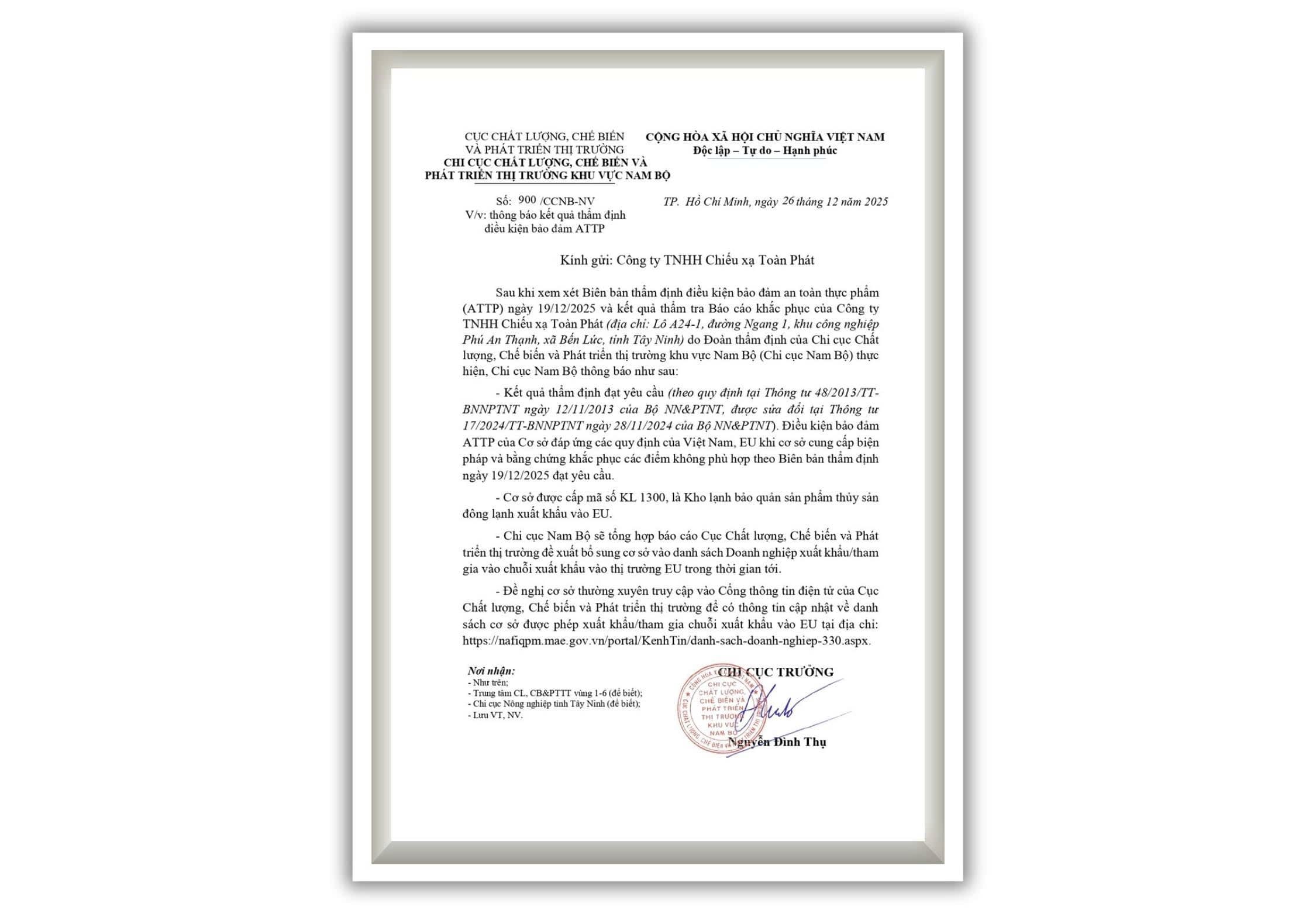
Toan Phat Irradiation (TPI) has been granted EU Code KL 1300, qualifying it as a cold storage facility for preserving frozen seafood products exported to the EU.
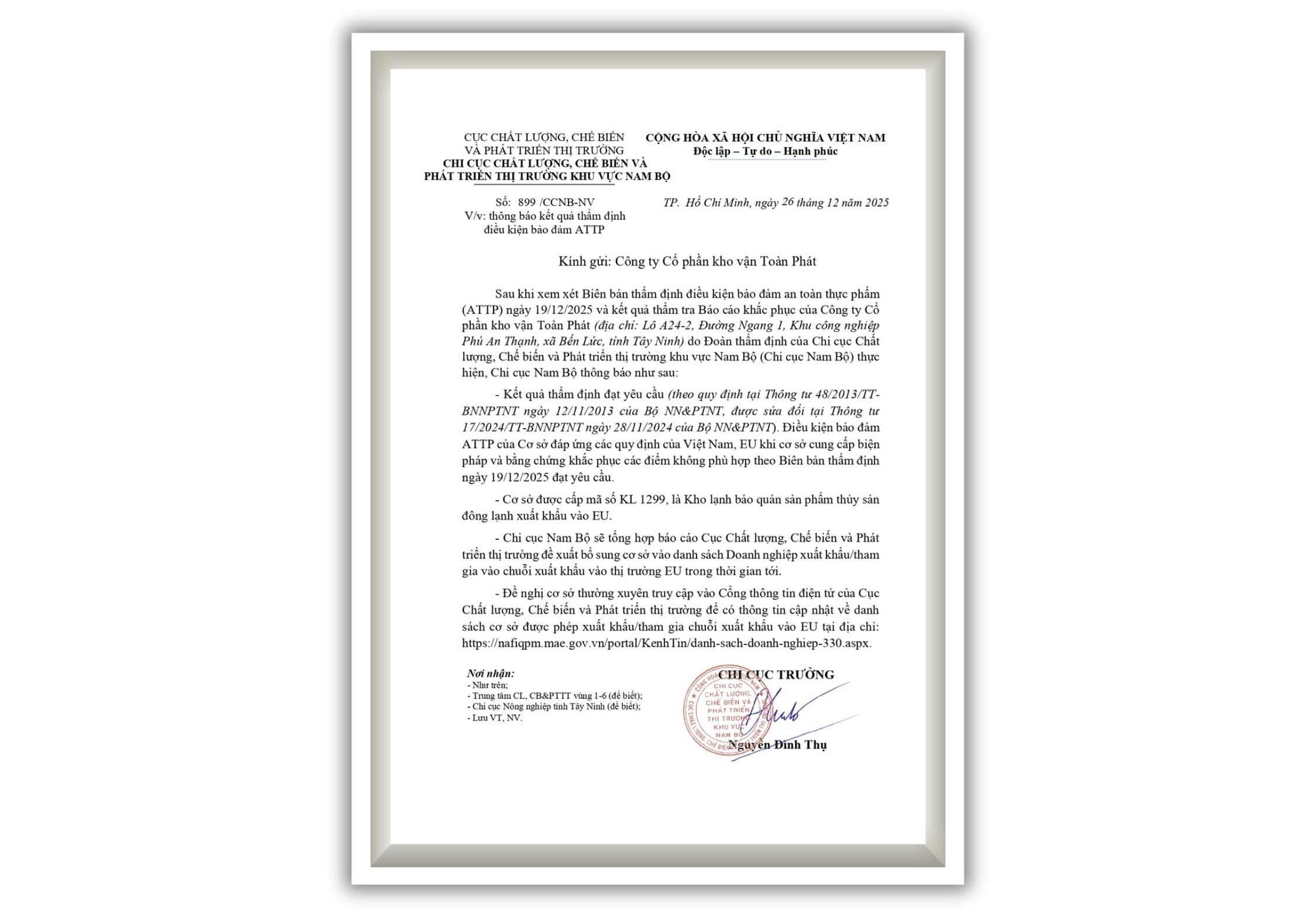
In addition, Toan Phat Cold Storage (TPL) has been assigned EU Code KL 1299, under the list of facilities qualified for frozen seafood storage for export to the EU.
The fact that both Toan Phat Cold Storage (TPL) and the cold storage facility at Toan Phat Irradiation Plant (TPI) have been granted EU Code certification for frozen seafood storage destined for the EU demonstrates a unified standardization orientation across the entire post-harvest logistics chain. Accordingly, all stages directly related to product storage and preservation are operated under a single, consistent standards system, meeting the strict requirements of the EU market and other high-standard destinations.
For exporting enterprises, selecting EU-recognized cold storage facilities for frozen seafood preservation ensures that products are consistently controlled for temperature, hygiene, and food safety throughout storage. On this foundation, EU Code–certified cold storage located at the irradiation facility plays a critical role in completing the post-treatment logistics chain, allowing products to continue being stored and controlled within the same standardized system after irradiation—without risks arising from transitions or dependence on multiple intermediaries.
The achievement of EU Code certification by TOANPHAT Group’s cold storage facilities reflects the ecosystem’s step-by-step completion of a supply chain that is safe, transparent, and efficient—creating a solid foundation to support Vietnamese seafood not only in meeting export requirements, but also in sustaining competitiveness and long-term growth in international markets.