Seafood exports increased positively in the first month of the year, but faced challenges from the US and Chinese markets.
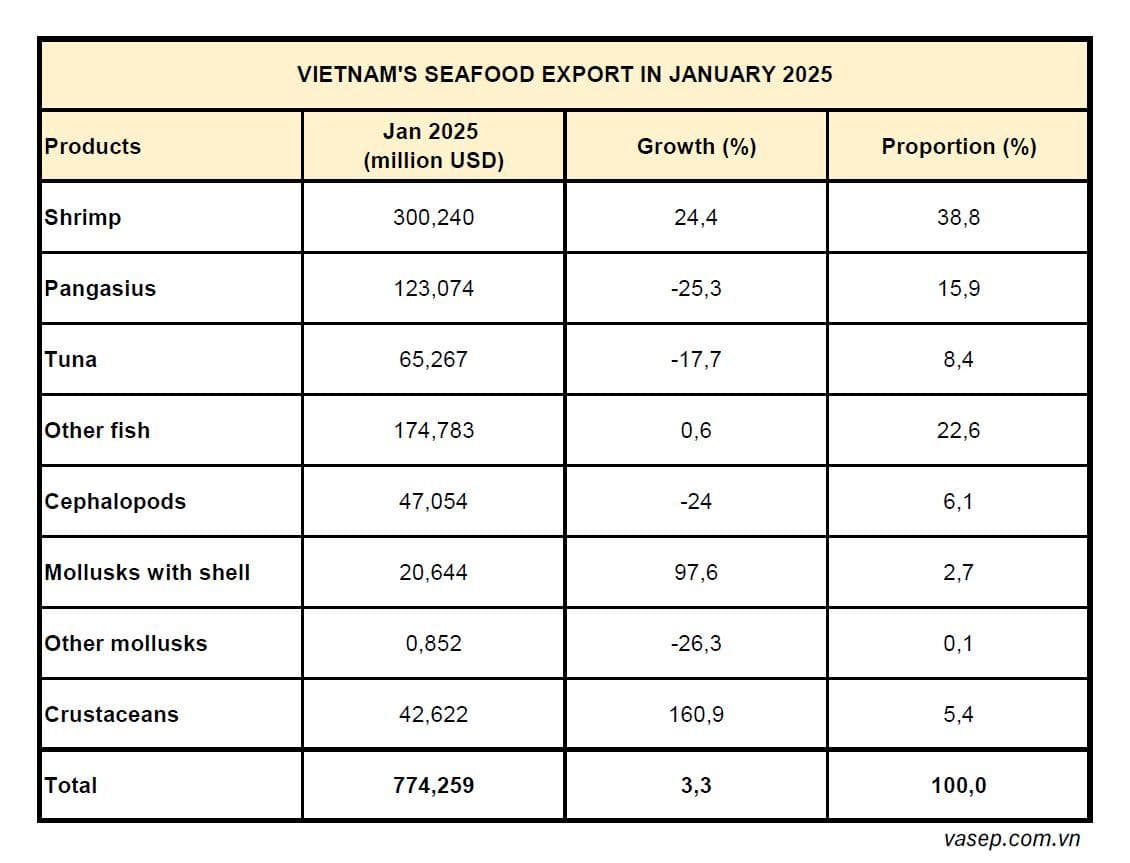
In January 2025, Vietnam's total seafood export turnover reached 774.3 million USD, up 3.3% over the same period in 2024. This is a positive result compared to the same period in 2023, when the Lunar New Year fell at the end of January, significantly affecting export results.
Shrimp - Prices recover in the EU and the US but may decrease in China
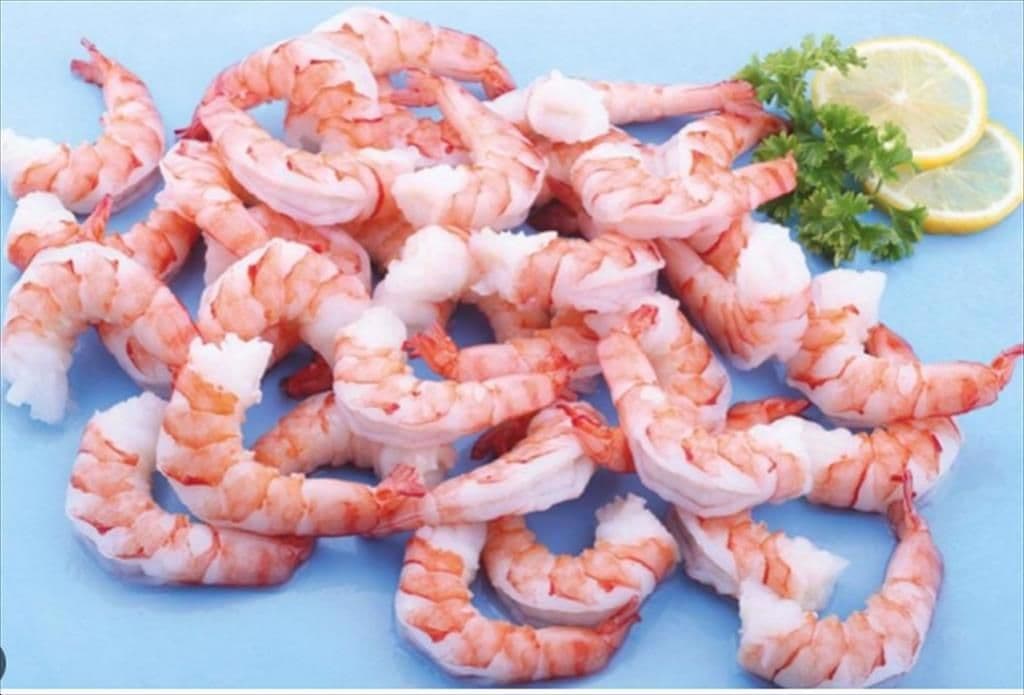
Shrimp continued to be the item with the strongest growth in January 2025, with an export value of 273.349 million USD, accounting for 35.3% of total seafood export turnover. Reports from Rabobank show that the global shrimp industry is in a rebalancing phase as producing countries slow down production growth to narrow the gap between supply and demand. This is expected to help shrimp prices gradually recover in the first half of 2025, especially when demand from markets such as the US and EU improves.
However, the Chinese market, one of the major partners of Vietnamese shrimp, is facing a decline in consumption demand. Changes in spending habits of the middle class, coupled with increasing income pressure, have led to a decline in white shrimp consumption, especially in large cities. Competition from cheaper seafood products and consumption preferences for other food items may affect shrimp exports to China in the coming months.
Pangasius fish – challenges from supply and tariff policy
Vietnam’s pangasius continued to face difficulties in the first months of 2025, despite strong growth in pangasius prices due to limited supply. Although demand from markets such as China and the EU remains stable, the shortage of fingerlings and fluctuations in international tariffs, especially anti-dumping policies, could negatively affect the growth potential of pangasius exports this year.
The limited supply of pangasius, combined with fluctuations in export markets, could lead to an increase in export value in the short term. However, the shortage of raw materials and changes in tariff policies could create a difficult environment for the pangasius industry in the coming time.
Tuna – Potential from Tariff Policy and Increased Innovation
Vietnam’s tuna industry faced a decline in exports in January 2025, with a decrease of 10.2%. However, with the steady growth of demand for tuna products in markets such as the US and EU, the tuna industry is expected to have a chance to recover in 2025. The biggest opportunity comes from changes in tariff policies of major markets, especially the US, where tariff measures can help Vietnamese tuna products become more competitive compared to other imported products.
However, the tuna industry still has many issues that need to be resolved to create momentum for further development. For fishermen, how can they, in addition to complying with legal regulations including IUU, have the motivation to increase marine exploitation, reinvest to go offshore; For businesses, it is necessary to continue reviewing and improving the process/procedures for issuing S/C and C/C certificates to resolve the problems that have arisen in the past... In addition, the tuna industry needs to focus on developing a sustainable production model and expanding the market through improving product quality and cooperating with other countries to exploit the sea effectively.
Export Markets
Vietnam's export markets recorded a large difference in consumption trends. While the Chinese and Hong Kong markets grew strongly with a growth rate of 64.9%, the US and EU markets faced difficulties with a decline of 16.0% and 17.6% respectively.
The decline in consumption in the US, due to President Donald Trump's tax policy on imported seafood products, may affect the demand for Vietnamese seafood products, especially shrimp and salmon. However, the increase in demand for easy-to-process seafood products, such as frozen shrimp, may help to partly offset the decline in consumption of high-end products.
On the other hand, the ASEAN market recorded stable growth with an increase of 10.5%, showing that the potential from Southeast Asian countries is still a bright spot in Vietnam's seafood exports. The Middle East and other markets have all seen a decline in consumption, which requires Vietnamese seafood enterprises to adjust their export strategies accordingly.
Forecast
In 2025, the global seafood market is expected to experience many fluctuations, with factors such as changes in consumption habits, tariff policies and fluctuations in supply and demand affecting Vietnam's seafood exports. In particular, the decline in demand in major markets such as China and the US will pose a major challenge to products such as shrimp, pangasius and tuna.
However, with increased demand from ASEAN markets and supportive tariff policies from major countries, Vietnam's seafood industry can still maintain its growth momentum in 2025. Developing value-added products, improving product quality and expanding new export markets will be decisive factors for Vietnam's seafood industry to continue to develop sustainably in the future.
Source: VASEP