US imposes import tax on agricultural products, what is the way out for Vietnamese goods?
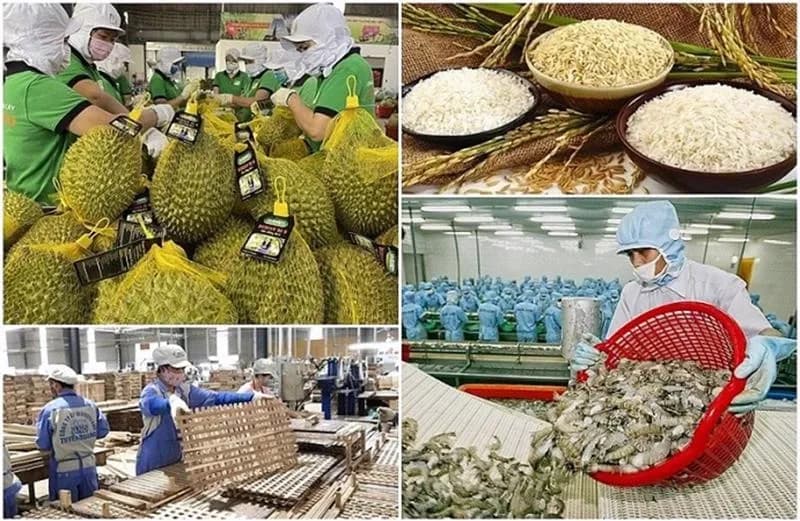
The US is Vietnam's largest agricultural export market, accounting for 22% of the market share. Therefore, when this market imposes import tariffs on agricultural products, it will affect our country's exports.
Facing many challenges
In a short period of time, US President Donald Trump has continuously introduced a series of new tariff policies. Most recently, on March 3, the US announced that it would impose new tariffs on imported agricultural products from April 2. In a post on social media on March 3, President Trump called on US farmers to prepare to increase agricultural production for domestic sale.
According to data from the US Department of Agriculture, tariffs on imported agricultural products will affect the market for fruits, vegetables and nuts, which account for at least half of the agricultural products imported into the country. Sugar, coffee, cocoa and other tropical products account for about 15% of imports. These are the items that Vietnam is currently exporting with a large proportion to the US.
According to statistics from the Import-Export Department (Ministry of Industry and Trade), in the first two months of 2025, the US is still Vietnam's largest agricultural export market. This country currently accounts for 22% of our country's agricultural exports.
According to economic expert, Associate Professor, Dr. Dinh Trong Thinh, although it is not yet known whether there will be any exceptions to Mr. Trump's plan to impose tariffs on imported agricultural products, it is clearly a concern for Vietnam's agricultural export industry.
Currently, the US is Vietnam's number 1 pepper export market, accounting for 29% of the market share. In 2024, Vietnam's pepper industry exported to the US market reached a record high of more than 73,000 tons, with a turnover of nearly 400 million USD, compared to 2023, the export volume increased by 33%.
Especially in the context of the forecast that "in 2025, Vietnam's import and export activities will face many challenges from the escalating political and military conflicts in some areas that may affect the supply chain of goods", Mr. Tran Thanh Hai, Deputy Director of the Import and Export Department (Ministry of Industry and Trade) commented. At the same time, Mr. Hai emphasized that the policy changes of major economies such as the US, China, EU, Japan... are and will have a significant impact on Vietnam's import and export activities.
Commenting specifically on the US market, the leader of the Import and Export Department said that with the new, very strict and tight tax policies, President Donald Trump's package could greatly affect Vietnam's goods exports.
In addition, the Chinese market - a major partner of the US - is currently boosting exports to other markets due to trade tensions and tariffs imposed by the US. In that context, exports in general, and agricultural products in particular, from Vietnam to other markets are also facing great competitive pressure.
Regarding this story, economist Nguyen Tri Hieu added that international press information shows that Chinese manufacturers are facing weak domestic demand and harsher conditions in the US, where they export more than 400 billion USD worth of goods each year. That is urging them to seek alternative export markets, which will increase price wars, reduce profits and increase trade barriers...
What is the solution for Vietnam?
In that situation, Mr. Thinh said that Vietnamese enterprises need to closely monitor market developments, grasp information and requirements of the US market as well as other key markets. In particular, enterprises must quickly change themselves to adapt to the increasingly high demands of the US. "An extremely important factor for Vietnamese agricultural products to be able to compete with rivals in the increasingly fierce trade war in the US market under the Trump regime is to aim to ensure product quality, protect the environment, and ensure green consumption," Mr. Thinh emphasized.
According to Mr. Hieu, enterprises need to quickly apply technological innovation, digital transformation, diversify trade promotion forms, and encourage the implementation of e-commerce channels to bring agricultural products to the global market at the lowest cost. "Vietnamese agricultural products need to focus on exporting high value-added products and diversifying markets, effectively exploiting market opening opportunities, especially within the framework of FTAs to boost exports to major markets," Mr. Hieu added.
At the same time, our country needs to proactively negotiate with the US to maintain a stable trade environment, minimizing the risk of imposing taxes or strict control measures in the coming period. At the same time, the state needs to support businesses through exchange rate management, prioritizing loan limits with reasonable interest rates for agricultural exports due to high domestic raw material prices.
From the perspective of a management agency, Mr. Hai recommended that this context requires businesses to have a more effective market diversification strategy to maintain the turnover achieved in the past with the US. In the coming time, the Import-Export Department will strengthen research, forecasting and warning activities for export goods, thereby capturing information about issues that may impact and affect transportation and circulation... At the same time, it will continue to coordinate with localities to promote customer search and export activities via e-commerce; support businesses to overcome new trade barriers that may arise in the coming time in the US market as well as other markets./.
Source: VTV