A series of goods in the US are more expensive because of Mr. Trump's taxes
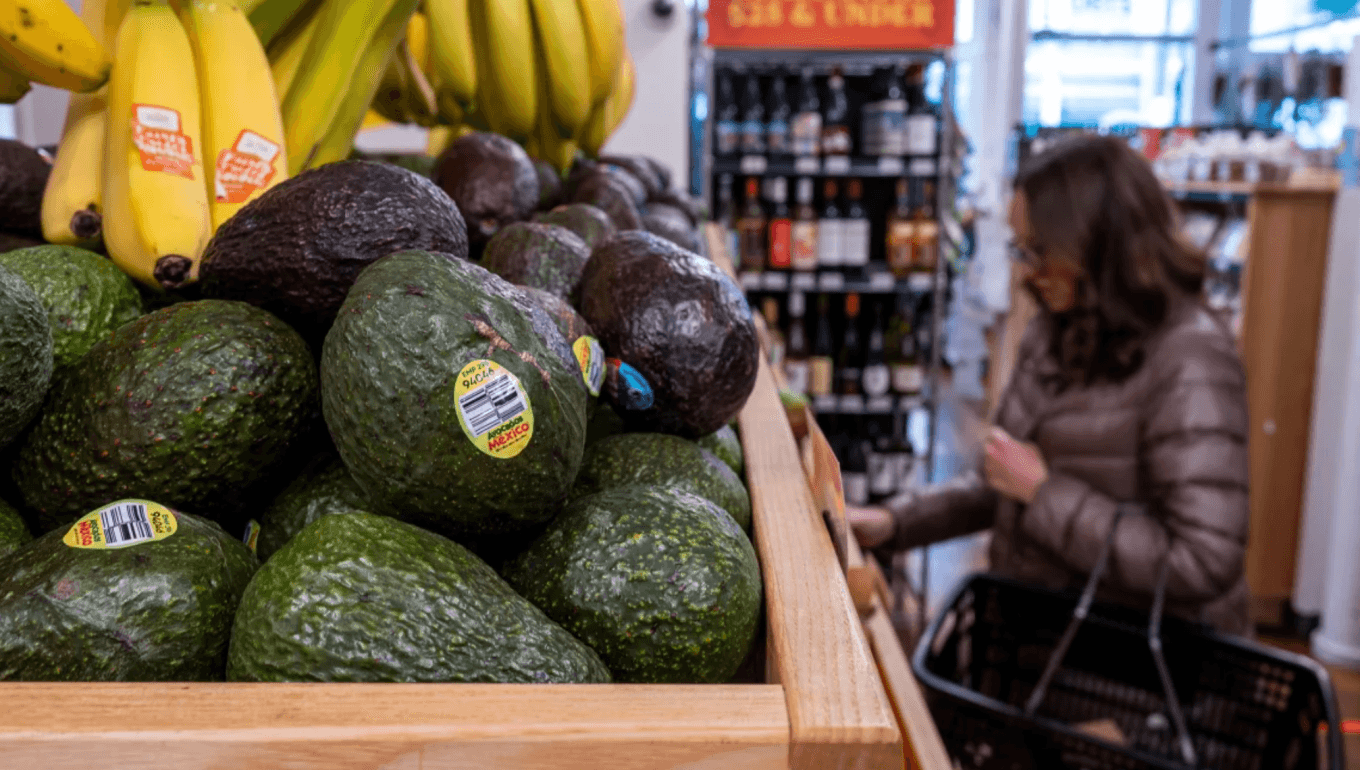
Food, fuel, cars, and electronics are among the items that will become more expensive because of Mr. Trump's tariffs on Canada, Mexico, and China, according to CNN.
President Donald Trump signed an order on February 1 to impose tariffs on goods from Mexico, Canada and China. Accordingly, energy imports from Canada will be taxed at 10%, while this item from Mexico will still be taxed at 25%. Other items from Mexico and Canada will be taxed at 25% and all Chinese goods will be taxed at 10%.
The new tariffs, which will take effect from February 4, will help increase US budget revenue, balance trade and bring countries to the negotiating table, according to Mr. Trump. However, economic experts warn that it will have a negative impact on US businesses and consumers. Many of them have been struggling with high inflation in recent years.
According to CNN, about a third of US goods are imported from Canada, Mexico and China. They are all popular and important items for consumers, such as fruits, vegetables, meat, gasoline, cars, electronics, clothing, and alcoholic beverages.
When it comes to food, Mexico is the largest supplier of fruits and vegetables to the United States, while Canada is the top exporter of grains, livestock, poultry, and meat to the world’s largest economy. As a result, agricultural products from both countries can become more expensive for Americans in a retail industry with thinner profit margins than other sectors. With less room to defend against tariffs, retailers are more likely to adjust their prices and consumers will have to pay the price.
The United States traditionally exports more agricultural products than it imports, but purchases have grown faster than sales over the past decade, according to the U.S. Department of Agriculture. Climate change has also increased the country’s reliance on markets like Mexico, which offer more favorable growing conditions. Last year, Washington imported $46 billion in agricultural products from Mexico, including $9 billion in fruits and $8.3 billion in vegetables.
Fuel and energy are also at risk of rising prices ahead. Last year, the US imported $97 billion worth of oil and gas from Canada, which is also the top export from this neighboring country to the US. Data from the US Energy Information Administration (IEA) also shows that the country has become more dependent on Canadian oil since the Trans Mountain pipeline - a 1,151 km system that carries about 890,000 barrels of oil a day from Alberta to the coast of British Columbia (Canada) - was upgraded.
The US imposes a 25% tariff on most products from Canada, but energy is subject to a 10% tariff. This will limit the impact on fuel prices, according to Tom Kloza, director of global energy analysis OPIS. At the same time, gasoline prices in the US are usually at their lowest in February due to weak demand. Therefore, he believes that tariffs will increase gasoline prices, but the impact will be greater in the summer. The Midwest is likely to be hit harder than other regions.
According to the US Department of Commerce, the value of US imports of cars from Mexico in the first 11 months of last year was $87 billion, and $64 billion of auto parts. Cars are also the second-largest item the US imports from Canada, at about $34 billion. So Mary Lovely, a senior fellow at the Peterson Institute for International Economics, said the auto industry could be “crazy” about the new tariffs.
To keep production costs low, automakers have shifted much of their production to Mexico in recent years, where they benefit from cheap labor. But with a 25% tariff, those efforts to cut costs are wiped out, Mary Lovely said. Automakers will also have a hard time moving factories elsewhere because they have already made a large investment and it is not easy to find all the raw materials to make cars and parts from elsewhere.
Although the United States is no longer a manufacturing-driven economy, it still consumes tens of millions of tons of steel each year for industries such as autos, oil, construction, and infrastructure. Canada and Mexico are the largest and third largest steel exporters to the United States, respectively.
During his first term, Trump imposed a 25% tariff on steel imports from most countries. However, Canada and Mexico were exempted from the tariff under free trade agreements with Washington.
Canada currently accounts for nearly a quarter of US steel imports, while Mexico accounts for about 12%.
Beer and wine may be less affected by the recession, but according to CNN, these products certainly cannot withstand the new tariffs. Some American favorites such as tequila made in Mexico and Modelo - the country's No. 1 beer brand - could be hit hard by the tariffs.
Constellation Brands - a company that imports Modelo and Corona beers, and Casa Noble tequila from Mexico - are at risk of increasing costs by 16% under the tariffs the US President just announced. They estimate that they will have to increase prices by about 4.5%.
In 2023, the US will import $5.69 billion worth of beer and $4.81 billion worth of wine from Mexico. These two items ranked 10th on the list of Mexican exports to the US last year, up more than 125% from 2017.
Wood materials for home construction and furniture from Canada are also at risk of rising prices. Softwood (from trees such as pine and other conifers) is favored for its light weight and flexibility in processing. Therefore, it plays an important role in the US construction industry. Every year, about 30% of the wood used in the US comes from Canada.
Economists and builders warn that tariffs on Canadian wood could exacerbate the crisis with limited ability to afford housing for Americans. "Tariffs on wood or any other imported product impact the supply chain. Past experience shows that wood tariffs are paid by new home buyers," said Nick Erickson, senior director of housing policy at Housing First Minnesota.
With Chinese goods, electronics such as smartphones, televisions, laptops, game consoles, monitors and components of this group are among the top items that the US imports from this country in 2024.
China is also a major supplier of home appliances to the US. According to CNN, these items, along with toys and footwear, are vulnerable to Trump's tariff threats.
Footwear Distributors & Retailers of America - a group representing Nike, Steve Madden, Cole Haan and other footwear brands, reported that about 99% of shoes sold in the US are imported. The organization also said that more than half of all shoes in the US are made in China.
In addition, the US also depends on China for toys and sports equipment such as footballs, soccer balls, and baseballs, with imports of about 75%.
Source: VnExpress