Suspension of Decree 46 on food safety implementation
Decree 46 and Resolution 66 regarding food declaration and registration have been officially suspended, according to a newly issued Government Resolution.
The Government has recently issued Resolution 15, dated April 6, to suspend the implementation of Decree 46 and Resolution 66 on food declaration and registration until the Amended Law on Food Safety and its new guiding documents take effect.
During the suspension of these two documents, Government Decree 15/2018—which stipulates certain articles of the Law on Food Safety—and its existing guiding documents will remain in force. Applications submitted before the effective date of this Resolution will continue to be processed under Decree 15/2018.
The Ministries of Health, Industry and Trade, and Agriculture and Environment have been tasked with providing implementation guidance within their respective management areas. They are also required to review the 2010 Law on Food Safety to propose amendments.
Relevant agencies are to complete the connection and sharing of data with the National Public Service Portal to unify data from central to local levels. These agencies must increase the application of Artificial Intelligence (AI) in food product management to enhance monitoring, traceability, and early risk detection capabilities.
Furthermore, the Government has requested the Ministry of Health to inspect the declaration, advertising, and production conditions of health supplements. The Ministry of Industry and Trade will monitor business operations and handle counterfeit food, smuggled goods, and fraud in e-commerce. The Ministry of Science and Technology is responsible for managing accreditation activities and testing laboratories, as well as refining food standards. The Ministry of Culture, Sports, and Tourism will manage food advertising activities.
Decree 46 and Resolution 66, which guide the implementation of the Law on Food Safety, initially took effect on January 26. The new regulations imposed stricter management requirements, particularly for imported food, health supplements, and state inspection activities regarding food safety. However, a lack of guiding documents caused the importation of food and raw materials for food production to fall into a state of congestion nationwide.
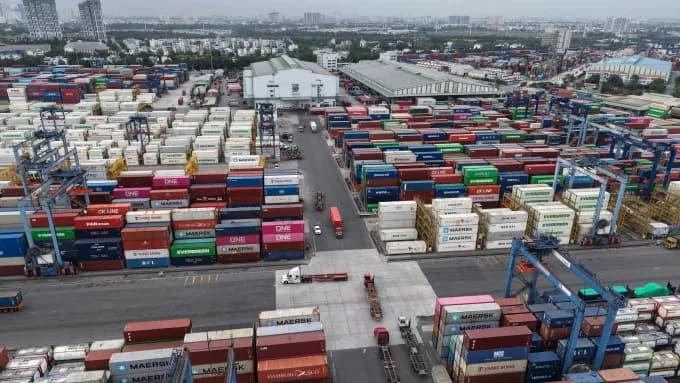
By late January, thousands of cargo containers were "stuck" at border gates and seaports due to obstacles in implementing these regulations. According to data from the Ministry of Agriculture and Environment at a regular press conference on February 5, in just four days (January 26–29), over 700 import shipments—equivalent to approximately 300,000 tons—were stalled at border gates and ports. The affected items were primarily fresh agricultural products and semi-processed plant-based products such as vegetables, tubers, fruits, rice, paddy, and cassava, along with some processed and pre-packaged foods.
Over a week later, the Government agreed to delay the implementation of both documents until April 15. During this period, food safety regulations for imported food and agricultural products followed the previous rules (Decree 15).
The Amended Law on Food Safety is expected to be submitted to the National Assembly during the upcoming October session, after which guiding Decrees will be issued. At a conference in early February, many associations proposed the abolition of Decree 46 and Resolution 66 while awaiting the new law. Regarding the upcoming legal revisions, experts suggest that management agencies should only introduce new procedures once they can demonstrate effectiveness in improving food safety without disrupting production and business, and after comprehensive impact assessments and consultations have been conducted.
Source: VnExpress