Food irradiation services: ensuring the safety of agricultural products and promoting export activities
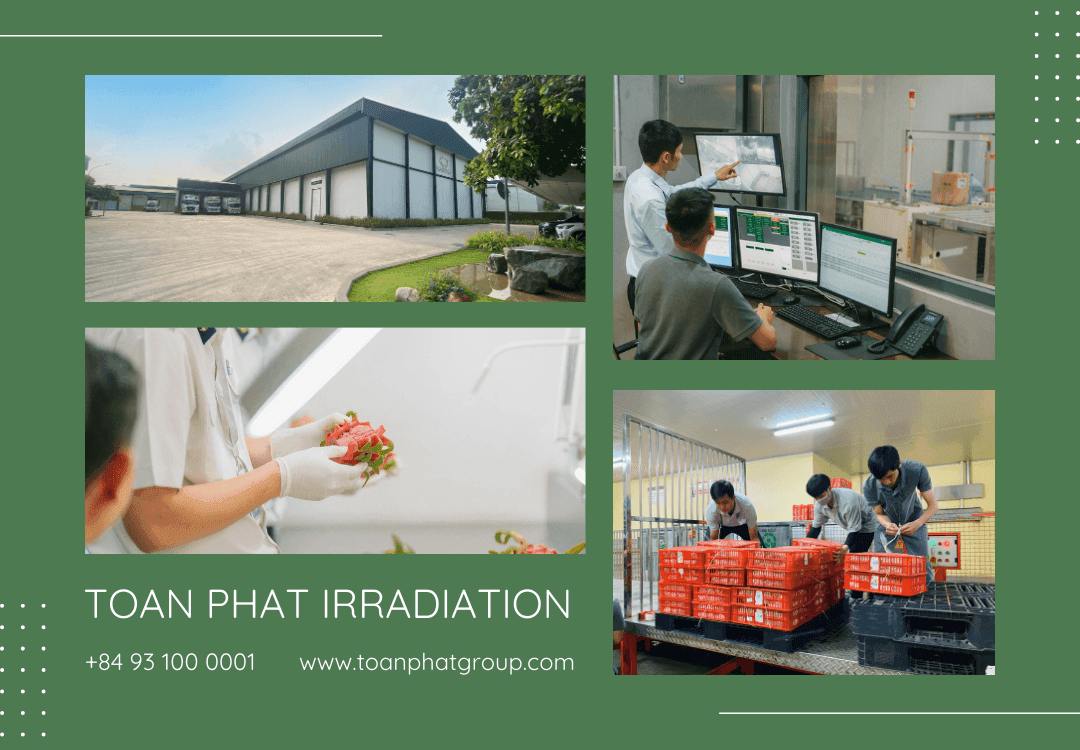
In Long An, Toan Phat Irradiation Factory has applied current advanced irradiation technologies to serve agricultural and aquatic product exports to countries such as the United States, New Zealand, Australia...
For decades, food irradiation has been used for plant quarantine and to extend the shelf life of agricultural products such as spices, dried herbs, seafood, and meat; and is increasingly used on fresh fruit and vegetables to prevent pest invasion. If products are not handled carefully, harmful insects and microorganisms can enter exported items, moving to other countries during trade; causing damage to food production and adverse effects on the local environment when they reproduce and spread in the importing country.
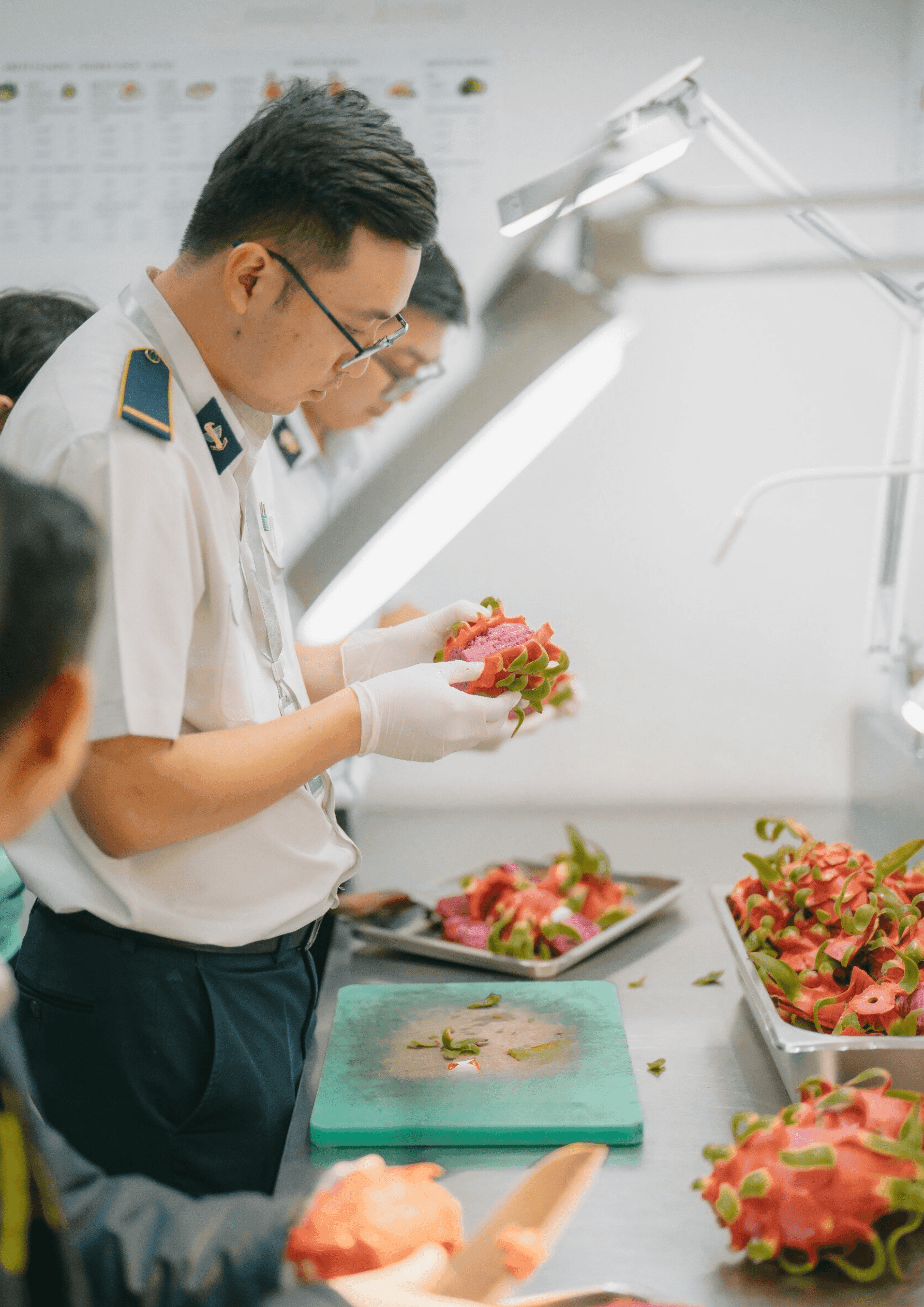
Carry out quarantine of fresh dragon fruit before being subjected to irradiation treatment
Therefore, plant quarantine treatment is a prerequisite in global trade to ensure products are not contaminated with some harmful insects, especially for fresh fruit and vegetable products. Conventional processing methods such as chemical insecticides can leave residue that is harmful to humans and the environment, or heat treatment can change the taste and texture of the product. Irradiation using low doses of gamma rays, electron beams or X-rays (less than 10 kGy) can treat large quantities of food without reducing quality or posing risks to consumers.
Currently, worldwide there are hundreds of facilities applying radiation in many different fields, and at least 60 facilities are applying food irradiation technology. These facilities consistently apply low levels of radiation to kill microorganisms that can spoil food, such as bacteria or fungi. Low dose irradiation is also used to control pests.
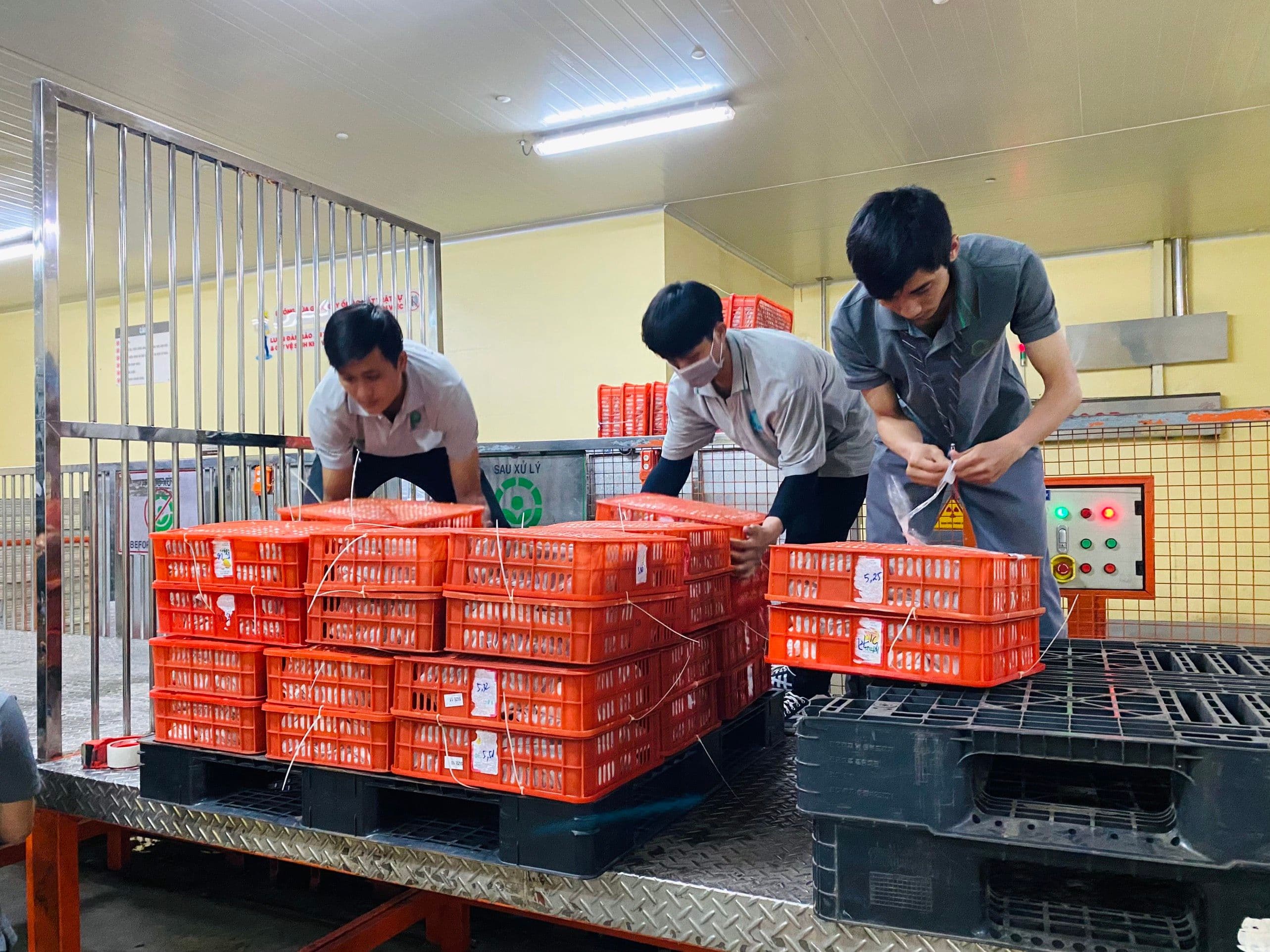
Irradiation treatment of fresh fruits with Cobalt-60 line using Gamma rays at Toan Phat Irradiation Factory (Toan Phat Irradiation)
The International Atomic Energy Agency (IAEA) has supported the development of irradiation as a phytosanitary measure for decades through technical cooperation programs. Mr. Carl Blackburn, Food Irradiation Expert of the Joint FAO/IAEA Program on Nuclear Techniques in Food and Agriculture, said: consumers now love delicious and beautiful fruits; Available year-round, and contains no chemical residue or harm to the environment. One of the effective solutions to meet increasingly diverse requirements is nuclear technology. “Irradiation does not affect fruit but can control pests. The treatment is optimized to neutralize pests while ensuring most nutrients remain unchanged and has little impact on fruit flavor, texture and color,” he said.
Experts in Vietnam began researching food irradiation in the late 1990s with the help of the IAEA. In Long An, Toan Phat Irradiation Factory is applying the same food irradiation method that other countries: the United States, Australia and New Zealand... have used to ensure product safety, as well as requiring fruits and agricultural products imported to these countries to undergo irradiation treatment.

Toan Phat Irradiation Factory applies electron beams to irradiate agricultural and aquatic products for export
Toan Phat Irradiation Factory is one of the pioneers in Vietnam applying all three irradiation technologies: Gamma rays, electron beams and X-rays in agricultural and aquatic irradiation. Mr. Blackburn also said that the use of radiation generated from electric current; such as electron beams and advances in irradiation technology can make this process more economical and easier, reducing safety and security concerns associated with the use of radioactive sources. Toan Phat Irradiation Factory is planning to expand an additional irradiation system to increase capacity, serve and meet the growth of the Agriculture - Aquaculture export industry in the coming years.
Translated and edited from www.iaea.org