Supply exceeds demand, causing prices of vegetables and fruits to drop sharply after Tet. What is the cause that needs to be resolved?
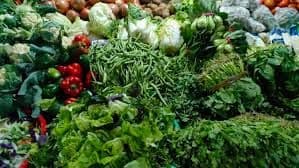
After Tet, the prices of many agricultural products such as vegetables, fruits and rice have all dropped sharply by 20-30% compared to before Tet. This directly affects farmers' income, making it difficult for them to cover production and living expenses.
Every year, after Tet holiday, consumption demand decreases due to people tightening their spending, along with abundant supply due to farmers harvesting in bulk to clear out inventory. This causes a situation of oversupply, pushing prices down.
Agricultural products fall sharply, farmers are struggling
According to the Department of Agriculture and Environment of An Giang province, rice prices have dropped sharply compared to before Tet. OM 18 rice has decreased from 7,600 - 7,800 VND/kg to 6,400 - 6,500 VND/kg, a decrease of about 1,200 - 1,300 VND/kg. Dai Thom 8 rice has also decreased similarly, from 7,600 - 7,800 VND/kg to 6,500 - 6,600 VND/kg, a loss of about 1,100 - 1,200 VND/kg. Meanwhile, OM 380 rice has decreased the most, from 6,600 - 6,700 VND/kg to only 5,000 - 5,200 VND/kg, a decrease of 1,400 - 1,500 VND/kg.
Not only rice, but also the prices of green vegetables and fruits in Ho Chi Minh City have also seen a significant decrease. Vegetables such as lettuce, Chinese cabbage, and cauliflower, which were expensive at the end of last year, are now only VND20,000 - 25,000/kg. Some other vegetables such as green beans, bitter melon, and eggplant have also dropped to around VND20,000/kg.
Fruit prices have also not been spared, with Ri 6 durian currently being sold for VND50,000 - 80,000/kg, 30% lower than last week and only half of the same period last year. Other fruits such as mango, watermelon, and orange have also dropped sharply, ranging from VND5,000 - 25,000/kg.
According to experts, one of the reasons for the sharp decrease in agricultural product prices is the abundant supply while purchasing power has decreased sharply after Tet. Typically, consumers tend to stock up on food before Tet, causing demand to decline after the holiday. In addition, many businesses and traders have not yet operated at full capacity, leading to disruptions in purchasing, causing prices to drop.
In addition, developments in the international market have also had a major impact on domestic rice prices. India's end of export restrictions has increased rice supply in the global market. At the same time, rice production in Vietnam, Thailand and Pakistan has also increased sharply, causing a surplus of rice and prices to fall.
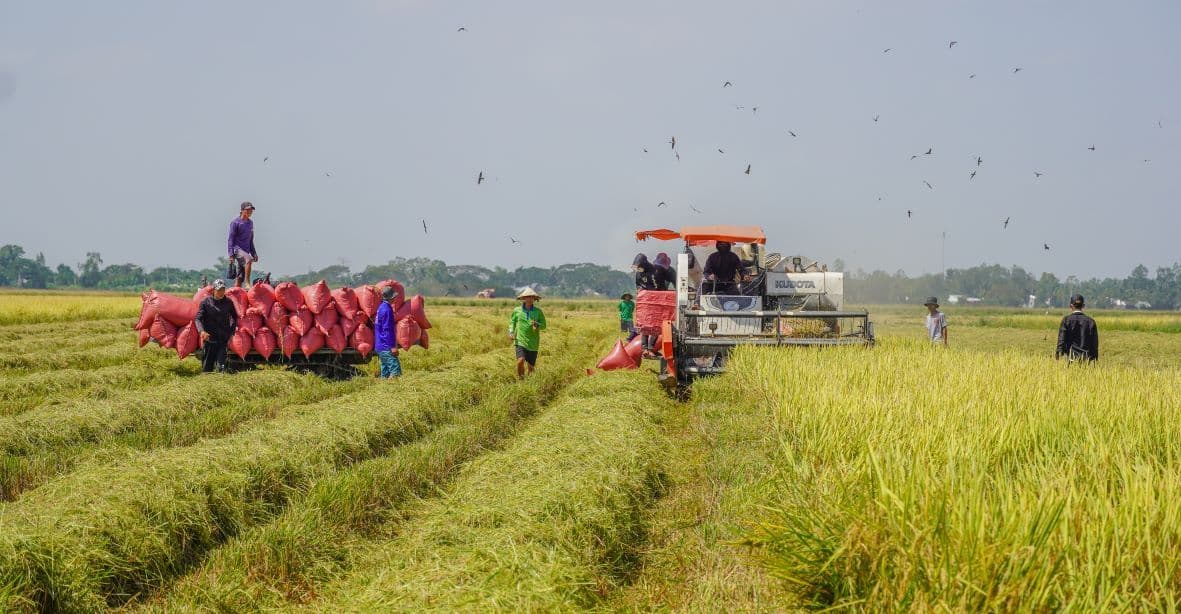
Not only rice, but also other agricultural products such as fruits and vegetables are facing difficulties due to stricter import control policies from major markets such as China. This has increased domestic inventories, putting pressure on prices.
In addition, although agricultural product prices have decreased, input costs for production remain high, creating a financial burden for farmers. Fertilizer, pesticide and labor costs have shown no signs of decreasing, and have even increased over the past year.
The purchasing and distribution system is also an important reason for unstable agricultural product prices. Farmers mainly sell their products through traders, while large purchasing enterprises do not have close links with producers. Therefore, when the market fluctuates, farmers are easily forced to lower prices and do not have stable output. In addition, the situation of "good harvest, low price" recurs due to the lack of reasonable regulation between supply and demand, making agricultural product prices highly dependent on seasonal factors.
What are the solutions for domestic agricultural products?
To solve the problem of sharp declines in agricultural product prices, it is necessary to strengthen the connection between farmers, cooperatives and purchasing enterprises to form a sustainable supply chain. When there is close cooperation between the parties, prices will be more stable, avoiding price pressure. One of the effective solutions is to develop a production model according to orders, helping farmers to be more proactive in production and product consumption plans.
Applying technology in production and preservation is also a necessary direction. Using post-harvest technology to extend the preservation time of agricultural products will help reduce the pressure of dumping when prices are low. At the same time, promoting the high-tech agricultural model will help increase productivity, reduce production costs and ensure product quality.
At the same time, the State needs to have specific support policies to help farmers overcome difficult times. Preferential loan packages and subsidies for fertilizers and pesticides can help reduce financial pressure on farmers.
The sharp decline in agricultural prices is posing many challenges for farmers, but with the right strategy, this situation can be controlled. In the long term, it is necessary to focus on developing sustainable markets, improving production and increasing product value to avoid a repeat of the situation of "good harvest, low price".
With the coordination of the government, businesses and people, Vietnam's agricultural sector can completely overcome difficulties and develop stably in the coming time.
Source: Thanh Tra Newspaper