Can passion fruit become a billion-dollar export crop?
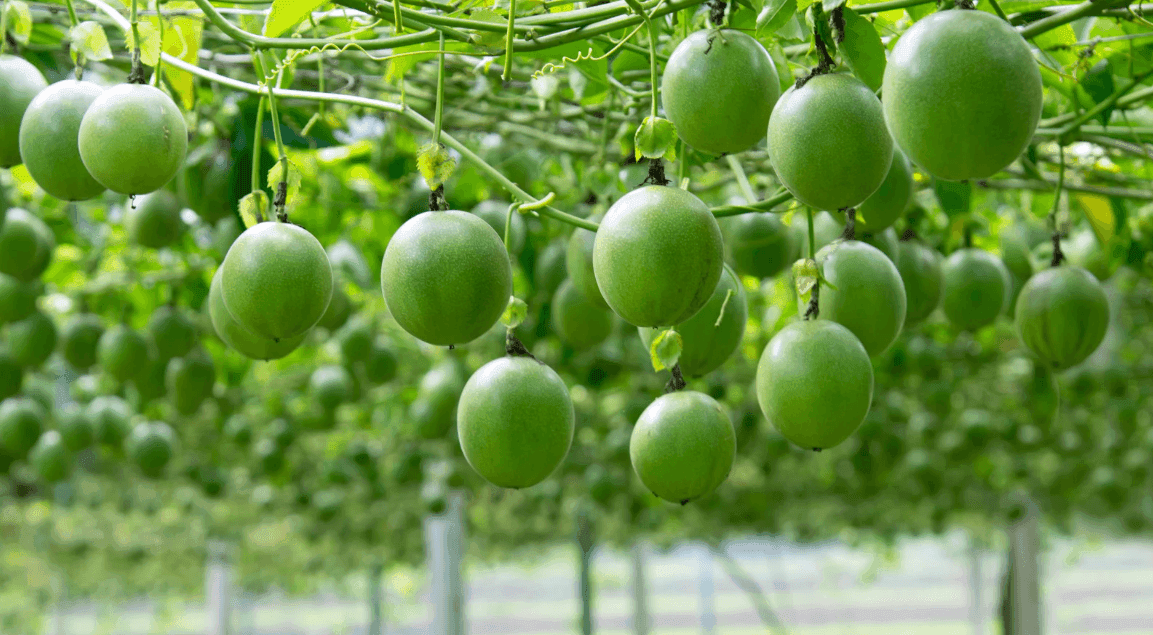
In just over a decade, passion fruit (also known as granadilla) has transformed from a little-known fruit into one of Vietnam's top export items, earning hundreds of millions of dollars. Can passion fruit continue to evolve into a billion-dollar commodity for our country's agricultural sector in the near future?
Rapid growth and emerging challenges
The nationwide passion fruit cultivation area currently reaches 12,600 hectares with an output exceeding 178,500 tons, placing it among the group of 18 fruit types with an annual production of over 100,000 tons.
The Central Highlands serves as the country's passion fruit capital, accounting for 86.4% of the area and 92.5% of the output in 2024, with Gia Lai leading the way. In 2025 alone, Gia Lai's passion fruit area is estimated at approximately 5,650 hectares with an output of around 80,000 to 100,000 tons, affirming the province's central role in this industry's value chain. To date, Gia Lai has been granted 48 growing area codes covering over 1,150 hectares and 6 packaging facilities dedicated to export.
According to Mr. Doan Ngoc Co, Deputy Director of the Department of Agriculture and Environment of Gia Lai Province, the official export of Vietnamese passion fruit to China since July 2022 has opened up massive opportunities and created strong momentum for the industry. With market doors wide open, the income and profits of farmers, cooperatives, and enterprises within the value chain have increased significantly. In Gia Lai, several companies such as Nafoods Central Highlands Joint Stock Company and Dong Giao Food Export Joint Stock Company (DOVECO) have partnered with cooperatives and farmers to establish closed production-processing-consumption chains.
Ms. Nguyen Thi Bich Ngoc, Deputy Director of the Plant Protection Institute under the Vietnam Academy of Agricultural Sciences, stated: Passion fruit is currently one of the fastest-growing fruit trees, with an area of 12,600 hectares and an average annual output of about 160,000 tons, placing Vietnam among the top 10 major passion fruit suppliers globally.
Passion fruit trees in Vietnam possess many advantages regarding terrain, soil, and climate conditions; specifically, when cultivated in the Central Highlands and other regions, the trees have a short growth cycle (4-5 months) and achieve high yields. The consumption market is also expansive with diverse demands (over 80% are processed products and fresh fruit). Over the past 10 years, passion fruit has developed by leaps and bounds; Vietnamese passion fruit exports grew from 20 million USD in 2015 to 222.5 million USD in 2023; in 2025, export turnover reached 220-240 million USD.
Agricultural experts believe that passion fruit holds many advantages and the potential to become a billion-dollar export crop for Vietnam. However, the development of the passion fruit industry is currently facing numerous challenges, such as increasingly complex climate change; many cultivation areas remain fragmented and disjointed; many households still plant spontaneously in areas with unsuitable soil and irrigation conditions; and seed quality management is not yet truly robust. Meanwhile, major markets such as the European Union (EU), the US, Japan, and China are imposing stricter requirements on technical standards, quality, and traceability. Passion fruit is a crop sensitive to many types of pests and diseases, particularly viral diseases, which are becoming the greatest challenge to sustainable production.
Vietnam has currently recorded six types of viruses affecting the growth and development of the trees, not to mention diseases caused by fungi and bacteria (brown spot, anthracnose, collar rot) along with various sucking insects, mites, and fruit flies, which reduce yield and quality while increasing the risk of field transmission.
Building passion fruit value chains
To promote the sustainable development of the passion fruit industry, according to Ms. Nguyen Thi Bich Ngoc, it is crucial to apply integrated farming measures such as field sanitation, soil treatment, enhancing soil health with organic and microbial fertilizers, and hardening seedlings in isolated net houses before planting to improve current productivity and quality. Along with this is the establishment of linkages between farmers, cooperatives, and enterprises for consumption because, according to current trends, importers are setting very stringent food safety requirements. The supply chain must have a complete and transparent traceability system. Enterprises wishing to export must obtain international certifications such as HACCP, ISO, BRC, Halal, and GlobalGAP, while also meeting ESG (Environmental, Social, and Governance) requirements—a set of standards evaluating sustainable development and corporate impact on labor, environment, and governance.
Mr. Ho Hai Quan, Director of Nafoods Central Highlands Joint Stock Company, noted that the global passion fruit market is changing rapidly, presenting both opportunities and challenges for Vietnamese producers and businesses. Current consumer trends lean heavily toward natural drinks with minimal chemical processing, prioritizing organic and nutrient-rich, low-sugar, health-conscious products, creating conditions for passion fruit products to expand their market share. Therefore, passion fruit growers need to utilize biological measures, further enhance product quality, and apply and comply with production standards such as VietGAP (Vietnamese Good Agricultural Practices) and GlobalGAP (Global Good Agricultural Practices) to ensure hygiene and food safety.
Source: VTV.vn