Vietnam Logistics Reaches into a New Era
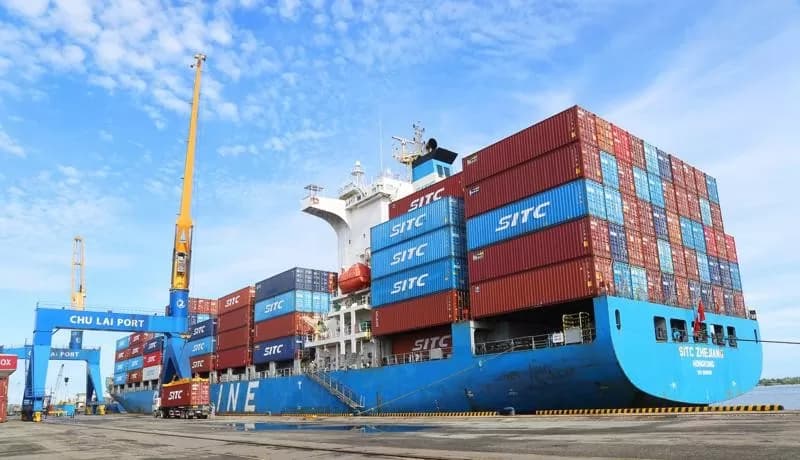
The companionship of the Party, the State and the determination of enterprises will bring the Vietnamese logistics industry confidently into a new era, an era of national growth.
This is the sharing of Mr. Tran Thanh Hai - Deputy Director of the Import-Export Department (Ministry of Industry and Trade) at the Vietnam Logistics Forum 2024 with the theme "Free Trade Zone - Breakthrough Solution to Promote Logistics Growth" organized by the Ministry of Industry and Trade in coordination with the People's Committee of Ba Ria - Vung Tau province on the morning of December 2.
Logistics "paves the way" for trade and production
Mr. Tran Thanh Hai - Deputy Director of the Import-Export Department (Ministry of Industry and Trade) - informed that logistics is an essential service industry, playing an important foundational role in the overall structure of the national economy; supporting, connecting and promoting the socio-economic development of the whole country as well as each locality, contributing to improving the competitiveness of the economy.
With the attention of the Party and the State, the consensus of enterprises, the Vietnamese logistics service industry has recorded results and is shown through some figures as follows: Vietnam's Logistics Performance Index (LPI) in 2023 ranked 43rd out of 154 countries and territories (according to the announcement of the World Bank) and is in the top 5 countries in the ASEAN region; ranked 10th out of 50 emerging logistics markets; the growth rate of the logistics industry in Vietnam in recent years has reached about 14 - 16%, with a scale of about 40 - 42 billion USD/year.
Regarding infrastructure, Vietnam's logistics includes road infrastructure accounting for 61-64% of goods transported by road; 3,143 km of railway network and 277 stations, railway density reaching 9.5 km/1,000 km2, reaching the average level of ASEAN and the world, ranking 58/141 in terms of network density. Vietnam has more than 17 thousand km of inland waterways in operation; 310 ports, 6,274 inland waterway wharves and 18 ports capable of receiving ships with a tonnage of over 3,000 tons, with 20 ports capable of receiving foreign watercraft.
With the maritime transport system, Vietnam has 286 ports belonging to 5 seaport groups, the wharf length is approximately 100 km; 2 special seaports that can receive container ships up to 132,000 DWT at Lach Huyen, ships up to 214,000 DWT at Cai Mep; 1,477 ships, total tonnage of 11.6 million DWT, ranked 2nd in ASEAN and 22nd in the world; 32 routes, including 25 international routes and 7 domestic routes. Currently, Vietnam has 22 operating airports. 69 large and medium-sized logistics centers, concentrated in a number of industrial parks.
Regarding logistics service enterprises, there are currently 46,428 transportation and warehouse enterprises; 5,000 enterprises providing 3 PL services (providing third-party logistics services);…
Affirming that logistics paves the way for trade and production, Mr. Tran Thanh Hai said that the scale of Vietnam's logistics service industry is reflected in the volume of goods transported and circulated, both growing by double digits in the first 9 months of 2024 and growing every year. Logistics promotes regional connectivity, currently the scale of Vietnam's warehouse market reaches 4 million square meters of floor space, with a growth rate of 23%/year in the period 2020 - 2023. These warehouses are concentrated in key economic regions.
Pointing out 6 logistics trends in the world and their impact on Vietnam, Mr. Tran Thanh Hai said that there is currently fierce competition in exploiting geopolitical advantages; the shift reshaping supply chains; alliances and associations to take advantage of scale; application of deep automation technology; towards green supply chains, green logistics; promoting the decisive role of people and human resources.
Talking about geopolitical advantage competition, Mr. Tran Thanh Hai pointed out that currently, the countries surrounding Vietnam are making strong moves to promote exports and increase trade activities. For example, China has the “Belt and Road” initiative; Singapore is building the largest transit hub in the region; Thailand is building a connection with the China-Laos railway...
According to Mr. Tran Thanh Hai, after the fluctuations in the supply chain in the world market, the logistics industry has also changed, specifically: The trend of moving the supply chain out of China or outside of China, another location can be added to diversify production facilities; the trend of looking for markets closer to the source of consumption; the trend of green supply chains is shown through transportation, warehousing and packaging activities.
“The logistics industry is one of the three industries with a very large amount of emissions, along with industrial production and energy. Of which, the transportation industry accounts for the largest proportion of emissions as road, waterway, and air transport vehicles consume a lot of energy. Therefore, the green logistics trend is first reflected in converting to less emission-intensive energy sources, using energy-saving methods, and improving transportation efficiency,” said Mr. Tran Thanh Hai.
The trend of applying technology and automation is also taking place quickly and strongly. E-commerce is currently the main direction and logistics in e-commerce cannot fail to apply technology.
Turn logistics into a high value-added service industry
Based on the current status and development trends of the logistics service industry, the Ministry of Industry and Trade was assigned by the Government to develop a Draft Strategy for the development of Vietnam's logistics services for the period 2025 - 2035, with a vision to 2045 (Draft Strategy) to develop a synchronous, comprehensive logistics service industry commensurate with Vietnam's economic development potential in the coming period.
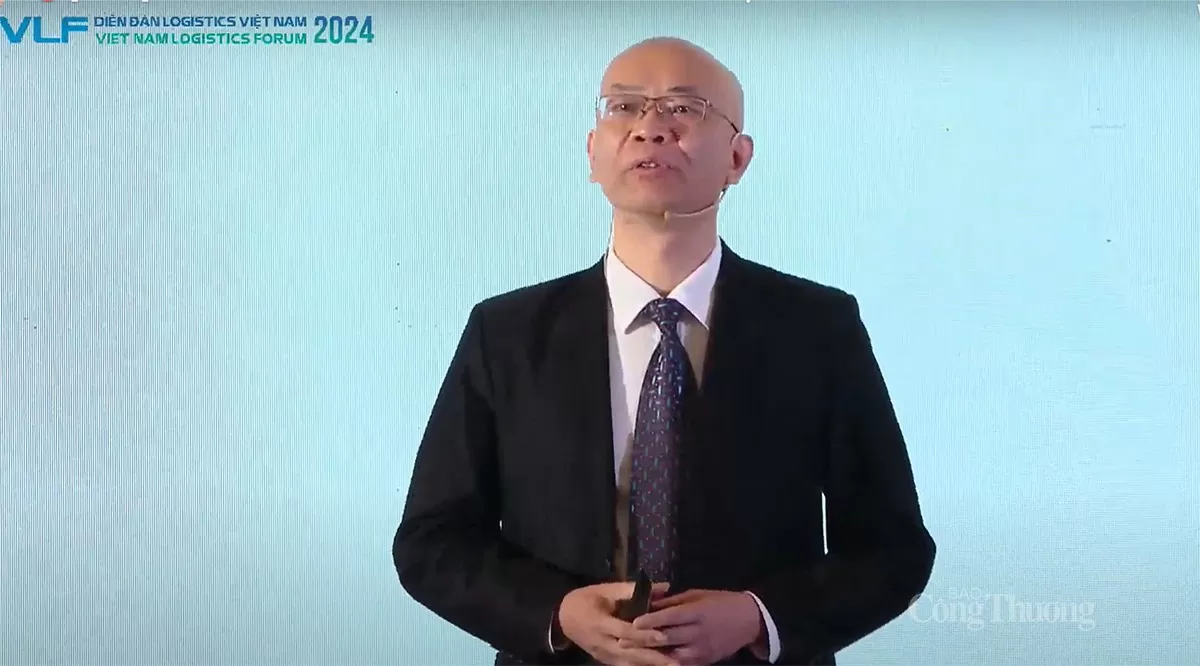
Mr. Tran Thanh Hai - Deputy Director of the Import-Export Department (Ministry of Industry and Trade) shared at the Forum
The Draft Strategy is developed with the following viewpoints: Consistent with the country's general socio-economic development strategy; considering logistics as a key service sector with high priority for development; 5 key points for strategic development include: Institutions, infrastructure, enterprises, human resources, technology; maximizing geopolitical advantages; forecasting and keeping up with the world's logistics development trends; regional linkages, and equitable development among localities.
The Strategy also sets a target that by 2035, the industry's growth rate will reach 8-12%; 80% of logistics enterprises will be digitally transformed; 70% of workers will be professionally trained; 70-80% of outsourcing ratio; logistics costs/GDP will account for 12-15% (currently 16-18%); LPI ranking of 40 or higher. To achieve the set goal of turning logistics into a high value-added service industry, the Ministry of Industry and Trade also proposed many groups of solutions. Accordingly, perfecting policies, laws, and institutions; perfecting and improving infrastructure capacity; improving business competitiveness; developing markets; promoting the application of technology and green logistics; developing local logistics; developing human resources; ...
Regarding some breakthrough solutions, according to Mr. Tran Thanh Hai, firstly, the early establishment of a transit port will help take advantage of geopolitical advantages, while helping Vietnam increase the source of goods for logistics services. Currently, we have Hai Phong and Ba Ria - Vung Tau ports as gateway ports, meeting the main source of Vietnam's exports and imports. As for the source of goods from other countries arriving at the port, being processed here and moving to other countries like Singapore or Hong Kong (China) have done, we do not have it. It is expected that Can Gio port will soon be a transit port for Vietnamese goods.
Second, it is building a national fleet. Currently, we have a large fleet of ships, but with small tonnage and a large number of ship owners, so the container fleet is still scattered and fragmented. We do not have a large shipping line, especially container shipping lines. Building a worthy container fleet is a must. In addition, there is a fleet of cargo aircraft, the demand for this service is currently very high, especially after the Covid-19 period.
Third, it is building a free trade zone. Currently, we are facing a bottleneck which is the lack of institutions. Therefore, in the coming time, when the Government amends Decree No. 35/2022/ND-CP regulating the management of industrial parks and economic zones and adds the content of free trade zones, this will open the 'door' for the free trade zone to develop. Fourth, it is building a large, modern, smart, automated and green logistics center.
In addition, Mr. Tran Thanh Hai also mentioned some solutions such as policies to support businesses such as tax incentives, capital or land access; attracting investment; developing the market; perfecting the apparatus. In the General Strategy picture, the Ministry also divided the component strategies such as strategy to improve the capacity of logistics enterprises; strategy for digital transformation of the logistics industry; strategy for developing logistics human resources; strategy for developing green logistics.
With the attention of the Party and State leaders; the consensus of the business community; together we build the Vietnamese logistics industry to progress quickly, strongly and confidently enter a new era, an era of national growth.
Source: Cong Thuong Newspaper