


What enterprises need to do regarding the EU's new regulations on meat designations
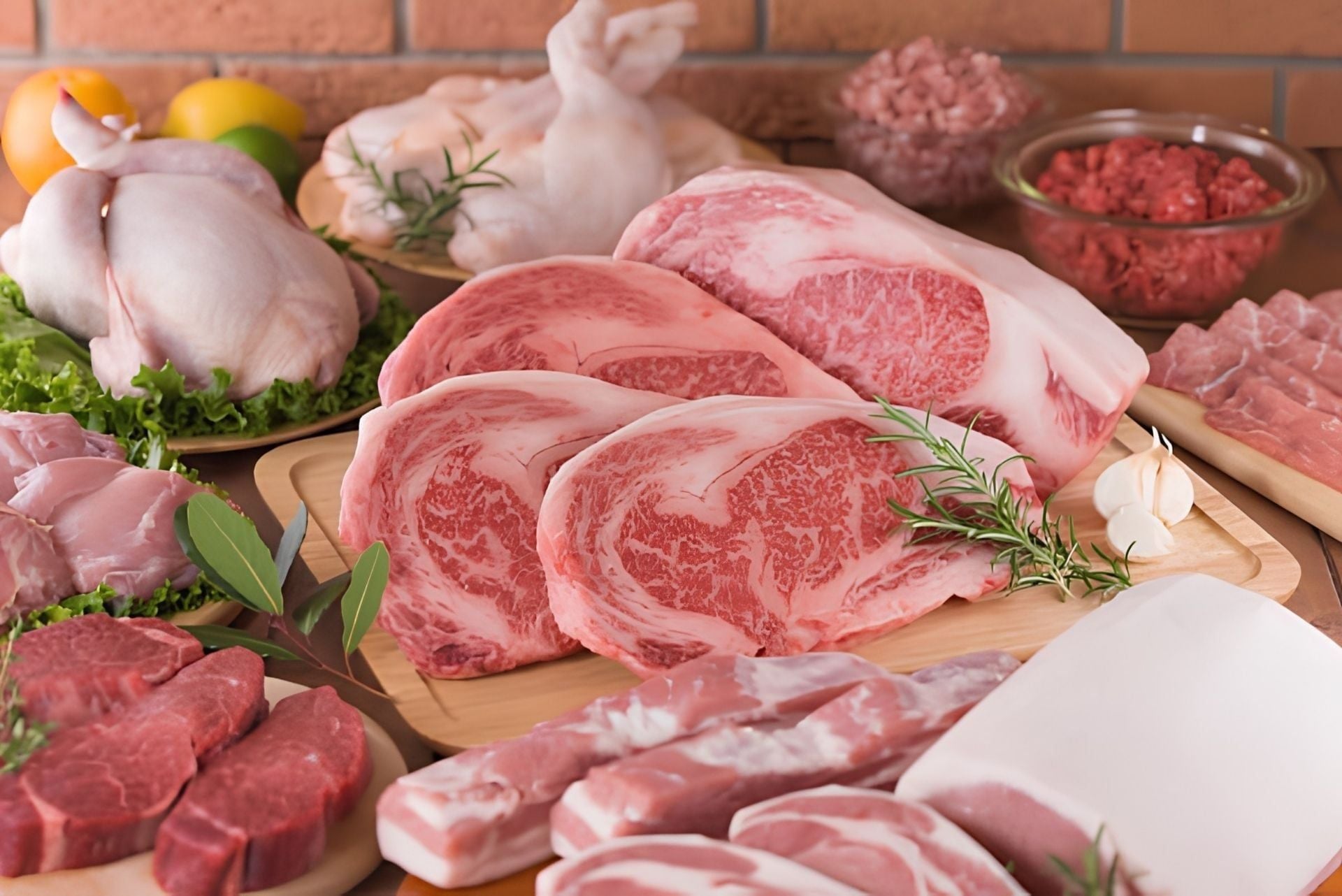
The European Union (EU) has recently promulgated Regulation 2026/1739, applying new requirements on meat designations starting August 19, 2029, with 31 terms reserved exclusively for meat and meat products. Under this regulation, according to experts, Vietnamese food enterprises exporting to the EU must review everything from product names, labels, and packaging to websites, e-commerce storefronts, and marketing materials.
The EU places meat designations under specific regulations
The EU is one of Vietnam's critical export markets. According to the General Statistics Office (Ministry of Finance), in the first eight months of 2026, Vietnam posted a trade surplus of USD 31.4 billion with the EU, an increase of 22.8% compared to the same period in 2025. Amid expanding trade flows, shifts in how products are designated and marketed in this destination impose fresh requirements on Vietnamese food enterprises, particularly those producing vegetarian goods, plant-based foods, and meat substitutes.
“Regulation 2026/1739 does not apply solely to domestic EU manufacturers. The text explicitly encompasses goods ‘imported into the Union,’ meaning merchandise imported into the EU. Therefore, Vietnamese enterprises introducing products within the regulatory scope to the EU market must account for naming mandates right from the preparation of consignments, packaging, and promotional documentation.” — Dr. Khuc Dai Long
Regulation 2026/1739 was enacted by the European Parliament and the Council of the EU on July 8, 2026, entering into force on August 18, 2026. The specific provisions concerning meat and meat product designations will apply starting August 19, 2029, creating a preparatory window for enterprises to adjust their product lines.
Under the new regulation, the term “meat” along with 31 terms denoting meat cuts and animal flesh are reserved exclusively for meat products across all marketing stages. This inventory includes names such as: beef, veal, pork, poultry, chicken, turkey, duck, goose, lamb, mutton, ovine, goat, and anatomical cut descriptors such as drumstick, tenderloin, sirloin, flank, loin, ribs, shoulder, shank, chop, wing, breast, thigh, brisket, ribeye, T-bone, rump, bacon, steak, and liver.
Notably, the regulation also restricts the use of these terms to describe certain cell- or tissue-cultured foods falling within the scope of Regulation (EU) 2015/2283.
For Vietnamese enterprises, according to Nguyen Ngoc Linh, Brand Director of Easy Export at the Institute for Sustainable Development and Digital Economy, the foremost issue requiring scrutiny is product naming when entering the EU. Products carrying labels that feature terms like chicken, beef, pork, bacon, or steak must be audited on a case-by-case basis.
According to Linh, businesses should not assume that affixing modifiers such as vegan, vegetarian, or plant-based to a product title automatically permits the use of terms reserved exclusively for meat.
Echoing this view, Dr. Khuc Dai Long (Vice Dean of the Faculty of Marketing, Thuongmai University) stressed that audits should not stop at a single line of text on primary packaging. He pointed out that product titles typically appear simultaneously on statutory labels, packaging, promotional decks, product catalogues, websites, e-commerce storefronts, advertising copy, and transactional files shared with importers and distributors.
This is particularly critical given the rapid expansion of cross-border e-commerce. “A product manufactured and packaged in Vietnam can be introduced and retailed online across the EU via diverse channels, with its name appearing across numerous touchpoints,” Dr. Long noted.
Consequently, according to the expert, if an enterprise merely adjusts the name on its physical packaging while leaving legacy designations on websites, product catalogues, or digital sales platforms, the product's identity becomes fragmented and inconsistent. Reviews must be executed synchronously across all channels accessed by EU consumers and commercial partners.
According to Dr. Long, Regulation 2026/1739 does not apply solely to domestic EU manufacturers. The text explicitly encompasses goods “imported into the Union,” meaning merchandise imported into the EU. Therefore, Vietnamese enterprises introducing products within the regulatory scope to the EU market must account for naming mandates right from the preparation of consignments, packaging, and promotional documentation.
What must Vietnamese enterprises do?
The new regulation arrives against a backdrop of broadening Vietnam–EU commercial relations. According to the European Commission (EC), Vietnam ranks as the EU’s 14th largest merchandise trading partner globally and its largest within ASEAN. In 2025, total bilateral trade in goods between the EU and Vietnam reached EUR 76 billion.
Within the agri-food sector, trade flows have maintained upward momentum. The EC reported that in 2025, EU agri-food imports touched a record EUR 188.6 billion. In the first five months of 2026, imports in this commodity group from Vietnam climbed 9%, representing an additional EUR 213 million. Over the same period, EU imports of beef and veal expanded by EUR 330 million, equivalent to a 28% increase.
These metrics illustrate the significant scale and import capacity of the EU food market. For Vietnamese enterprises, the new designation rules must therefore be treated as an integral component of overall market access criteria, alongside existing requirements on quality, food safety, traceability, and mandatory labeling information.
A notable element of Regulation 2026/1739 is its transitional mechanism. Under Article 4, products that do not comply with the new designation rules but were manufactured in the EU or imported into the EU prior to August 19, 2029, may continue to be marketed until inventory is exhausted or until August 19, 2032, whichever comes first.
According to Nguyen Ngoc Linh, for Vietnamese enterprises, the milestone of importing goods into the EU before August 19, 2029, must be factored into manufacturing, packaging, shipping, and distribution timelines. This is a critical consideration for product lines characterized by extended production, transit, and shelf-life horizons.
The expert noted that altering product names or packaging involves far more than visual redesigns. Businesses may have to liquidate pre-printed packaging inventory, amend supplier contracts, and update technical product dossiers, commercial collateral, and distribution systems. Identifying affected SKUs early will grant enterprises the runway needed to formulate orderly adjustment roadmaps.
Regulation 2026/1739 also delegates authority to the EC to adopt delegated acts granting specific exceptions for meat-reserved terms. “Exceptions may be considered where the precise nature of the product is clear from traditional, long-standing customary usage and cannot mislead consumers,” Linh noted.
Therefore, between now and the implementation date, Vietnamese exporters must continuously track administrative guidelines, detailed implementing acts, and potential exceptions issued by the EU.
According to Dr. Khuc Dai Long, preparation should begin by compiling a comprehensive catalogue of products currently exported or slated for export to the EU, identifying designations containing any of the 31 protected terms, and auditing their usage across labels, outer packaging, corporate websites, e-commerce storefronts, sales collateral, and promotional campaigns.
For vegetarian foods, plant-based items, and meat analogues, evaluations must be conducted on an individual SKU and designation basis, grounded directly in the text of the EU regulation and related implementation guidelines. A broad, uniform interpretation should not be presumed across an entire product portfolio.
Given that Vietnam exported more than USD 56 billion worth of goods to the EU in 2025, regulatory shifts taking effect in 2029 demand proactive integration into long-term market access strategies, especially for products utilizing meat-related nomenclature.
Source: Tap chi Kinh te - Tai chinh
Related Articles

Many Vietnamese agricultural products capture nearly half of Sweden’s market share
08/10/2026

Shrimp exports to the EU decelerate: How are Vietnamese enterprises adapting?
08/10/2026

Common fish transforms into an export commodity, helping Mekong Delta farmers hold their ground at home
08/10/2026

Seafood exports: Enterprises prepare for a tougher scenario
08/10/2026


