


Vinh Long’s coconuts need a "green passport" to go the distance
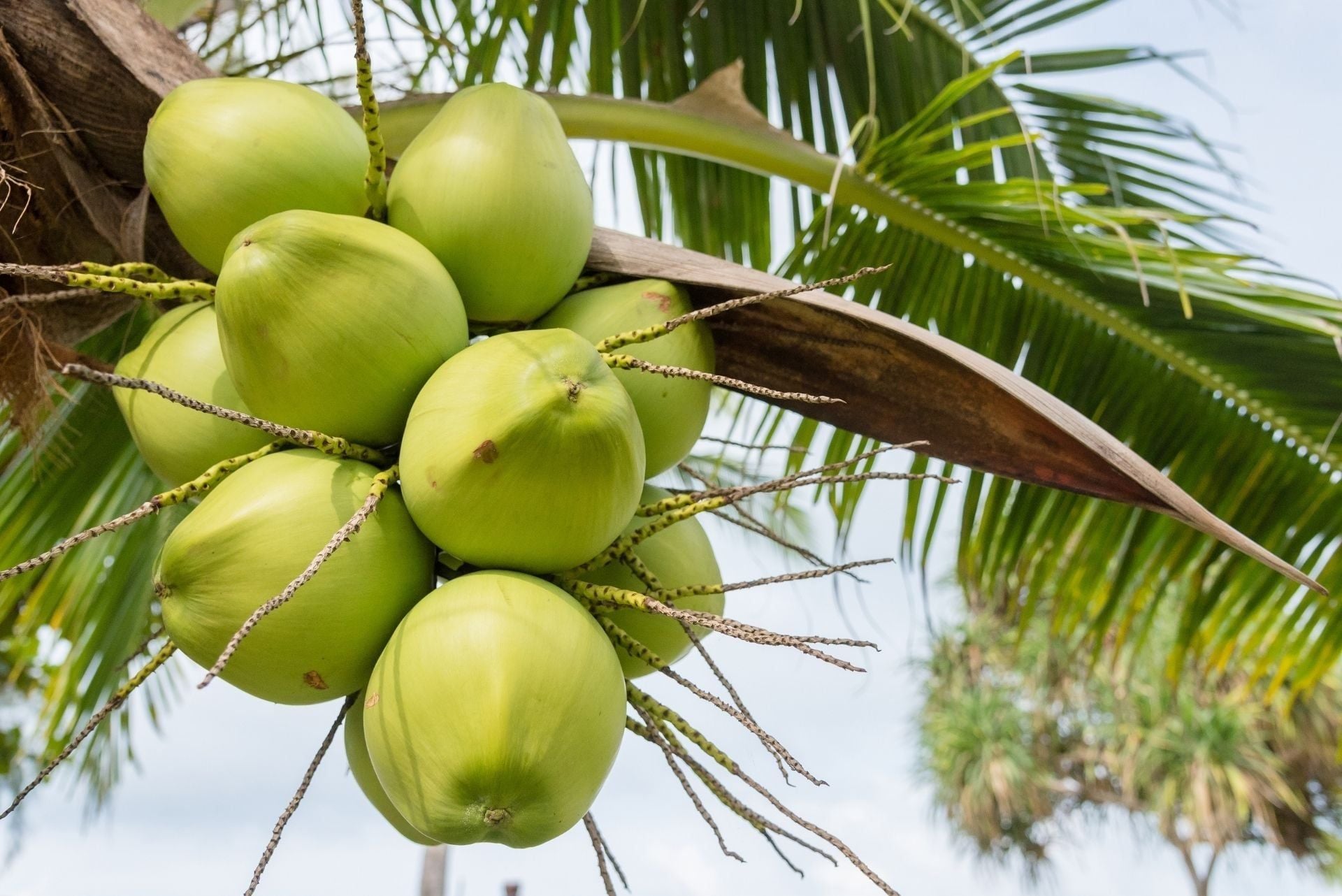
Vinh Long boasts the nation’s largest coconut-growing region alongside an array of high-value processed products. However, raw volume alone will no longer suffice unless enterprises can gain firm control over cultivation zones, traceability, food safety, and emissions.
Vinh Long’s coconut industry stands on the brink of a major transformation from a conventional agricultural commodity into a high-value export sector. Yet international market doors are increasingly lined with strict prerequisites. For businesses, retaining a trade partner can often prove just as demanding as penetrating a new market.
Vinh Long currently accounts for over 120,000 hectares of coconuts, representing more than 50% of Vietnam’s total coconut acreage. Approximately 33,000 hectares have attained organic, VietGAP, and GlobalGAP certifications, serving both domestic and international appetites.
While this represents a considerable competitive edge, transforming scale into long-term market power is not merely a question of how many hectares are planted or how many nuts are harvested.
Value unlocked across the entire chain
A single coconut can unlock value across multiple tiers of advanced processing. Activated carbon, coconut flower nectar, virgin coconut oil, coconut water, coconut milk, coconut cream, coconut candy, cosmetics, and handicrafts are substantially expanding the industry's commercial frontier.
Vinh Long has set its sights on surpassing USD 1 billion in coconut production and processing value in 2026.
To hit that target, the province is simultaneously bolstering both ends of the value chain: upgrading raw material quality and scaling up deep-processing capacity.
Tra Vinh University has been researching and selecting suitable cultivars. Associate Professor Dr. Nguyen Minh Hoa, President of Tra Vinh University, revealed that cultivating dua sap (macapuno / wax coconut) via embryo culture technology has driven the wax-flesh yield to 85% or higher, compared to a mere 30% from natural propagation.
The institution is expanding propagation via cell tissue culture alongside intensive farming techniques. Following trial phases, the variety has exhibited exceptional adaptability to local soil and climatic conditions, yielding nuts with thick meat and superior flavor profiles.
On the commercial front, Tra Bac Joint Stock Company has concentrated since 1997 on items such as desiccated coconut, frozen coconut milk, clean BBQ charcoal, anthracite, and activated carbon. According to Huynh Khac Nhu, General Director of Tra Bac Joint Stock Company, the company's Trabaco-branded activated carbon has entered Japan, South Korea, and China, earning favorable market reception.
Cau Ke Wax Coconut Processing Co., Ltd. has similarly embraced value-added deep processing. After six years in operation, the enterprise has upgraded processing lines to develop vacuum-sealed fresh wax coconut, wax coconut candies, shredded wax coconut, dried wax coconut flakes, and wax coconut cookies.
Notably, its crispy dried wax coconut snack features five natural flavors: jackfruit, durian, dragon fruit, pineapple, and butterfly pea flower. Free from chemical additives and artificial colorings while meeting stringent hygiene and food safety standards, the product has successfully penetrated the UK, US, and Japanese markets.
The market demands more
The decisive shift across global export markets is that buyers are no longer simply purchasing the physical fruit. They are buying the transparency behind it.
China—which consumes roughly 4 billion Vietnamese coconuts annually—is transitioning from bulk imports to controlled, regulated buying that prioritizes traceability, planting zone codes, and safe, sustainable production practices.
The United States, Japan, South Korea, the European Union, and the Middle East are following suit with similar rigor.
This confronts exporters with a definitive imperative: quality and compliance can no longer be checked only after the coconut arrives at the factory gates.
According to Dr. Le Hoang The, General Director of VOS Holdings, coconut production in Vinh Long remains fragmented, reliant on traditional empirical methods, and deficient in data. Meanwhile, global markets are escalating demands for end-to-end transparency and verifiable emissions metrics.
Frameworks like Carbon Footprinting along with MRV (Measurement, Reporting, and Verification) and traceability architectures are helping farmers and cooperatives optimize farm management, curb supply risks, and elevate product value.
In particular, integrated nutrient management, raising organic matter, intercropping, and mulching can lift yields and carbon sequestration capacity while trimming fertilizer inputs by 20–30% and curbing N₂O emissions.
Going the distance means maintaining trust
For export businesses, adopting green standards is no longer a matter of choice between "going green" or "business as usual." International market benchmarks are making food safety, origin tracking, and emissions thresholds non-negotiable prerequisites for sustaining trade partnerships.
Dr. Le Van Dong, Deputy Director of the provincial Department of Agriculture and Environment, emphasized that coconut is a pillar crop with substantial export value. The province is actively incentivizing local authorities, cooperatives, and agribusinesses to partner with growers in scaling up organic, VietGAP, and GlobalGAP practices tied directly to planting area codes and digital traceability.
This foundational work will dictate the long-term resilience of the industry.
To preserve ties with international off-takers, exporters must collaborate with farming communities to build stable raw material zones, regulate cultivation practices, maintain field logbooks, secure legitimate planting zone codes, and guarantee batch-level traceability on demand. Concurrently, investments must flow into deep processing to untie the industry from raw export dependence.
When these measures are implemented in unison, the true worth of a coconut will not merely be measured by the water, flesh, or oil it holds inside, but by the verifiable proof of origin, quality, and accountability across the complete supply chain.
Vinh Long already commands extensive raw material hubs, cutting-edge varietal research, capable processors, and products that have gained entry into the world's most discerning markets. The next task is restructuring the chain toward absolute transparency and low-carbon production.
That is how the coconut industry will not only cross the USD 1 billion benchmark, but, more importantly, secure enduring trust with global off-takers and deliver sustainable livelihoods for local farming communities.
Source: Tap chi Doanh nghiep va Hoi nhap
Related Articles

Many Vietnamese agricultural products capture nearly half of Sweden’s market share
08/10/2026

Shrimp exports to the EU decelerate: How are Vietnamese enterprises adapting?
08/10/2026

Common fish transforms into an export commodity, helping Mekong Delta farmers hold their ground at home
08/10/2026

Seafood exports: Enterprises prepare for a tougher scenario
08/10/2026


