


Vietnamese lobster and the billion-dollar export goal
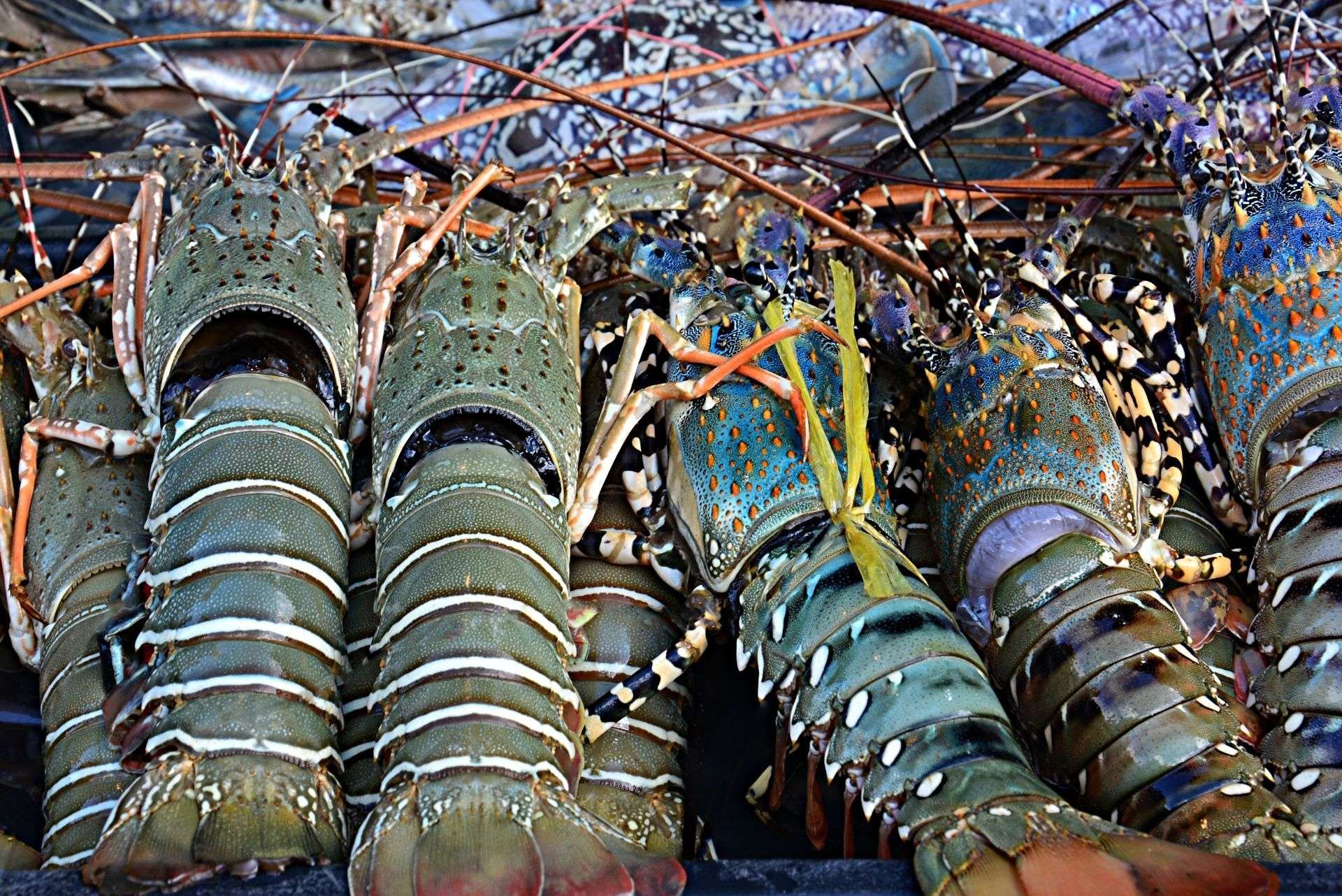
Vietnamese lobster is facing a major opportunity as market demand climbs and exports continuously set new milestones. To retain its edge, this sector must transition from hot growth to deep-level development.
Market advantages
In 2025, lobster export turnover reached USD 858 million—the highest level ever recorded. In just the first 6 months of 2026, this figure touched USD 584.6 million, up over 44% compared to the same period. If this growth momentum is maintained, the doorway to USD 1 billion is becoming increasingly clear.
However, behind these impressive numbers lies a paradox: a sector with strong market demand remains heavily dependent on external seed sources, production remains fragmented, farming areas face environmental pressure, and it relies almost entirely on a single export market.
According to a report by the Department of Fisheries and Fisheries Surveillance at the conference "Sustainable Lobster Farming and Consumption Development", the nation has approximately 303,876 farming cages, yielding around 14,537 metric tons of commercial output. Vietnamese lobster is consumed in over 20 markets. In the first 6 months of this year alone, commercial production reached an estimated 11,790 tons, equivalent to 81.1% of last year's total output.
The USD 584.6 million export turnover in the first half reflects the sector's powerful resurgence. Of this, China accounted for roughly USD 576 million, commanding almost the entire export turnover of Vietnam's lobster. The pull of this market is easily explained: massive demand for live lobster, combined with geographical proximity, gives Vietnam a distinct edge in transport time and logistics costs. On the other hand, green lobster (Panulirus homarus) in small-to-medium sizes aligns well with consumer preferences and commercial inventory turnover rates.
VASEP data reveals that in 2025, China imported around 69,800 tons of lobster, with Vietnam supplying 24,100 tons (a 34.5% market share), ranking first among tracked supply sources. While this represents a major advantage, excessive concentration in a single destination exposes the industry to a core problem: "rapid growth that must avoid over-dependence."
Within the product mix, green lobster holds a dominant role. In 2025, this commodity accounted for 98.3% of lobster export value, reaching USD 843.2 million. In the first half of 2026, green lobster continued to represent the overwhelming majority of export value to China. Consequently, future growth headroom lies not merely in farming more lobsters, but in elevating quality, standardizing farming zones, building brand equity, and diversifying export markets.
Unlocking "bottlenecks"
While target markets are opening wide doors, seed stock supply remains one of the most difficult locks to open. The country requires approximately 100 to 120 million lobster seed larvae annually, whereas domestic wild-harvested supply meets only about 8 to 12 million. Artificial breeding technology has yet to be perfected for commercial-scale deployment.
This situation leaves the farming sector significantly dependent on imported seed stock. Notably, in the first 6 months of this year, zero official, legal consignments of imported lobster seed serve commercial farming were recorded. This supply scarcity pushed seed prices up to VND 45,000–70,000 per piece, depending on species, size, and timing.
Khanh Hoa province requires roughly 60 to 70 million seed larvae per year, but local wild harvest meets only 5% of demand. In 2025, the locality imported about 33.07 million pieces; however, in the first 6 months of 2026, reported official imports stood at zero.
Mr. Hoang Anh Hao, Deputy Head of the Khanh Hoa Department of Fisheries, Sea and Islands, observed that the fundamental difficulty currently facing the farming trade is that science and technology have not yet mastered artificial seed production protocols. Meanwhile, natural wild seed resources are increasingly scarce and heavily dependent on weather and environmental factors.
This is not merely a matter of lacking a single production input. When seed larvae are scarce and expensive, production costs rise alongside elevated quality and provenance risks. Over the long term, this dependence could become a vulnerability for the entire value chain if overseas supply policies change.
Mr. Nguyen Huu Dung, Secretary General of the Vietnam Fisheries Society, noted that Indonesia is currently a crucial seed source for Vietnam. Therefore, Vietnam should research joint-venture models and invest in seed nursing facilities in Indonesia to proactively control quality and supply before bringing lobsters to Vietnam for further grow-out.
Over the long term, local authorities and technical agencies advocate establishing national-level scientific and technological programs to master artificial seed production. This will serve as a fundamental solution, reducing reliance on wild harvesting and external supplies.
"It is necessary to retrain and guide farmers on wild seed harvesting techniques to raise survival rates and ease pressure on imported seed stock. Concurrently, we must organize farming zone linkages to register origin traceability—from farming facilities and packing facilities to export entities—to ensure transparency. Long-term lobster sector development cannot rely solely on natural endowments or high selling prices. Seed stock must be controlled, farming zones planned, farmers reorganized, and enterprises deeply integrated into the value chain; farming technology, environmental management, and origin traceability must be viewed as vital links to enhance competitive capacity." — Mr. Tran Dinh Luan, Director General of the Department of Fisheries and Fisheries Surveillance.
Khanh Hoa and Dak Lak currently account for roughly 95% of the nation's commercial lobster production. Concentrated scale creates advantages for forming commercial production hubs, but simultaneously exposes the clear limitations of spontaneous growth. In certain areas, cage density remains excessive while raw fresh feed remains widely used. Accumulated organic waste, environmental fluctuations, and disease risks can erase production gains after a single harvest cycle.
For farmers, sustainability begins with the right to produce in clearly defined farming zones. Mr. Nguyen Xuan Hoa, Director of the Van Ninh Aquaculture Cooperative in Khanh Hoa, shared that the cooperative has drawn over 100 member households managing tens of thousands of cages on Van Phong Bay. However, without stable marine surface allocations, farmers lack the peace of mind to make long-term investments.
One critical shift expected to create a breakthrough for the sector is feed. Relying on trash fish, mussels, oysters, and other fresh feed aligns with long-standing habits but introduces major drawbacks regarding feed cost, quality inconsistency, disease transmission, and environmental degradation.
Dr. Mai Duy Minh from the Research Institute for Aquaculture shared that the institute has researched formulated commercial feed for green lobster and spiny lobster (Panulirus ornatus). Results indicate that both species accept commercial feed formulations. The current challenge is water stability, with feed pellets lasting about 45–50 minutes in water. The research team is working to extend this to 3–4 hours in combination with automated feeding equipment.
As international trade shifts decisively toward standards-based competition, an export lobster requires complete accompanying documentation. This includes seed origin, farming facility records, farming zone codes, grow-out logs, feed details, disease control records, food safety verification, and packaging plant registration. In particular, spiny lobster faces strict requirements to prove F2 generation farm-raised provenance to satisfy Chinese species conservation regulations. Clearing this technical barrier demands scientific dossiers, transparent data, and tight coordination among regulatory agencies, scientists, and corporate entities.
Lobster represents a key species in the national marine aquaculture development strategy. A billion-dollar target may serve as the destination, but sustainable development remains the prerequisite condition for the sector to go the distance. When farmers possess stable production zones, enterprises hold compliant supply sources, the State maintains effective management tools, and international markets observe transparency in every single lobster, the natural advantage of Vietnam's marine waters will be fully realized.
Source: Tap chi Thuy san Viet Nam
Related Articles

Purchasing power recovers, export rice prices rise sharply
12/11/2026

Vietnamese watermelons and durians gain wider access to China
12/11/2026

Will fresh agricultural products be opened as a "green channel" across the border?
12/11/2026

Agricultural products and food to the UK: Big opportunities, strict standards
11/11/2026


