


Vietnamese agricultural products before opportunities from the Halal market
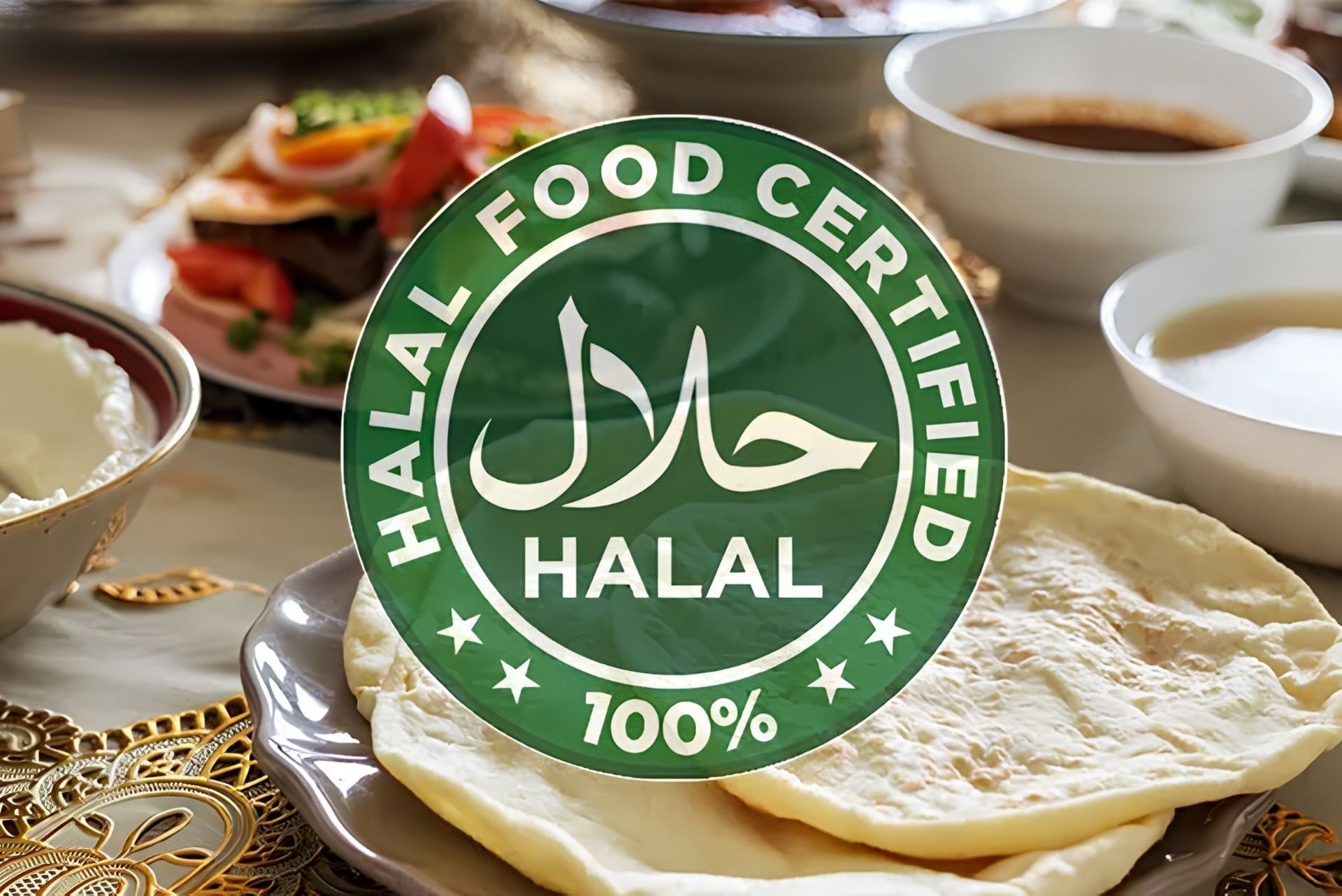
The Halal market opens up opportunities to expand exports of agricultural products, food, and the development of tourism in Vietnam. To transform potential into tangible value, it is necessary to remove certification barriers, complete institutional frameworks, and reorganize supply chains.
When supply advantages alone are not competitive enough
The Halal economy is becoming a notable development space in global trade, tied to consumer demand within the Muslim community and trends emphasizing quality, safety, and origin traceability. With advantages in agriculture, food processing, and tourism, Vietnam has many favorable conditions to participate more deeply in this market. However, to convert potential into export value, bottlenecks regarding standards, certification, and supply chain organization must be resolved.
According to DinarStandard's State of the Global Islamic Economy 2025/26 Report, consumer spending by Muslims across six real economy sectors related to Halal reached approximately USD 2.6 trillion in 2024 and is projected to rise to USD 3.56 trillion by 2029. The market encompasses not only food but also extends to pharmaceuticals, cosmetics, fashion, and Muslim-friendly tourism.
Notably, many non-Muslim majority nations such as Brazil, Australia, India, and Thailand still participate deeply in the Halal supply chain thanks to production, processing, and quality control capabilities. This demonstrates that opportunities do not lie solely in raw material advantages, but also depend on the capacity to meet standards and connect with markets.
Vietnam possesses strengths in rice, coffee, tea, cashews, pepper, fruits, vegetables, and seafood. Alongside these, the potential for coastal tourism, resort destinations, and cultural heritage creates headroom to develop services catering to Muslim travelers. However, having good quality products and competitive prices is insufficient to guarantee market access without meeting the certification requirements of importing countries.
Halal standards pertain not only to product ingredients, but also include raw material origins, additives, processing workflows, equipment sanitation, storage, transport, and origin traceability. Enterprises must control cross-contamination risks with non-permissible ingredients under applicable standards. This demands investment in technology, management procedures, and human resources.
Another barrier is the divergence among national Halal management systems. Indonesia manages certification through the Halal Product Assurance Organizing Agency (BPJPH), whereas Malaysia operates a system tied to the Department of Islamic Development Malaysia (JAKIM). Gulf markets also maintain distinct regulations regarding standards and import conditions. Consequently, certification accepted in one market does not automatically carry validity in another.
For small and medium-sized enterprises (SMEs), assessment fees, production line adjustments, and certification maintenance costs can become heavy burdens. Lacking accurate information on import regulations and accepted certification bodies easily leads to incurred costs without achieving market entry. This represents an issue that must be resolved through synchronized policies rather than relying on isolated trade promotion activities.
Completing institutional frameworks, unblocking trade flows
Practical policy dialogues with Pakistan show that cooperation between state agencies plays an important role in facilitating enterprise access to the Halal market. Issues concerning certification recognition, import conditions, and conformity assessment procedures can hardly be thoroughly resolved by relying on individual corporate efforts alone.
With its large population scale and location connecting South Asia with part of the Central Asian economic space, Pakistan is a market worthy of attention for Vietnamese goods. However, capitalizing on opportunities must be based on analyzing import demand by product category, tax rates, competitors, and actual supply capacity. The two countries need to step up legal information exchanges, connect regulatory bodies and certification agencies, and study the feasibility of recognizing Halal certification results within appropriate scopes.
This approach also needs to be deployed with Indonesia, Malaysia, and Gulf markets. Each market requires a distinct roadmap aligned with legal regulations and corporate readiness levels. The objective is not merely signing cooperation agreements, but creating measurable favorable conditions for export activities.
Vietnam has established a policy framework through Prime Minister's Decision No. 218/QĐ-TTg dated February 14, 2023, on strengthening international cooperation to build and develop Vietnam's Halal industry through 2030. The requirement now is to concrete directives into tasks with clear focal points, timelines, and measurable outputs.
First, priority must be given to international cooperation on standards and certification. Regulatory bodies need to review market-specific barriers, identify negotiation topics, and build appropriate recognition roadmaps. Concurrently, domestic assessment, testing, and certification capacities must be upgraded; experts trained; and databases established on standards, import rules, and certification bodies accepted by target markets.
Mutual recognition should not stop at signing documents. Parties need to agree on evaluation criteria, monitoring procedures, and information exchange mechanisms. Only when certification issued in Vietnam is accepted by destination country competent authorities under regulations can enterprises reduce costs and shorten market entry times.
In parallel, supply chains must be organized to meet standards from the outset. Vietnam should prioritize raw material zones and product groups with distinct advantages, linking production with processing, preservation, logistics, and origin traceability. SME support policies should focus on standards consulting, workforce training, subsidies for assessment costs based on transparent criteria, and importer matching.
Trade promotion effectiveness must also be measured by the number of standard-compliant enterprises, signed contracts, and generated export value, rather than merely counting trade fairs or business delegation trips.
In the services sector, Muslim-friendly tourism is a direction warranting attention. Vietnamese destinations can develop appropriate culinary services, maintain transparent ingredient disclosures, establish prayer spaces at high-demand locations, and build staff well-versed in traveler customs. Investments should be grounded in actual demand, avoiding fragmented spreads and ensuring service commitments can be delivered.
Unlocking the Halal market is not simply opening additional outlets for agricultural produce and food, but serves as an opportunity to upgrade national manufacturing capabilities and service quality. When certification barriers are removed, supply chains systematically organized, and support policies made substantive, Vietnam will gain additional conditions to convert its agricultural and tourism advantages into sustainable export value.
Source: Co quan Bao va Phat thanh, truyen hinh Ha Noi
Related Articles

Purchasing power recovers, export rice prices rise sharply
12/11/2026

Vietnamese watermelons and durians gain wider access to China
12/11/2026

Will fresh agricultural products be opened as a "green channel" across the border?
12/11/2026

Agricultural products and food to the UK: Big opportunities, strict standards
11/11/2026


