


The U.S. offers strong market potential, but businesses need to proactively manage risks
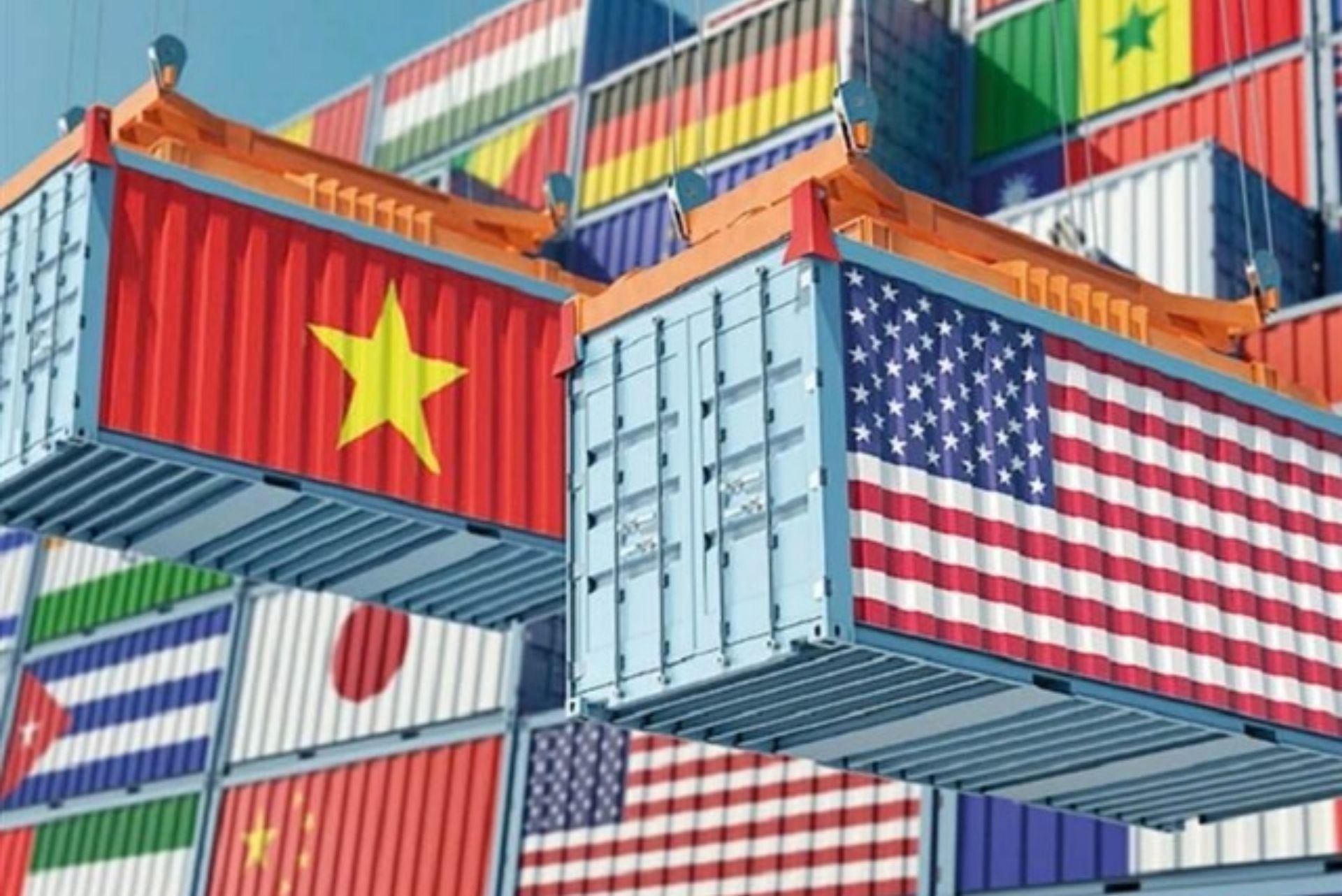
To successfully enter the U.S. market, Vietnamese businesses need to change their approach, proactively conduct market research, and carefully consider risks related to policy, quality standards, payment, and legal issues.
At the VCCI seminar “U.S. Market 2026: Opportunities, Challenges and Breakthrough Solutions for Vietnamese Businesses,” held on October 1 in Ho Chi Minh City, Mr. An The Dung, former Commercial Counselor in the United States and former Director General and Chief of Office of the National Committee for International Economic Cooperation under the Ministry of Industry and Trade, shared his views on the potential of the U.S. market and the key issues facing Vietnamese businesses.
According to Mr. An The Dung, the United States is a high-quality market. To successfully penetrate this market, Vietnamese businesses need to conduct a comprehensive analysis from three perspectives: the country, the enterprise, and the product.
At the national level, trade between Vietnam and the United States has expanded significantly. Mr. Dung noted that 20–30 years ago, when trade relations with the United States were first restored, bilateral trade turnover stood at only around USD 300 million. Following the signing of the Bilateral Trade Agreement (BTA) in 2000, trade turnover quickly surpassed USD 1 billion and subsequently grew at a rapid pace. At the time, the Ministry of Trade was frequently overwhelmed as businesses lined up to submit applications for certificates of origin (C/O).
The United States is a massive economy with total trade valued at approximately USD 5 trillion and domestic consumption reaching USD 2 trillion.
Vietnam also has an extensive network of free trade agreements that provides broad opportunities for connectivity and alternative markets across multiple regions. Among them, the Regional Comprehensive Economic Partnership (RCEP) accounts for 30% of global trade and covers 2.2 billion consumers, providing businesses with a significant alternative and complementary market.
The Comprehensive and Progressive Agreement for Trans-Pacific Partnership (CPTPP) accounts for 15% of global trade, alongside the EU-Vietnam Free Trade Agreement (EVFTA) and agreements with the Eurasian Economic Union, including Russia and Belarus. According to Mr. Dung, this network covers a substantial portion of international trade and provides strong support for Vietnam’s position in the global economy.
At the enterprise level, Mr. Dung observed that Vietnamese businesses are shifting from a “passive” to a “proactive” position.
While Vietnamese companies 10–20 years ago were often hesitant and at a disadvantage in international negotiations, accepting terms largely dictated by their partners, over approximately the past decade they have increasingly taken a more proactive role in shaping and participating in international business based on their own capabilities, strengths, and confidence.
At the product level, Mr. Dung said Vietnamese products are comparable in quality to those from major suppliers such as China and other ASEAN countries, while market perceptions and preferences toward Vietnamese goods have also improved significantly.
Mr. Dung cited a specific example from the Fancy Food Show in 2018, before the COVID-19 pandemic. Two adjacent booths were selling white turmeric products for export to the United States: one from China and the other from Vietnam.
Due to U.S. trade policies and campaigns targeting China at the time, the Chinese booth attracted relatively few visitors. By contrast, the Vietnamese booth remained busy, with visitors and transactions taking place continuously throughout the day.
Key risks businesses need to consider
In addition to these three perspectives, Vietnamese businesses need to pay particular attention to five major bottlenecks and risks commonly encountered in the U.S. market.
The first is the risk associated with unexpected changes in trade mechanisms and policies.
According to Mr. Dung, U.S. trade policy changes frequently and can be highly volatile, making continuous monitoring essential to avoid unexpected costs. He cited tariff changes under President Donald Trump as an example, with rates changing unexpectedly from 46% to 20% before an additional 12% was imposed. Businesses that fail to closely monitor such developments can easily face unexpected cost pressures.
Quality and food safety standards under the Food Safety Modernization Act (FSMA) and U.S. Food and Drug Administration (FDA) regulations are another area businesses cannot afford to overlook.
According to Mr. Dung, the United States operates one of the world’s most stringent quality inspection systems. Even a relatively minor food safety violation can have serious consequences for a business.
He cited the example of a pho restaurant in Queens, New York. In 2015, authorities ordered the establishment to close after a rat was reportedly found running through the kitchen. By 2021, the restaurant remained closed and had never been able to obtain another business license.
Business practices and payment methods are another area in which Vietnamese companies may need to adjust when dealing with U.S. partners.
Mr. Dung noted that Letter of Credit (L/C) payment is often taught as one of the safest methods in academic settings. However, insisting on L/C when negotiating with U.S. partners could result in a 70–80% likelihood of negotiations failing.
According to him, U.S. businesses often avoid L/Cs because opening them can be extremely expensive. An L/C worth USD 1–2 million with a six-month term can also significantly constrain a U.S. company’s credit limit. With alternative suppliers available in India, Thailand, and other markets, buyers may simply switch suppliers if the proposed payment method is unsuitable.
Common payment methods in the United States include D/P (Documents against Payment), under which payment is made before documents are released; D/A (Documents against Acceptance), under which the buyer accepts an obligation to pay before receiving the documents; and deferred payment or trade credit arrangements.
However, with D/A transactions, Vietnamese businesses may face the risk of having their capital tied up if contractual terms are not structured carefully.
Mr. Dung cited the case of a Vietnamese company that exported a shipment worth USD 300,000–400,000 to the United States. After receiving the goods, the buyer failed to make payment and ceased communication.
When the Vietnam Trade Office provided assistance in working with HSBC, it was discovered that the contract contained significant weaknesses relating to its open-account D/A payment terms. As a result, the Vietnamese company ultimately had to accept the loss and had substantial capital tied up for months during the pandemic because it lacked sufficient legal grounds to recover the payment.
Legal disputes and litigation costs represent another significant risk because the U.S. legal system is highly complex and legal representation can be extremely expensive.
Citing a lawyer, Mr. Dung said Vietnamese businesses should make every effort to avoid litigation in the United States because of the substantial potential financial losses and legal costs involved. When disputes arise, proactively negotiating a settlement is often the preferred approach to minimizing risks and losses.
Close monitoring of market prices and rapid supply capability are critical
Another example involved exports of face masks during the early stages of the COVID-19 pandemic.
At a time when the United States was experiencing a severe shortage of medical masks, the Vietnam Trade Office contacted suppliers in Vietnam to seek additional sources.
Vietnamese businesses offered a price of USD 17 per box, excluding taxes and fees, while ocean transportation would have taken approximately one month.
However, when the Trade Office conducted market research in Chinese communities in the United States, it found that local suppliers had already stocked the products and were selling them at retail for USD 12 per box.
According to Mr. Dung, the lesson was that Vietnamese businesses had not conducted sufficient on-the-ground research into market prices and lacked the ability to respond quickly enough to supply requirements.
Businesses can obtain information from Vietnam’s representative agencies and Trade Offices in the United States and other overseas markets. These channels can provide information on product demand, market prices, legal requirements, competitors’ capabilities, and the credibility of potential business partners.
Source: Tap chi dien tu Tai chinh va Cuoc song
Related Articles

Many Vietnamese agricultural products capture nearly half of Sweden’s market share
08/10/2026

Shrimp exports to the EU decelerate: How are Vietnamese enterprises adapting?
08/10/2026

Common fish transforms into an export commodity, helping Mekong Delta farmers hold their ground at home
08/10/2026

Seafood exports: Enterprises prepare for a tougher scenario
08/10/2026


