

Seafood exports: Enterprises prepare for a tougher scenario
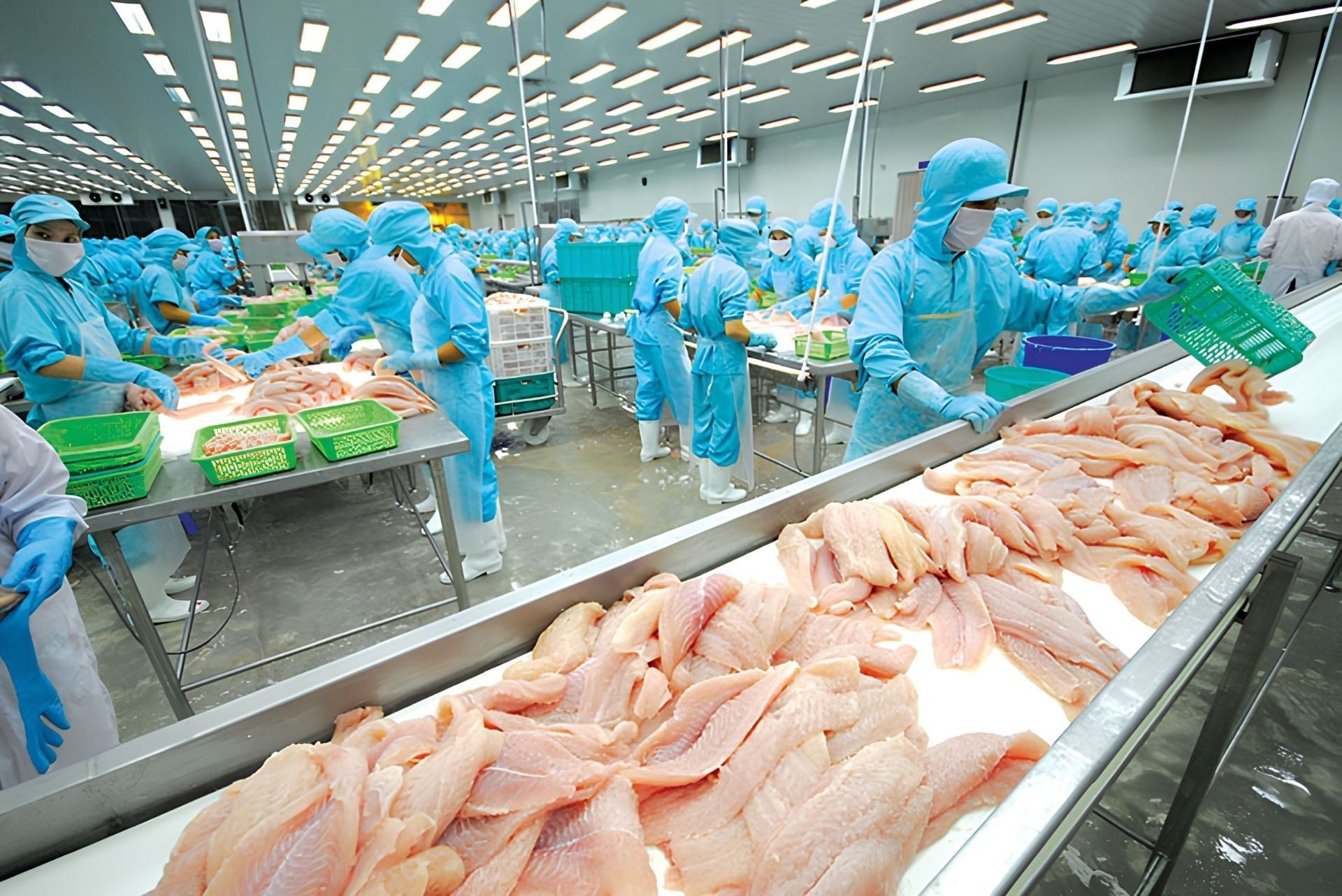
Seafood exports in the first 9 months of 2026 reached more than USD 9 billion. To achieve the USD 12 billion target, enterprises need to prepare for a tougher scenario in the closing months of the year.
Advantage from nearby markets
Seafood exports in the first 9 months of 2026 reached USD 9.103 billion, up 11.4%. Behind the two-digit increase is an increasingly clear divergence among markets: China, Hong Kong (China), and ASEAN grew strongly, while the US, the EU, and Japan all declined in September. This result shows that enterprises have capitalized on the advantage of nearby markets with reasonable logistics costs.
According to Ms. Le Hang, Deputy Secretary General of the Vietnam Association of Seafood Exporters and Producers (VASEP), seafood exports in September maintained a turnover of over USD 1.1 billion, with a higher growth rate than August. However, export value was lower than the previous month, reflecting that enterprises still maintained a large volume of transactions toward the year-end period, but the growth momentum remained uneven. Several sub-sectors increased quite rapidly, while shrimp, the product accounting for the largest proportion, only rose by 3.9%.
In particular, China–Hong Kong was the most prominent market, with September turnover reaching about USD 315 million, up 39.9%. Cumulative shipments reached USD 2.3 billion, up 33%, accounting for about one-fourth of Vietnam's seafood exports. Calculated from available data, the incremental growth from this market contributed about 62% of the entire industry's turnover increase compared to the same period.
Even so, Chinese purchasing power needs to be viewed alongside domestic supply and competing imported goods. The reopening of fishing activities in the Yellow Sea–Bohai Sea from early September has supplemented domestic seafood, while several Ecuadorian shrimp facilities regaining export eligibility increased choices for buyers. Vietnam's high growth may therefore come with price pressure.
The ASEAN market reached nearly USD 84 million in September, up 45.4%; cumulative turnover reached USD 620 million, up 21%; South Korea also rose 16.4% in the month, bringing the 9-month result to USD 652 million, up 6.1%.
With distant markets, exports decreased significantly, such as: the US market declined 3.4% in September to USD 176 million; the 9-month total reached USD 1.43 billion, up only 0.9%. According to Ms. Le Hang, supplemental tariff costs and MMPA and COA requirements continue to affect transactions. Retail demand is also polarized: canned seafood increased in sales volume, while fresh and frozen goods saw revenue gains mainly driven by price.
Notably, the EU market dropped 12.8% in September to USD 93 million; cumulative turnover reached USD 843 million, down 3%. Japan fell 13.7% in the month, causing 9-month growth to slow to just 0.8%, reaching USD 1.25 billion. The synchronized decline in these markets shows that positive signals from pangasius or processed products were not enough to lift growth across the entire commodity group.
Tough scenario for the final quarter
Following the acceleration phase in Q3, seafood exports in Q4 are projected to ease in tempo. Many purchase orders serving year-end consumption were imported and delivered early, making it difficult for supplemental replenishment demand to sustain the high levels of recent months.
According to VASEP's analysis, shrimp exports in September were estimated at USD 467 million, lifting total 9-month turnover to USD 3.75 billion, up 11%. With a share of roughly 41% of total seafood exports, shrimp performance continues to heavily influence the overall industry's results. The low increase in September also indicates that headroom for expanding orders is under pressure from supply competition and market absorption capacity.
Information released at the Global Shrimp Forum in September showed that China's shrimp imports increased faster than consumption, while EU raw shrimp imports declined and diverged across regions. In the US, sales volume of frozen shrimp in August decreased despite rising revenue. These developments mean that the export growth of Vietnamese shrimp cannot yet be viewed as a signal of synchronized recovery in global demand.
Pangasius recorded more positive results in September, reaching about USD 214 million, up 18.6%; cumulative turnover reached USD 1.74 billion, up 10.7%. Tightened supplies of certain wild-caught whitefish species are creating additional opportunities for pangasius. In Japan, Kyokuyo continuing to introduce pangasius through professional distribution channels is a noteworthy signal, even though this market remains small. Price advantage and stable supply are helping the product attract greater attention.
Ms. Le Hang stated that the export target of around USD 12 billion in 2026 can still be achieved if the closing months maintain an average of nearly USD 1 billion per month. But deceleration risks are rising, especially if purchasing power in the US fails to recover, early November shrimp tariff determinations prove unfavorable, or IUU and MMPA documentation continues to delay shipments.
Enterprises exporting to the US need to calculate total tax liabilities by each product line and legal entity, avoiding using an average tax rate across the entire business plan. Contracts should clearly stipulate responsibilities when tariffs change, timing of obligation determination, price adjustment mechanisms, and sharing of incurred costs.
For shrimp, at least two scenarios should be formulated ahead of the early November results, while avoiding hoarding inventory without guaranteed off-takers. For pangasius, there is a need to pivot faster toward the EU, the Middle East, ASEAN, and alternative whitefish segments. For wild-caught seafood, IUU, MMPA, and traceability documentation must be verified right from raw material procurement.
Given rising raw material prices, feed costs, and compliance expenditures, chasing turnover through price discounting will spread risks from the marketplace into corporate finances. The priority for Q4 is therefore not merely securing additional purchase orders, but selecting orders with controllable tariffs, documentation, receivables, and profit margins.
China–Hong Kong and ASEAN continue to support exports, but can hardly offset in full the slowdown across the US, the EU, and Japan. Q4 results are likely to be lower than Q3; full-year exports may still surpass the previous year, though the growth rate will narrow significantly compared to the two-digit pace of the first 9 months.
To assist enterprises in networking and information sharing, starting October 1, 2026, the VASEP Trade Opportunity Portal officially entered into operation, becoming a dedicated connection channel for VASEP member enterprises, helping members proactively share demand, introduce products and services, and seek suitable cooperation opportunities.
Source: Tap chi Kinh te - Tai chinh
Related Articles

Purchasing power recovers, export rice prices rise sharply
12/11/2026

Vietnamese watermelons and durians gain wider access to China
12/11/2026

Will fresh agricultural products be opened as a "green channel" across the border?
12/11/2026

Agricultural products and food to the UK: Big opportunities, strict standards
11/11/2026