


Resolving logistics bottlenecks, expanding markets for Vietnamese agricultural products
The Agency of Foreign Trade (Ministry of Industry and Trade) has just issued a document responding to recommendations from commodity associations regarding issues of logistics costs, maritime transport, market development, and improving the efficiency of trade promotion.
According to Document No. 1096/XNK-NH dated August 22, 2026, of the Agency of Foreign Trade, associations reflected many difficulties that are directly impacting the competitiveness of export enterprises, prominent among which are rising maritime transport costs, dependence on foreign shipping fleets, and limitations in accessing international markets.
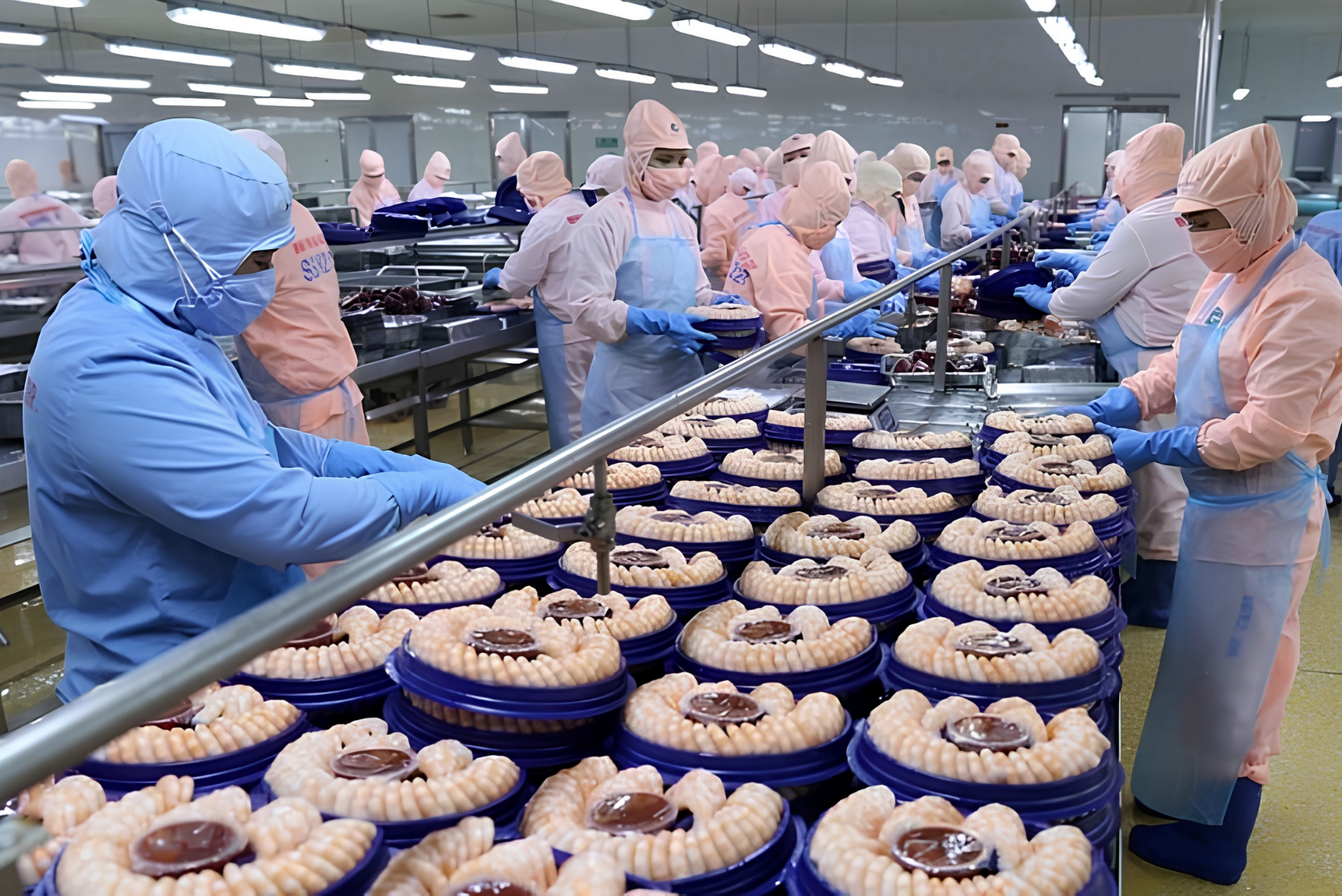
Among them, the Vietnam Association of Seafood Exporters and Producers (VASEP) stated that currently logistics costs, especially ocean freight rates, are one of the factors reducing the competitiveness of Vietnamese seafood.
According to the Association, from mid-June 2026, ocean freight rates increased significantly.
Freight rates to the US East Coast increased by about 2,000 – 3,000 USD/container, the US West Coast increased by more than 1,000 USD/container, while freight rates to Europe were at around 800 – 1,200 USD/container.
For that reason, VASEP proposed researching a program to reduce logistics costs for agricultural, forestry, and aquatic products; simultaneously developing Vietnam's container fleet and refrigerated container fleet in order to step-by-step reduce dependence on foreign shipping lines, increase proactiveness in transporting export goods, and enhance the capability to respond to market fluctuations.
Responding to the recommendations, the Agency of Foreign Trade stated that relevant ministries, sectors, and agencies are deploying many solutions to resolve logistics difficulties.
The Ministry of Industry and Trade is implementing Decision No. 2229/QD-TTg dated October 9, 2025, of the Prime Minister on the Strategy for developing Vietnam's logistics services for the 2025–2035 period, with a vision to 2050.
The focus is on completing logistics infrastructure, reducing the proportion of logistics costs, elevating supply chain efficiency, and improving the competitiveness of enterprises.
At the same time, functional agencies also continue to research mechanisms to support enterprises in developing a maritime fleet for cargo transport, especially container ships.
The Agency of Foreign Trade also emphasized that it will strengthen connections between production regions and the seaport system, border gates, and logistics centers in order to reduce goods circulation costs.
Simultaneously, coordinate with ministries, sectors, and localities in planning, mobilizing resources to invest in warehouses, bonded warehouses, and specialized infrastructure serving export commodity sectors.
Regarding recommendations on supporting enterprises in market development, which is being strengthened in the context of volatile global trade, rising protectionist trends, and markets increasingly tightening standards, the Agency of Foreign Trade stated that the system of Vietnam Trade Offices abroad is required to regularly update regulations on SPS/TBT, quality, imports, trade remedies, and new standards, thereby providing information, early warnings, and supporting enterprises in removing barriers when exporting.
Market matching activities have also shifted strongly toward introducing Vietnamese goods into international distribution systems.
The Vietnam International Sourcing (VIS) program is evaluated by the Ministry of Industry and Trade as a typical model, connecting international distribution corporations and buyers with domestic enterprises.
The scale of VIS increased from about 200 enterprises coming from 30 countries and territories in 2023 to 450 delegations from 60 countries and territories in 2025.
In 2025, there were more than 400 Vietnamese enterprises participating with about 12,000 products, organizing about 3,000 B2B meetings.
Alongside that, in the coming period, market development work will continue to be diversified.
Besides key markets such as the United States, EU, China, Japan, and South Korea, the Ministry of Industry and Trade orients expansion into the Middle East, South Asia, Africa, Latin America, Eastern Europe, and niche markets
Regarding proposals to reduce production and logistics costs for export agricultural products, the Agency of Foreign Trade stated that it will continue coordinating with ministries, sectors, and localities to promote the program to reduce logistics costs for key agricultural, forestry, and aquatic commodities; optimize supply chains, reduce warehousing, storage, and road transport costs, especially on the North – South route.
Units under the Ministry will also coordinate to attract investment, plan the system of warehouses, bonded warehouses, inspection centers, and specialized warehouses in key raw material regions.
Simultaneously, research mechanisms to encourage the formation of integrated logistics supply alliances, thereby optimizing resources and elevating supply chain efficiency.
The Ministry of Industry and Trade also orients accelerating digital transformation, building smart border gates, and developing multimodal transport, thereby step-by-step forming a specialized logistics system for export goods.
The ultimate goal is to reduce costs, enhance competitiveness, and create further conditions for Vietnamese goods to expand into international markets.
Source: Tap chi Thuy san Viet Nam
Related Articles

Many Vietnamese agricultural products capture nearly half of Sweden’s market share
08/10/2026

Shrimp exports to the EU decelerate: How are Vietnamese enterprises adapting?
08/10/2026

Common fish transforms into an export commodity, helping Mekong Delta farmers hold their ground at home
08/10/2026

Seafood exports: Enterprises prepare for a tougher scenario
08/10/2026


