


Enhancing agricultural export value
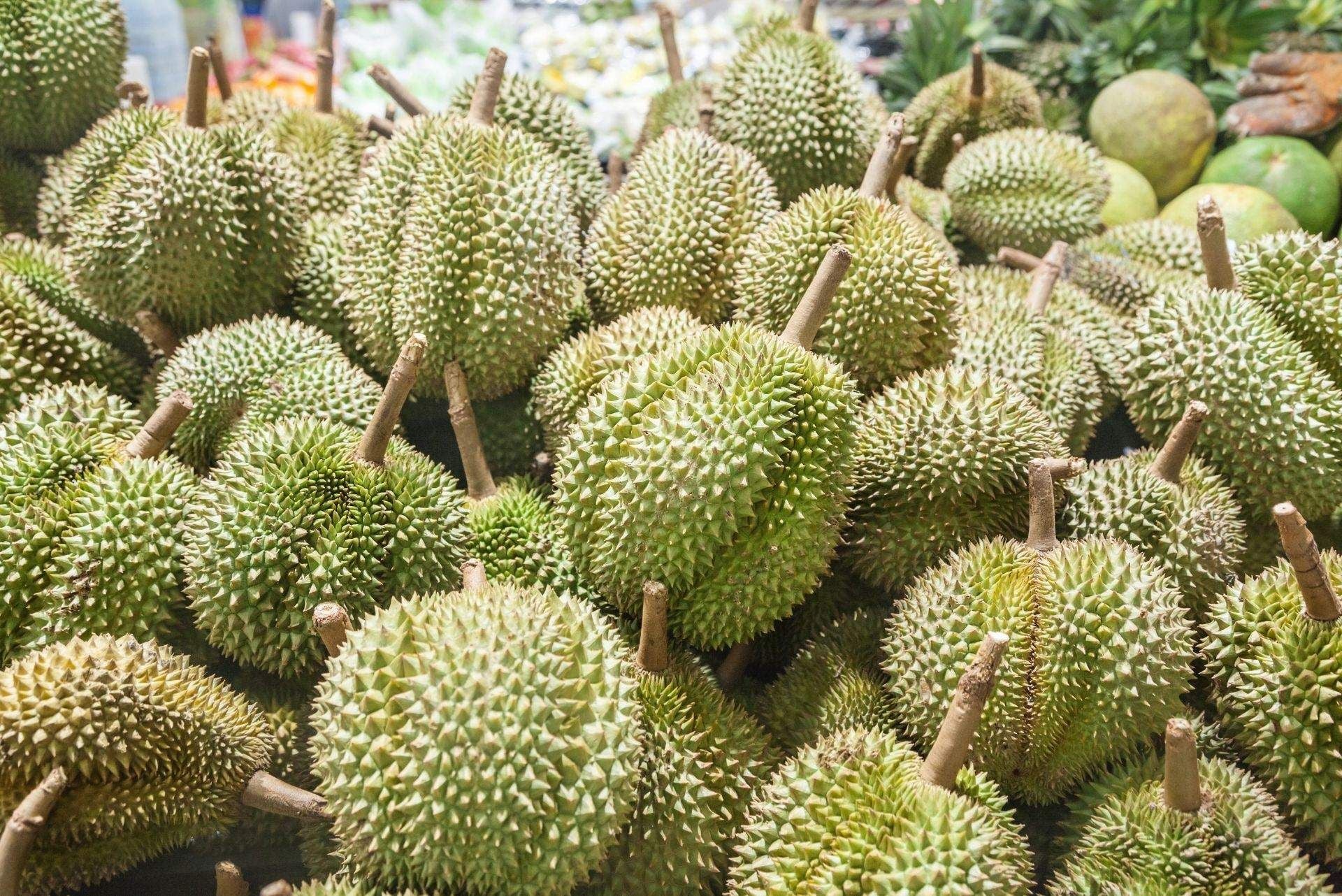
In the final months of the year, durian and Vietnamese agricultural commodities enter peak export season, making major contributions to growth. Requirements regarding quality, origin traceability, and deep processing are becoming increasingly stringent to retain market share. The agricultural sector is focusing on diversification and value addition to accomplish its goal of over USD 74 billion in 2026.
In the closing months of the year, durian enters its peak export season. Leveraging strong production yields, the "king of fruits" continues to contribute significantly to growth within the fruit and vegetable category.
However, as opportunities expand, requirements regarding quality and origin traceability capabilities become far more demanding. Past issues concerning Auramine O (vàng ô) and cadmium chemical residue contamination across previous harvest seasons have served as critical lessons for growers, enterprises, and regulatory authorities.
The mandate to hold market share through quality
In the fruit hub of Dong Thap province, adhering to production standards, controlling input materials, and satisfying import market mandates are top priorities. Mr. Nguyen Van Dien, an orchardist in My Thien commune, noted that growers must exercise extreme caution when selecting fertilizers, strictly minimizing factors that risk food safety.
According to Mr. Nguyen Thanh Long, Deputy Chief of Office of the Thanh Hung Commune People's Council and People's Committee (Dong Thap), local authorities directed specialized units—particularly the Economic Division—to coordinate with provincial functional agencies to educate and guide farmers toward increasing organic input usage, limiting chemicals, and adopting biological models. The commune currently holds 26 Unit Land Area Codes (PUCs) covering approximately 1,600 hectares. In the coming period, local authorities aim to develop an additional 24 growing zone codes to serve official-quota exports and elevate grower incomes.
Expanding growing zone codes is not merely a matter of completing export paperwork. It represents a fundamental shift from fragmented production toward organized raw material zone management, enabling regulatory bodies and enterprises to maintain far superior governance over cultivation, harvesting, packaging, and origin traceability. This stands as a mandatory requirement from consumption markets.
Real-world conditions demonstrate that agricultural exports face a dual mandate: capitalizing on market demand to drive growth, while proactively mitigating risks arising from shifts in technical standards, food safety regulations, and import policies.
Mr. Ngo Hong Phong, Director of the Department of Quality, Processing and Market Development (Ministry of Agriculture and Environment), evaluated that export figures for the first nine months serve as a solid foundation for achieving full-year targets. Notably, the proportion of facilities satisfying food safety compliance conditions continues to hold stable at a high level of approximately 94%. The Department is actively preparing to amend the Food Safety Law and draft a master plan to unify local food safety management under a single authority.
Meanwhile, a representative from the Department of Fisheries and Fisheries Surveillance stated that during the first nine months of 2026, total fisheries output reached 7.89 million metric tons, accomplishing 78.1% of the annual plan and increasing 3.9% year-on-year. Export expansion must be paired with quality management, origin traceability, and sustainable production practices. Alongside production outcomes, controlling Illegal, Unreported, and Unregulated (IUU) fishing remains a vital requirement to elevate the reputation of Vietnamese seafood.
Currently, the sector manages 80,073 fishing vessels nationwide. The installation rate of Vessel Monitoring Systems (VMS) on fishing vessels measuring 15 meters or longer has reached 99.7%. An interconnected data management system bridging central to local authorities has been operationalized, supporting vessel location tracking, pinpointing non-compliance hotspots, and auditing catch certificate issuance statuses at fishing ports.
These concerted efforts demonstrate that the competitiveness of agricultural, forestry, and fishery products is dictated not solely by volume or selling prices, but hinges fundamentally on supply chain governance capacities and the ability to fulfill import market benchmarks.
Deep processing and market diversification
According to consolidated data from the Ministry of Agriculture and Environment, agricultural, forestry, and fishery exports in the first nine months of 2026 reached approximately USD 56.3 billion, equivalent to 75.9% of the full-year target. To achieve the USD 74.212 billion target, the agricultural sector must sustain high growth momentum in the fourth quarter while capitalizing on surging consumer demand during year-end, holiday, and Lunar New Year periods across major markets.
The Ministry of Agriculture and Environment determined to maintain growth momentum across wood and wooden products, seafood, and fruit and vegetable categories. Concurrently, the ministry will resolve operational bottlenecks for sectors lagging behind targets. Key primary markets—such as China, the United States, Japan, and the European Union (EU)—remain central priorities, alongside exploring emerging opportunities in the Middle East and the Americas.
Mr. Tran Gia Long, Deputy Director of Financial Planning (Ministry of Agriculture and Environment), noted that alongside immediate export promotion, a vital requirement is restructuring commodity sectors, reorganizing production and market distribution, and focusing on areas possessing remaining growth headroom. This serves not only as the solution to complete the 2026 plan, but also builds the foundation for the upcoming development cycle.
Mr. Ngo Xuan Nam, Deputy Director of the Vietnam SPS Office, emphasized that market diversification must be paired with exploiting processed products, as this path yields higher value addition for agricultural produce. For durians, alongside fresh fruit exports, items such as dried durian, durian pastries, and other processed lines require targeted attention to broaden off-take channels.
In practice, fresh fruit exports remain highly vulnerable to seasonal harvests, shelf-life limitations, and cold-chain transport constraints. Conversely, frozen items, purees, dried products, or food-industry raw material formulations extend shelf life, relieve off-load pressures during concentrated harvest periods, and broaden access across diverse consumer segments.
Efforts deployed from now through the end of the year across the agricultural sector do not aim merely at hitting the target figure of over USD 74 billion in 2026 exports. The far greater challenge lies in the ability to retain market share, raise the value generated per product unit, and integrate Vietnamese agricultural commodities far deeper into global value chains.
Source: Bao Nhan Dan dien tu
Related Articles

Purchasing power recovers, export rice prices rise sharply
12/11/2026

Vietnamese watermelons and durians gain wider access to China
12/11/2026

Will fresh agricultural products be opened as a "green channel" across the border?
12/11/2026

Agricultural products and food to the UK: Big opportunities, strict standards
11/11/2026


