


Durian prices surge sharply
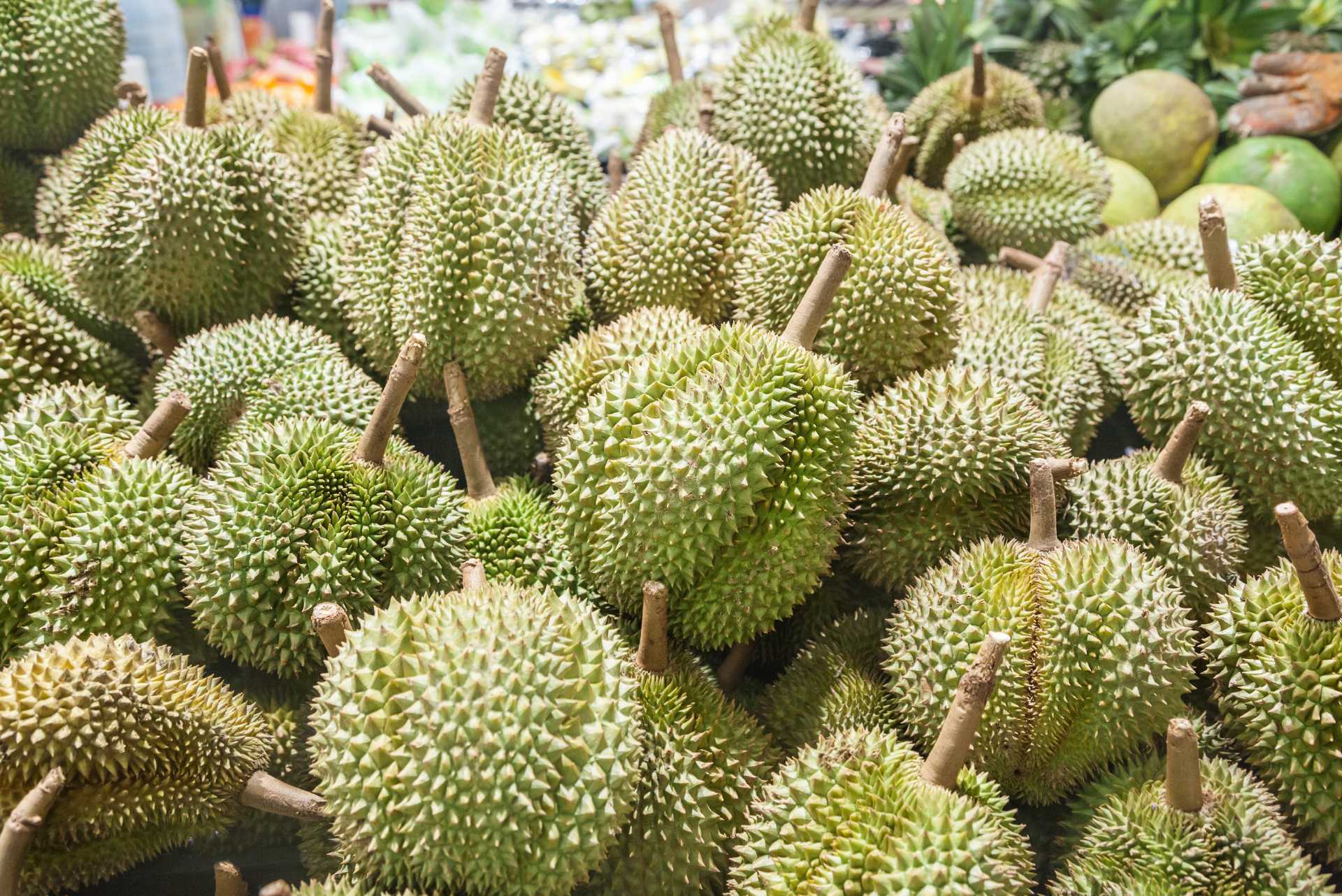
Durian prices in Dak Lak have jumped 20–30% over the past week following months of steep declines, pushing special-grade selections up to VND 100,000 per kilo at warehouses.
At several collection depots in Dak Lak, premium-selected Monthong—featuring vibrant yellow flesh, sweet flavor, green husks, well-spaced spines, and uniform round shapes—currently commands VND 100,000–105,000 per kilo. Grade A fruit (2.7 locules) has risen to VND 90,000–95,000, while Grade B hovers around VND 60,000–70,000. Compared to last month, these price points reflect a 20–30% increase.
This upward momentum follows a prolonged downward trend. Starting in early May, as supply expanded, durian prices fell continuously, with Grade A shipments dropping at times to about VND 60,000 per kilo at warehouses, equivalent to VND 45,000–50,000 per kilo at the farm gate.
For late-harvest orchards, rising prices offer growers greater flexibility in timing their sales. Mr. Hoa, owner of a 0.5-hectare durian farm in Dak Lak, shared that traders recently offered a deposit based on VND 70,000 per kilo—roughly 20% higher than in August. However, he declined the deposit as his harvest is scheduled for early October.
"As harvest day approaches, I will sell at market price to avoid dependency," he said.
According to Ms. Phuong, a trader in Dak Lak, prices are climbing because many growing regions have finished their seasons, whereas Dak Lak still has fruit, though harvesting volumes vary unevenly across farms. Frequent rains have also caused some fruit to fall short of standards, shrinking the supply of qualified produce.
Diminishing supplies coincide with a surge in purchasing demand from China. Le Anh Trung, Chairman of the Dak Lak Durian Association, noted that export enterprises are stepping up procurement to gear up for China’s Mid-Autumn Festival and National Day (October 1). With market-ready volumes no longer abundant, purchasing prices have been driven upward.
Nevertheless, total seasonal supply remains quite substantial. According to Trung, Dak Lak has harvested only about 40% of its yield, and the harvest season could stretch into mid- or late November.
This year, the province’s durian output is projected at roughly 500,000 metric tons, up about 20% year-on-year. Consequently, prices may continue fluctuating depending on harvest volumes and buying demand through the final months of the season.
Trung also cautioned that persistent rainfall could impact fruit quality during the remainder of the season. He recommended that farmers prioritize partnering with reputable export enterprises capable of stable procurement, as market prices remain subject to periodic shifts.
Source: VnExpress
Related Articles

Many Vietnamese agricultural products capture nearly half of Sweden’s market share
08/10/2026

Shrimp exports to the EU decelerate: How are Vietnamese enterprises adapting?
08/10/2026

Common fish transforms into an export commodity, helping Mekong Delta farmers hold their ground at home
08/10/2026

Seafood exports: Enterprises prepare for a tougher scenario
08/10/2026


