


Deep processing: The golden key shaping the status of Vietnamese agricultural produce
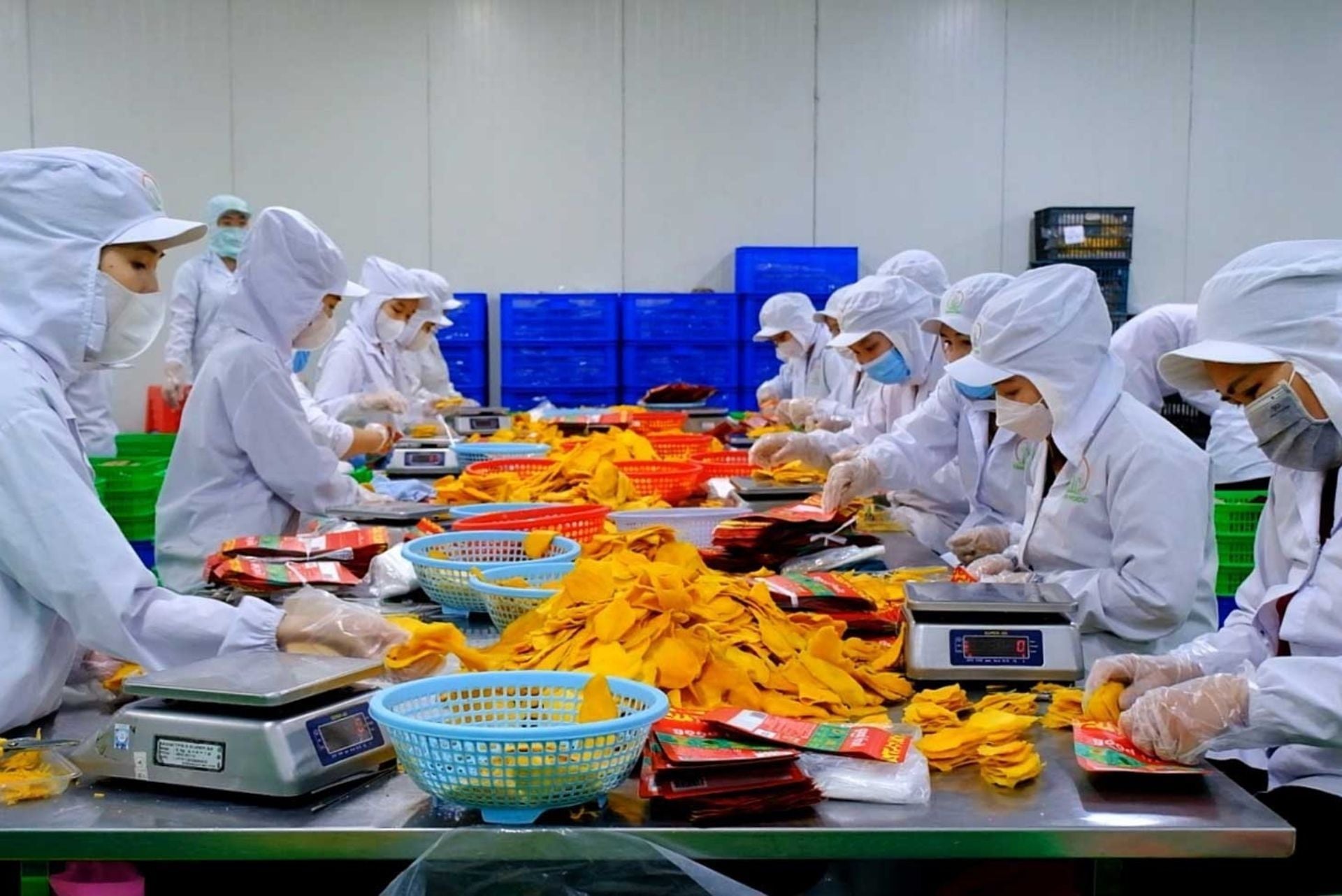
Vietnamese agricultural produce continues to struggle with the paradox of "bumper crops, plummeting prices" due to its heavy reliance on raw exports. Accelerating deep processing is the decisive pathway to unlocking value addition, broadening export markets, and elevating the national agricultural brand.
The raw export spiral and the post-harvest loss dilemma
According to the Ha Noi Moi Newspaper, despite standing as an agricultural export powerhouse, Vietnam remains trapped in a vicious cycle of "bumper crops, plunging prices" and thin profit margins driven by raw material exports. Consequently, deep processing is regarded as a matter of survival for the sector. Currently, the lion's share of Vietnam’s agricultural exports still leaves in raw form, severely capping value addition compared to international peers. Compounding this, post-harvest losses across key staples—such as rice, seafood, and fruits—remain staggering, as exemplified by Dak Lak Province, the nation’s epicenter for high-value export crops.
Dak Lak currently boasts over 217,000 hectares of coffee, yielding more than 580,000 metric tons per year; nearly 29,000 hectares of pepper, producing over 82,000 tons annually; and 76,000 hectares of fruit orchards, representing nearly 21% of its perennial crop acreage. According to the Dak Lak Department of Industry and Trade, while the province's deep processing rate outpaces the national average, it still stands at a modest 10–20%, while raw exports account for approximately 80%. Over-reliance on fresh and raw shipments leaves the entire supply chain acutely vulnerable to technical trade barriers and global market gyrations.
In Hanoi, high-value-added export lines—such as processed foods, OCOP specialty products, and agro-based handicrafts—are capturing an expanding share, signaling a sound direction in sectoral restructuring. Nevertheless, the capital’s deep processing rate stands at only around 30%, with the bulk of produce still marketed fresh or minimally processed.
Consequently, the city is encouraging enterprises to invest in advanced processing technologies, including drying, freezing, smart packaging, and convenience food processing. Simultaneously, it is developing agro-logistics hubs and cold-storage networks to curtail post-harvest waste. Experts note that with agricultural land availability capped, priorities must pivot to boosting productivity, upgrading quality, and establishing raw material zones closely linked with deep processing to capture higher value. Deep processing not only lifts output efficiency, but also unlocks the latent capacity required to deliver export targets for the 2026–2030 period.
Integrated value chains and technology forging the future
To break out, Vietnam must leapfrog by investing in processing technologies on par with regional and global benchmarks, synchronized with zoned raw material belts. From operating procedures to industrial machinery, everything must aim for superior value addition—cutting post-harvest losses by even 10% translates into enormous economic returns. Furthermore, accelerating deep processing not only lifts export turnover, but also diversifies destination markets, mitigates reliance on raw commodities, and sharpens agility against global market swings.
Evidence demonstrates that shipping raw materials yields low added value and prevents enterprises from forging enduring brand equity. Conversely, through deep processing, a single agricultural commodity can spawn diverse product lines, widening market reach and expanding profit margins. Speaking from operational practice, Nguyen Manh Hung, CEO of Nafoods Group, shared that deep processing serves as a strategic lever enabling Vietnamese farm produce to overcome its two greatest constraints: geographical distance and shelf life.
Modern processing technologies do more than extend shelf life and alleviate freight bottlenecks; they propel agricultural products into premium markets in forms that command superior economic value. Moreover, deep processing acts as a vital "shock absorber," shielding farmers from market volatility and climate risks. Dr. Dang Kim Son, former Director of the Institute of Policy and Strategy for Agriculture and Rural Development, emphasized that reinforcing value chain linkages and coupling farm production directly with processing and distribution is an existential prerequisite for modern agriculture.
For deep processing to evolve from isolated models into a systemic growth engine, Dr. Son argued for the cultivation of a tightly integrated tripartite ecosystem uniting the State, enterprises, and scientists. In this model, the State serves as an enabler by enacting policies that resolve land and infrastructure bottlenecks, investing heavily in logistics infrastructure, and streamlining green credit mechanisms to embolden corporate technology investments. Enterprises must sit at the core, spearheading technological innovation and investing in large-scale, world-class processing complexes. Transitioning toward circular agriculture and maximizing byproduct utilization will optimize workflows while safeguarding natural capital.
Concurrently, scientists serve as vital partners, transferring technical advances, deploying digital tools, and leveraging blockchain to drive transparency, ensuring Vietnamese produce satisfies the world's most exacting standards. Deep processing is precisely the golden key to redefining the standing of Vietnamese agriculture. When each peppercorn and coffee bean is no longer treated as a raw commodity but as a refined end-product, farming livelihoods will be secured sustainably and the national brand firmly consolidated.
Source: Tap chi Thuong hieu va San pham
Related Articles

Many Vietnamese agricultural products capture nearly half of Sweden’s market share
08/10/2026

Shrimp exports to the EU decelerate: How are Vietnamese enterprises adapting?
08/10/2026

Common fish transforms into an export commodity, helping Mekong Delta farmers hold their ground at home
08/10/2026

Seafood exports: Enterprises prepare for a tougher scenario
08/10/2026


