

Common fish transforms into an export commodity, helping Mekong Delta farmers hold their ground at home
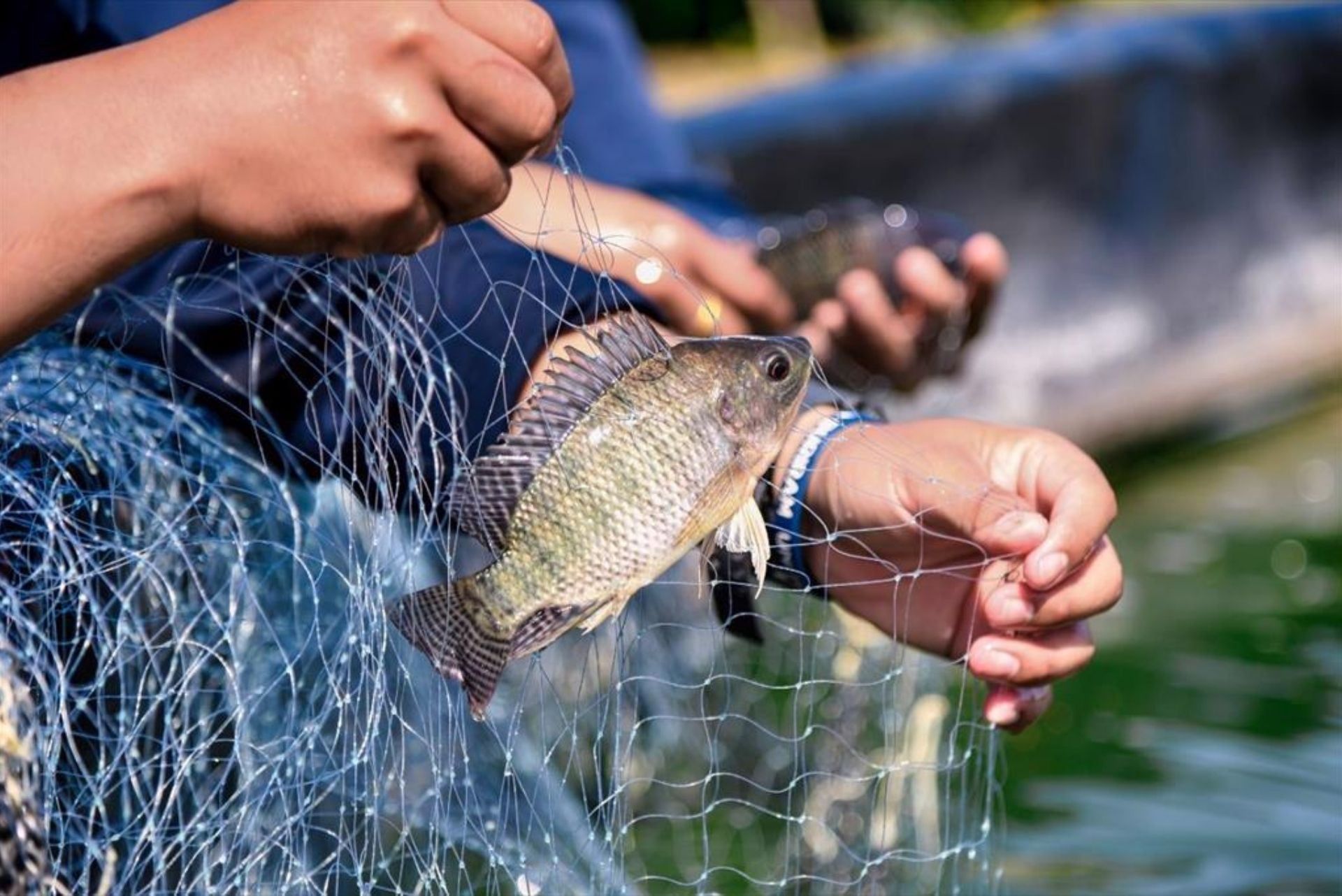
Tilapia, once considered a common everyday fish, has now risen to export stature, delivering steady incomes. Guaranteed offtake supply-chain linkages in Can Tho are thoroughly resolving the rural employment puzzle for local farmers.
Early morning sunlight stretches across the countryside of Giong Chat hamlet as Tran Van Chau carefully checks the aeration system in the tilapia farming ponds. Looking at his composed demeanor and stable current job, few would suspect this man, born in 1973, once struggled through a long stretch of precarious casual labor. The milestone turnaround originated with the tilapia itself—an aquatic species once viewed as commonplace that is now evolving into a new export spearhead for Can Tho.
Magnet keeping workers anchored to their homeland
Agricultural restructuring is not measured solely by macroeconomic growth metrics; it manifests tangibly in the rice bowls of individual households. Developing intensive tilapia farming models geared toward export has directly created a new rural employment segment. Farmers no longer face the imperative to migrate to major urban centers in search of a livelihood.
Directly managing farming ponds with a monthly wage of VND 8 million, Chau serves as a vivid illustration of this change. "I am very satisfied with this work; every day I inspect the ponds, feed the fish, and turn on the aeration. Living nearby makes commuting very convenient. Looking at healthy fish, I cannot hide my pride for our local farmers," Chau shared regarding his current daily routine.
Beyond generating employment for manual laborers, the pull of this emerging sector is also inviting educated youths to return. Tran Cong Vinh, a bachelor born in 2003 who recently graduated in Aquatic Pathology from Can Tho University, declined opportunities to remain in the city to commit himself to local tilapia farming operations. The Gen Z youth brings university knowledge to continue researching and optimizing farming protocols.
"Having finished my studies without needing to go elsewhere, I want to apply my knowledge right in my homeland for development," Vinh affirmed of his choice.
Deciphering the cost puzzle and guaranteed offtake linkages
The fish farm where Chau and Vinh work is managed by Truong Thanh Hoang. This represents one of the clean production models highly commended for sustainability by the Department of Agriculture and Rural Development of Can Tho City. The success of this model lies in resolving the perennial paradox of Vietnamese agriculture.
Years ago, tilapia farming was largely small-scale and spontaneous, leaving farmers vulnerable to recurring boom-and-bust price cycles. This bottleneck has now been cleared as large enterprises enter the field, proactively underwriting and purchasing all output. Backing from commercial off-take contracts allows farmers to confidently apply science and technology. The upgraded husbandry process has lowered production costs to an optimal level of VND 27,000 per kilogram of commercial fish.
Hoang's facility currently maintains 10 large and small ponds in continuous operation. With a growth cycle spanning roughly 4.5 months, fish reach standard harvest sizes of 500 to 600 grams per piece. Each pond yields between 30 and 35 metric tons at harvest, ensuring steady profit margins to reinvest and pay wages for farmhands.
New export axis for the Western capital
The livelihood landscape built on tilapia is gradually expanding across the broader region. According to data from the Department of Agriculture and Rural Development of Can Tho City, brackish water tilapia farming acreage in the area has maintained a steady trajectory over the 2021–2025 period. In the first 9 months of 2026 alone, the entire city stocked 2,310 hectares of tilapia alongside 80 cages of red tilapia.
Cultivation methods have also been diversified to adapt to climate change and specific local soil conditions. Farmers utilize approaches ranging from low-density polyculture in garden ditches and cage farming along river routes in Thot Not, Cai Rang, and Hung Phu, to rotational farming with shrimp in brackish water zones. Consequently, total harvested tilapia production reached 2,800 tons. Average intensive farming yields touched 35 tons per hectare, while cage farming delivered 7 to 8 tons per cage.
Amid growing global consumer demand for tilapia fillets, Can Tho is seizing the opportunity to convert this commodity into a new-generation billion-dollar export sector. The harmonious combination of natural endowments, science and technology application, and closed-loop processing linkages not only creates a launchpad for the local economy, but more importantly, preserves a bustling, prosperous rhythm of life across rural delta communities.
Source: Nguoi Quan Sat
Related Articles

Purchasing power recovers, export rice prices rise sharply
12/11/2026

Vietnamese watermelons and durians gain wider access to China
12/11/2026

Will fresh agricultural products be opened as a "green channel" across the border?
12/11/2026

Agricultural products and food to the UK: Big opportunities, strict standards
11/11/2026