


Can Tho sugarcane "goes abroad"
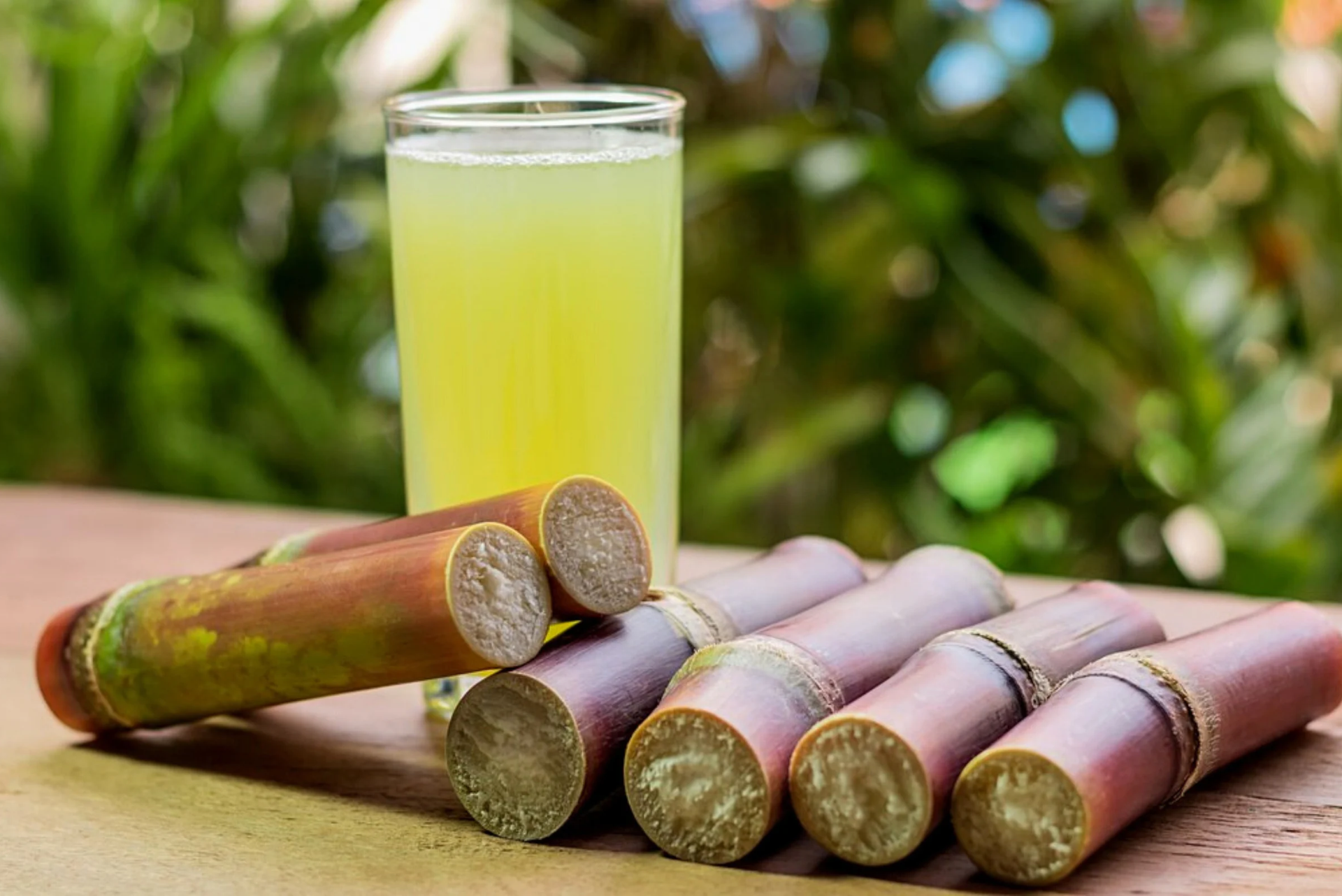
Sugarcane in Tan Phuoc Hung Commune (Can Tho City) is opening a new consumption direction as enterprises purchase it for export as frozen fresh sugarcane and sugarcane juice.
Exporting fresh sugarcane
Tan Phuoc Hung Commune is a long-standing sugarcane growing area in Can Tho City with an area of over 1,600 hectares, mainly KK3 and ROC 16 varieties. These days, during the peak sugarcane harvest season, along the Quan Lo - Phung Hiep route through Tan Phu A1 Hamlet, local people are busy harvesting and transporting sugarcane for consumption.
Instead of selling only to sugar factories or traders purchasing bundled sugarcane to supply juice processing stalls, a new direction is emerging as businesses incorporate local sugarcane into processing chains for export.
According to the Tan Phuoc Hung Commune People's Committee, the local sugarcane area has decreased by about 50% compared to before. For a long time, the output of sugarcane relied heavily on sugar factories with off-take prices of around VND 1,000 - 1,100/kg. Over the past 4 - 5 years, many households switched to growing sugarcane for juice extraction, but market outlets and prices remained unstable.
Capitalizing on the available raw material area, Cane Village Co., Ltd. relocated its factory from former Tien Giang Province to Tan Phuoc Hung Commune. Operating since August 2025, the plant helps the enterprise shorten transport distances, lower costs, and facilitate raw material procurement.
Mr. Nguyen Quoc Huan, co-founder of Cane Village Co., Ltd., shared that while searching for export products, he noticed sugarcane juice was consumed in many countries, but the flavor was not appealing. The company began researching how to bring Vietnamese sugarcane to international markets with two key products: fresh cut sugarcane segments and frozen sugarcane juice.
According to Mr. Le Thanh Tin, Director of Cane Village Co., Ltd., Tan Phuoc Hung sugarcane features attractive coloration and a rich aroma. Beyond soil conditions, the local sugarcane zone benefits from cultivation experience accumulated by farmers across generations. These factors contribute to the quality and distinct identity of local sugarcane.
Sugarcane is purchased directly at the farmgate and transported to the plant. The procurement price varies by time, around VND 50,000 per bundle (equivalent to 18 - 20kg).
At the factory, sugarcane undergoes specific pre-processing stages to satisfy storage and export requirements. Workers scrape off the outer skin, cut the sugarcane into segments of about 40 - 50cm, remove sugarcane nodes, then pack, vacuum-seal, and quick-freeze at minus 18 degrees Celsius.
To satisfy export market demands, raw material quality remains the key factor. The company focuses on the natural sweetness of sugarcane, color, aroma, and cultivation practices. In particular, organic production orientation is viewed as the foundation to move toward higher-value product segments.
According to Mr. Tin, Cane Village’s strategy is to progressively develop raw material areas toward organic practices, targeting certifications such as USDA Organic (US), JAS (Japan), and EU Organic (Europe). When the inherent quality of local sugarcane is combined with processing workflows meeting strict standards, products will have opportunities to access higher-value market segments.
Solution for sugarcane output
Mr. Le Thanh Tin added that the enterprise possesses 18 years of experience in sugarcane exports. Average export volume reaches 3,000 - 4,000 tons/year. Products have accessed numerous markets including the US, South Korea, Germany, Switzerland, France, New Zealand, Singapore, Australia, Taiwan, and Malaysia.
Among them, the US serves as a key market due to high consumer demand for fresh-pressed sugarcane juice, particularly within the Asian diaspora community.
Even in Malaysia—a country with a developed sugarcane farming industry—Vietnamese sugarcane maintains competitive potential thanks to its distinct flavor profile. According to the company, this advantage can be fully leveraged if the raw material area meets quality and volume requirements.
In addition to the ROC 16 and Su Phen varieties currently being purchased, the enterprise assesses that yellow sugarcane and local cane (mía lao) also hold export potential, especially in Singapore. This market currently imports significant yellow sugarcane from Malaysia, but weather fluctuations and price shifts could open up opportunities for Vietnamese products.
In the near future, Cane Village plans to develop concentrated sugarcane juice products. Diversifying products will help the business expand its customer base while creating additional outlets for the material region. Rather than selling raw sugarcane, growers can participate in value chains across multiple consumption segments.
Mr. Tin believes it is necessary to change how the value of sugarcane is perceived, rather than assuming sugarcane juice is merely a low-cost product. When backed by investment in quality, processing workflows, and market standards, sugarcane can become a raw material for high-value export items.
Field realities in Tan Phuoc Hung show that searching for better off-take channels has become a major concern for growers. Mr. Bui Van Quan in Tan Phu A1 Hamlet has been attached to sugarcane farming for over 20 years across an area of about 2.2 hectares.
Over the past 6 - 7 years, he transitioned from growing factory sugarcane to sugarcane for juice extraction. This crop season, his family still has over 100 tons of unsold sugarcane, while sugarcane prices have dropped to around VND 1,400 - 1,500/kg (compared to VND 2,100 - 2,200/kg at the beginning of the season).
According to Mr. Quan, Cane Village maintains favorable procurement policies when sugarcane meets quality criteria. For example, sugarcane reaching about 9 sugar degrees (Brix) and satisfying technical farming standards is purchased stably at VND 2,100/kg. However, not every grower can meet sweetness and farming technique requirements.
To strengthen linkage capabilities with enterprises, farmers in Tan Phu A1 Hamlet are considering establishing a sugarcane cooperative covering about 50 hectares with 30 participating households. By organizing concentrated growing areas and unifying production workflows, farmers can elevate raw material quality, minimize fragmented individual sales, and gain better access to favorable prices.
Mr. Nguyen Van Lua, another long-time sugarcane farmer in the area, believes off-take channels dictate production efficiency. He hopes enterprises will establish direct linkages, backed by stable purchasing contracts and quality-indexed pricing mechanisms. This would ensure farming investments yield concrete economic benefits for growers.
In the 2025 - 2026 sugarcane crop season, Can Tho City planted 7,285 hectares, harvesting about 6,326 hectares to date, with an estimated yield of 635,763 tons. The scale of the cultivation zone demonstrates that the City's sugarcane raw material supply holds potential to serve both traditional markets and processing-export models.
According to a representative from Cane Village, the local raw material zone can currently satisfy the company's production requirements. The remaining task is organizing structured linkages with sugarcane growers, ensuring uniform material quality and securing stable off-take outlets.
Source: Bao Nong nghiep va Moi truong
Related Articles

Purchasing power recovers, export rice prices rise sharply
12/11/2026

Vietnamese watermelons and durians gain wider access to China
12/11/2026

Will fresh agricultural products be opened as a "green channel" across the border?
12/11/2026

Agricultural products and food to the UK: Big opportunities, strict standards
11/11/2026


