


"Banana king" proposes developing banana industry to reach export turnover of 1 billion usd/year
That was the proposal of Mr. Pham Quoc Liem - Vice President of the Vietnam Fruit and Vegetable Association, Chairman of the Board of Directors cum General Director of U&I Agriculture Joint Stock Company (Unifarm) at the Conference on the development of science, technology, innovation, and digital transformation driving growth in the agricultural sector of the Southern region.
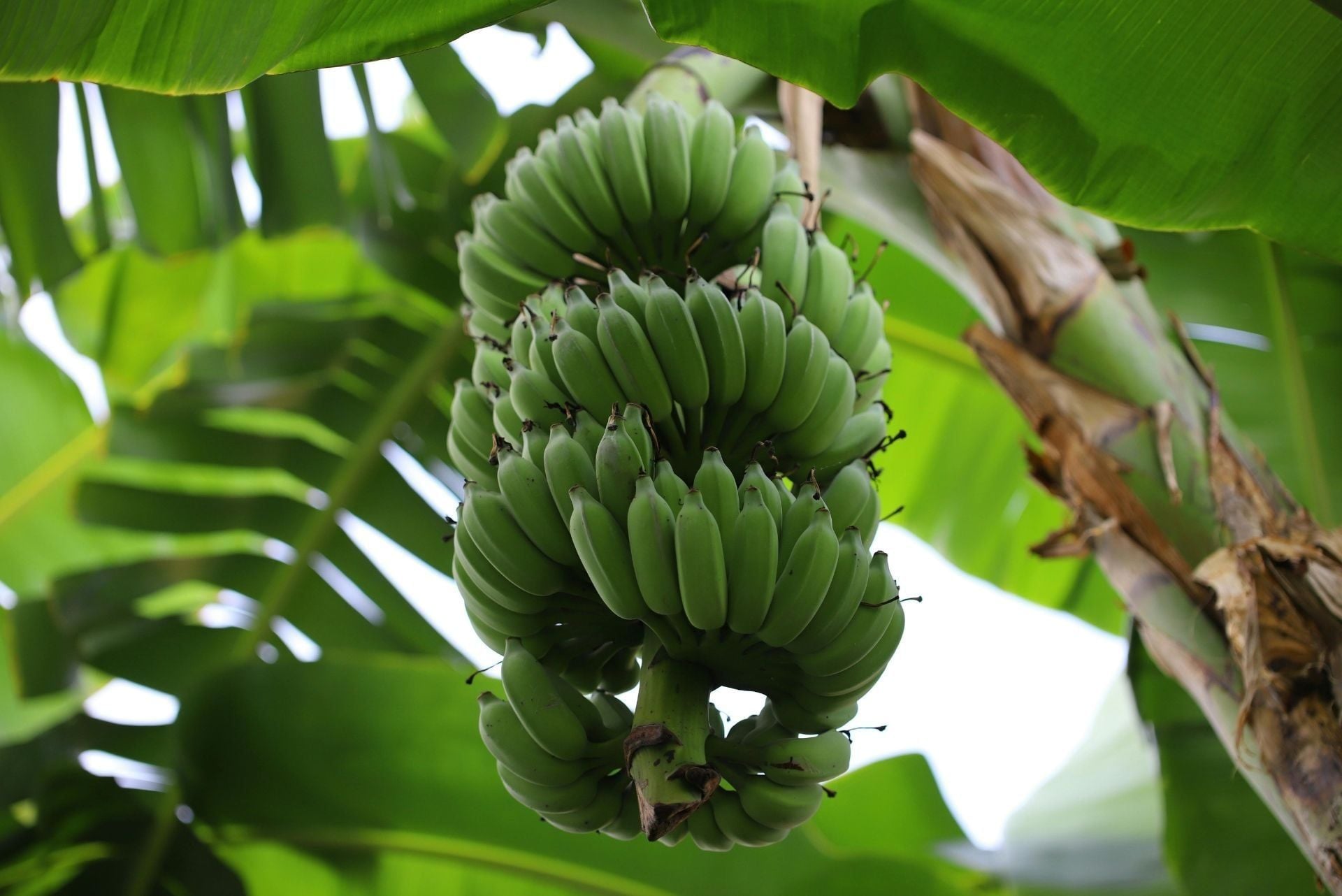
Vietnam currently has about 163,000 ha of bananas, but export turnover has only reached nearly 420 million USD
The conference was organized by the Ministry of Agriculture and Environment in coordination with the Standing Office of the Central Steering Committee 57 (Ministry of Public Security) on the morning of November 2 in Can Tho City.
The conference was co-chaired by Deputy Prime Minister Ho Quoc Dung, Minister of Agriculture and Environment Trinh Viet Hung, and Deputy Minister of Public Security Nguyen Van Long.
According to Mr. Pham Quoc Liem - Vice President of the Vietnam Fruit and Vegetable Association, Chairman of the Board of Directors cum General Director of U&I Agriculture Joint Stock Company (Unifarm), in 2025, Vietnam's fruit and vegetable export turnover reached about 8.6 billion USD. In the first 9 months of 2026, exports reached 7.28 billion USD, an increase of 18.8% over the same period, and the whole year is forecast to reach 9.5-10 billion USD.
Currently, our country has key export items such as durian, coconut, banana, dragon fruit, mango, and jackfruit. To surpass the 10 billion USD mark and head toward higher goals, Vietnam needs to develop more billion-dollar export sectors with sustainable competitive capacity in the international market. The banana industry is a typical example.
Mr. Liem said that Vietnam currently has about 163,000 ha of bananas, but export turnover in 2025 only reached nearly 420 million USD.
If calculated based on the average commercial banana export yield of 50 tons/ha and the average export price of 510 USD/ton, this value is equivalent to the yield of about 16,500 ha, or only equal to 10% of the country's total banana area.
This shows that the potential for export development of the banana industry is still very large, right on the existing cultivation area.
To reach an export turnover of 1 billion USD, the banana industry needs to simultaneously implement three solutions. First is to standardize about 24,000 ha of growing areas to meet export requirements, equivalent to 15% of the national area. Second is to increase average commercial export yield to 60 tons/ha. Third is to increase the average export price to about 700 USD/ton through improving quality and developing high-value markets.
Further ahead, if 30% of the existing banana area can be standardized, equivalent to about 49,000 ha, export turnover could exceed 2 billion USD, creating a foundation for Vietnam to move closer to the group of leading banana-exporting countries in the world.
Mr. Liem assessed that the story of the banana industry also reflects the potential of many Vietnamese fruit and vegetable sectors.
"Export value can grow strongly without necessarily having to correspondingly expand the cultivation area. The core issue is to increase the proportion of products meeting export standards, increase commercial yield and value per unit area through science and technology and production organization along the linkage chain," Mr. Liem said.
For the banana industry to reach export turnover of 1 billion usd/year
To realize that potential, Mr. Liem proposed recognizing plant varieties that have proven effective in practice as strategic technology products for the export industry on a national scale.
"For example, the Uni126 banana variety has been researched and developed by Unifarm since 2018. Through testing and actual production in lands with a history of disease infection, the Uni126 variety showed resistance to Panama disease TR4 (one of the most dangerous diseases for the global banana industry, while disease control solutions remain limited) reaching 95-98%, while maintaining commercial characteristics meeting export market requirements. From that reality, it is necessary to build an evaluation and recognition mechanism for this banana variety, accompanied by policies to support intellectual property protection, commercialization, and expansion of application in production," Mr. Liem said.
Mr. Liem affirmed that this is a way to timely leverage science and technology achievements that Vietnam has mastered, instead of just waiting for the results of future research programs.
Mr. Liem also proposed developing sustainable linkage chains of key sectors with the leading role of champion enterprises. According to him, Vietnam does not lack agricultural enterprises with capacity in finance, science and technology, production organization, quality management, and market development. Many enterprises are also ready to transfer technology, link with cooperatives and farmers to form large raw material areas meeting export market requirements.
The issue is how to transform the capacity of an enterprise into the competitive capacity of the entire linkage chain.
In reality, linkages between enterprises and farmers still risk breaking down when the market fluctuates. Farmers may sell products outside when prices rise, while enterprises may fail to fulfill purchasing commitments when the market faces difficulties.
These risks not only cause damage to parties but also affect the stability of raw material areas, product quality, and the industry's reputation in international markets.
Therefore, to develop a sustainable linkage chain, one cannot rely solely on goodwill or bilateral agreements, but urgently needs an effective policy mechanism to bind the benefits, responsibilities, and commitments of participating components.
In the immediate future, each fruit and vegetable sector with large export potential needs at least one pilot linkage model led by a champion enterprise. The selection of champion enterprises must be based on clear criteria regarding financial capacity, science and technology, production organization, quality management, and market development.
In these models, the state plays a facilitating, coordinating, and supporting role, especially through preferential credit policies for components participating in the chain on the basis of linkage contracts with champion enterprises. Support policies need to be linked to specific conditions regarding responsibilities, obligations, and fulfillment of commitments, while ensuring credit risk management requirements.
Mr. Liem believed that the aforementioned approach would create conditions for enterprises to promote their leading role, cooperatives and farmers to better access technology, capital, and markets, while forming raw material areas with stable scale, quality, and output.
Enterprises with capacity and experience in sectors such as Unifarm with bananas or Doveco with pineapples can participate in pilot models. The Vietnam Fruit and Vegetable Association can also coordinate with management agencies in selecting champion enterprises and promoting implementation.
The Vice President of the Vietnam Fruit and Vegetable Association believes that if the aforementioned bottlenecks are promptly resolved, Vietnamese fruits and vegetables can completely reach an export turnover of 20 billion USD in the not-too-distant future, thereby contributing to the development of Vietnam's agriculture and improving the income and life of Vietnamese farmers.
Source: Bao dien tu Dan Viet
Related Articles

Purchasing power recovers, export rice prices rise sharply
12/11/2026

Vietnamese watermelons and durians gain wider access to China
12/11/2026

Will fresh agricultural products be opened as a "green channel" across the border?
12/11/2026

Agricultural products and food to the UK: Big opportunities, strict standards
11/11/2026




