


Agricultural exports: Failing standards, losing orders
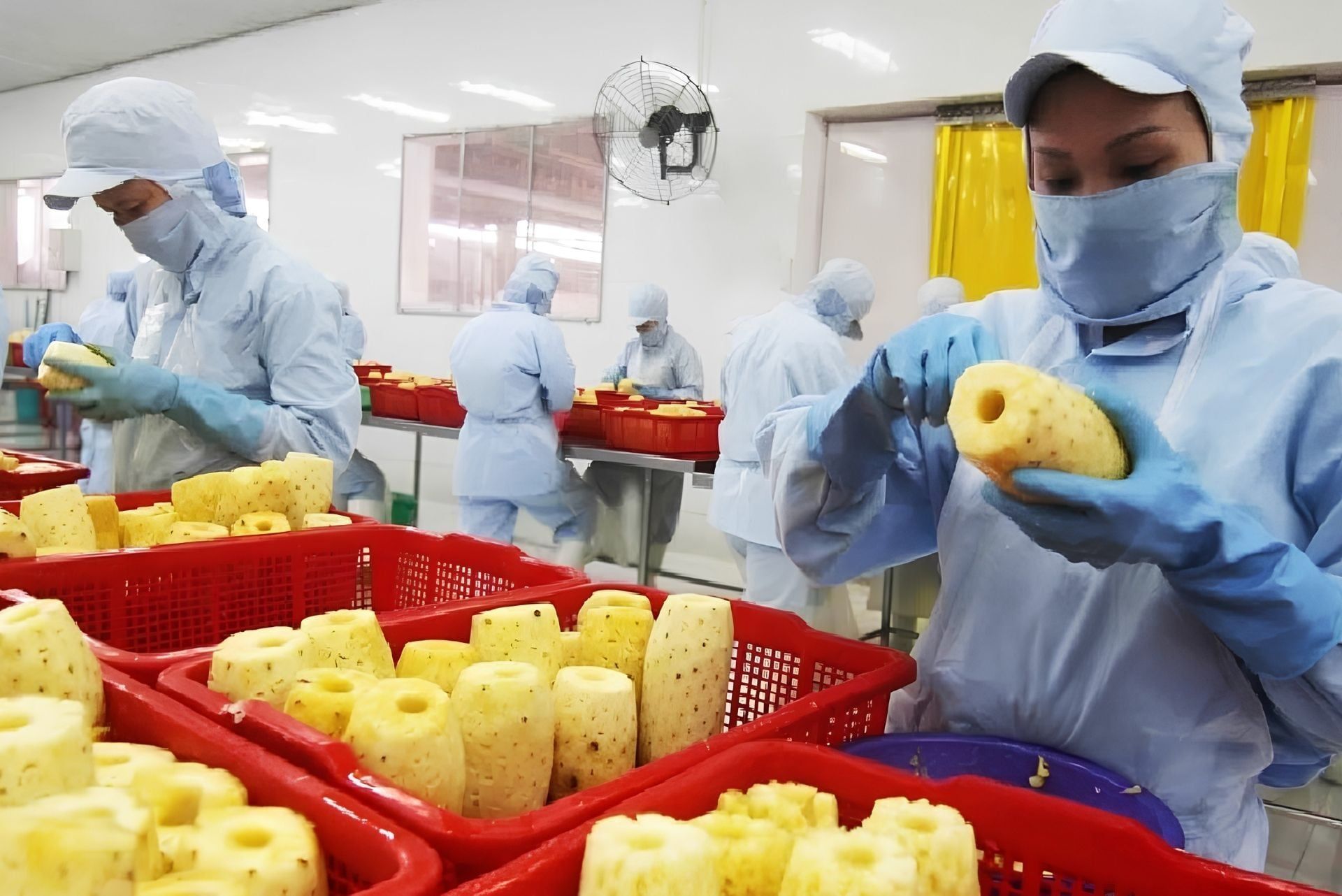
Export markets increasingly demand not only that products meet physical quality standards, but that enterprises proactively substantiate that quality through verifiable processing workflows, compliance dossiers, and technical parameters. A minor regulatory shift can instantly expose consignments in transit to detention risks or severe cost overruns.
A single technical parameter can dictate customs clearance
For export enterprises, non-tariff trade barriers frequently do not lie in customs duties, but manifest within seemingly minor technical specifications.
The Philippine market serves as a prime case study. The country recently notified the WTO of a temporary suspension on imports of select high-risk foot-and-mouth disease (FMD) animals and animal products from 23 countries, including Vietnam. The emergency measure came into effect on September 19, 2026.
However, the regulation established explicit exceptions. Select processed livestock items remain eligible for import provided they satisfy precise technical requirements. For instance, heat-treated meat products in hermetically sealed containers must achieve a thermal F₀ value of 3 minutes or greater.
This demonstrates that enterprises cannot merely state that goods are "processed." Processing workflows must hit exact technical thresholds supported by verifiable documentation. For restricted commodity categories, failing to meet exact criteria can result in import suspensions or border seizures under Philippine law.
Operational risks escalate when businesses execute contracts, prepare inventories, or dispatch shipments before updated regulations are widely disseminated. In such scenarios, financial losses extend beyond individual consignments to encompass demurrage, transport, cold-chain storage, and contractual delivery deadlines.
Over the first 9 months of 2026, Vietnam's livestock product exports reached USD 564 million, up 24.6% year-on-year. This growth trajectory underscores that market risk management must be prioritized alongside export expansion goals.
Transitioning from "meeting quality" to "proving compliance"
Shifting import mandates are simultaneously unfolding across other commodity groups. In the fruit and vegetable sector, Canada proposed revised Maximum Residue Limits (MRLs) for Cyprodinil and Fludioxonil across specific tropical fruits. These proposals directly impact how exporters govern pesticide application within raw material cultivation zones.
In the seafood sector, Egypt is drafting new requirements for quick-frozen fish while establishing transitional timelines for enterprises to fulfill updated standards on canned tuna and salted fish. Cambodia has also heightened sanitary, origin traceability, residue control, and mandatory HACCP application standards for fish and fishery products.
In Turkey, updated plant quarantine fumigation and disinfection procedures for imported plants and plant products take effect on January 1, 2027. All treatment measures executed in the exporting country must be fully declared on the Phytosanitary Certificate.
These regulatory updates share a common foundation: enterprises must enforce compliance controls well before shipments leave port. A consignment may meet all visual and commercial quality expectations yet encounter severe trade friction if residue thresholds are exceeded, documentation is incomplete, or processing workflows cannot be independently verified.
According to the Vietnam SPS Office, from the beginning of the year through September 15, 2026, WTO members issued 822 SPS notifications (comprising 509 draft proposals and 313 enforced measures). The first half of October alone yielded an additional 58 summarized notifications.
Dr. Ngo Xuan Nam, Deputy Director of the Vietnam SPS Office, emphasized that exporters and agricultural cooperatives must embed destination market mandates directly into supply chain governance. Technological adoption must be paired with food safety verification, data transparency, and demonstrable compliance capabilities.
Against increasingly granular technical regulations, export capacity is no longer measured solely by shipment volumes or geographic reach. Crucially, it is defined by an enterprise's ability to audit, govern, and prove product compliance before cargo leaves Vietnam.
Source: Tap chi Thuong hieu va Cong luan
Related Articles

Purchasing power recovers, export rice prices rise sharply
12/11/2026

Vietnamese watermelons and durians gain wider access to China
12/11/2026

Will fresh agricultural products be opened as a "green channel" across the border?
12/11/2026

Agricultural products and food to the UK: Big opportunities, strict standards
11/11/2026


