


International studies on irradiation in food preservation and safety
Food irradiation technology is a technique that uses ionizing radiation to destroy harmful microorganisms, prolong the preservation time and ensure food safety. This process uses three main radiation sources: gamma rays (Cobalt-60 source), electron beam accelerator (E-Beam) and X-rays.
History of irradiation technology development
Food irradiation technology has been studied since the 1900s when scientists realized the ability to kill bacteria with radiation. During the 20th century, this technology became an important method in the food industry, especially in developed countries. Many studies and tests have been conducted to evaluate the safety and effectiveness of irradiation.
Benefits of food irradiation technology
After many years of research and development of domestic and international standards, with many benefits, more than 60 countries in the world have regulations allowing the use of irradiation for many different types of food.
Destroy harmful microorganisms: Food irradiation helps eliminate dangerous microorganisms such as Salmonella, Listeria and E. coli, ... thereby reducing the risk of food poisoning and protecting the health of consumers.
Extend the storage time: Irradiation helps minimize food spoilage, especially during long-term transportation and storage, helping to improve quality and avoid food waste.
Maintain the sensory and nutritional quality: Many studies have shown that irradiation does not change the taste, color or nutritional value of food, helping to ensure the naturalness and quality of the product.
Safe and no radioactive residue: Food irradiation uses ionizing radiation sources and ensures that food is free of radioactive residue after processing, helping consumers feel secure when using it.
Although irradiation technology brings many benefits, widespread implementation still faces many barriers. High investment costs, insufficient awareness of consumers and complex legal regulations make this technology not widely applied in many countries. For food irradiation to become a standard solution in the food industry, long-term strategies are still needed to overcome limitations, increase efficiency and benefits.
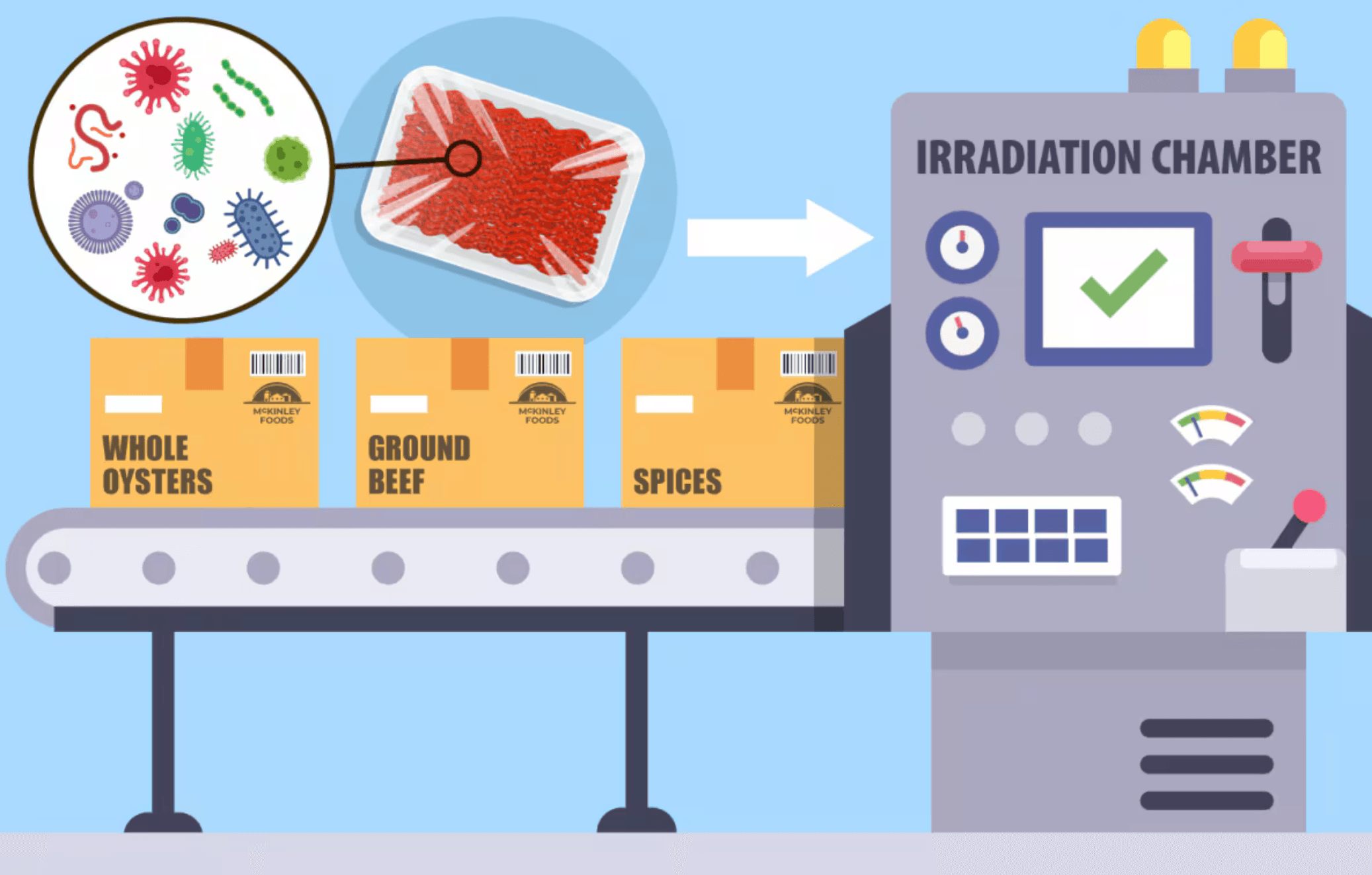
Food is placed in an irradiation chamber, where radiation damages the bacteria's DNA, rendering them inactive. This process makes food safer and protects consumers' health (Image: cdc.gov)
Applications and prospects of irradiation technology
Not only supporting the food industry in ensuring food safety, irradiation also has the potential to combine with modern preservation technologies to optimize efficiency.
1. Widely used in the food industry
Irradiation technology has been applied in the quarantine of fruits, preservation of vegetables, meat, seafood and other agricultural products. This is an effective solution to ensure safety and prolong the shelf life of food.
2. Combined with other preservation technologies
Irradiation can be combined with modern preservation methods such as freezing or modified atmosphere packaging (MAP) to optimize the effectiveness of food preservation.
3. Expanding export markets
Many countries require imported food to be irradiated to ensure compliance with international food safety standards. Thereby, opening up great opportunities for food exporting businesses globally.
Assessments from international organizations
More than 30 international organizations have published studies and confirmed that food irradiation is completely safe.
- The US Food and Drug Administration (FDA) has approved irradiation technology as a safe and effective process in food preservation.
- The World Health Organization (WHO) and the International Atomic Energy Agency (IAEA) have conducted many studies on the effects of irradiation on food, confirming that this technology is not harmful to human health.
- The US Department of Agriculture (USDA) and the US Environmental Protection Agency (EPA) have also confirmed the safety and effectiveness of the irradiation method.
- The National Aeronautics and Space Administration (NASA) uses food irradiation to preserve food for astronauts on long-term space missions.
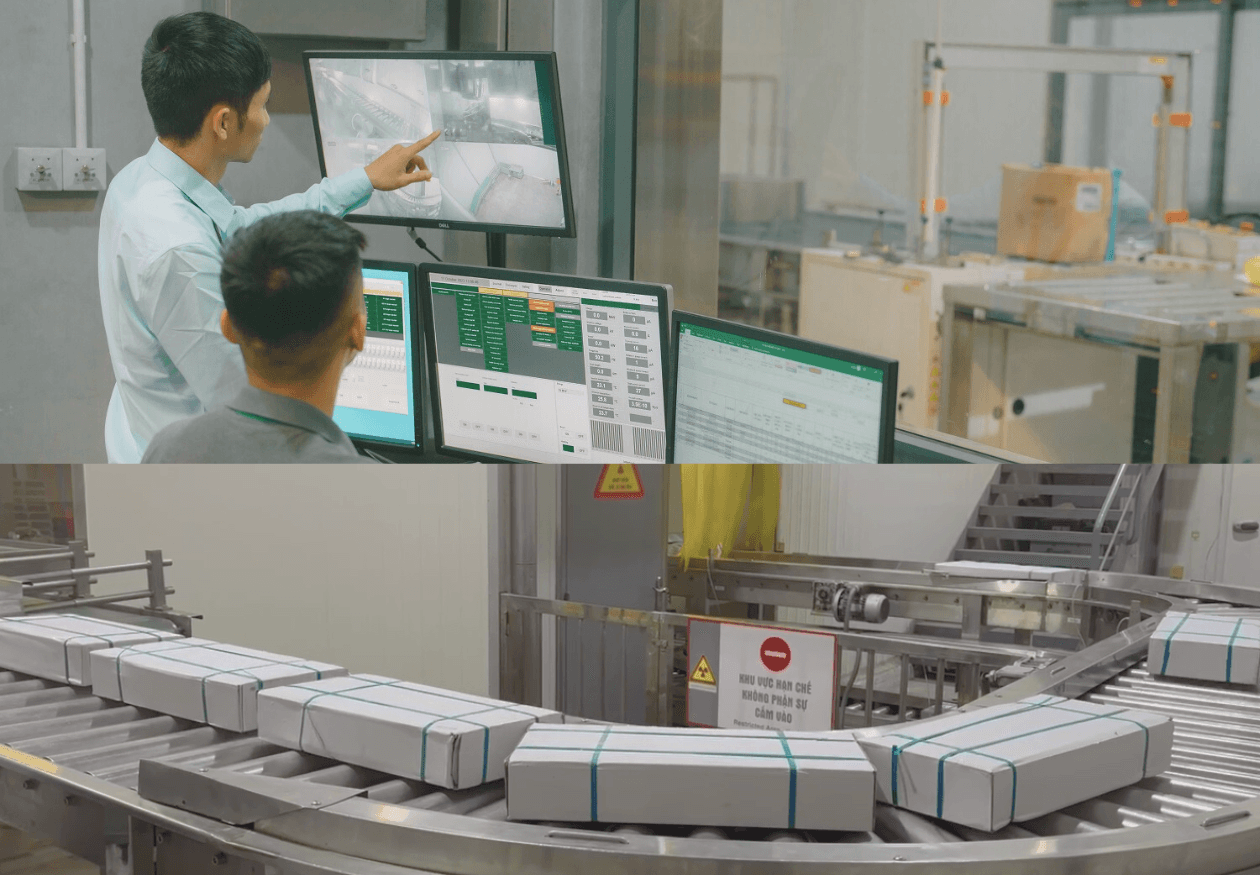
Irradiation treatment system using electron beam accelerator (E-Beam) at Toan Phat Irradiation Plant
Summary of studies on the safety and efficacy of radiation therapy
Below is a summary of some studies by reputable organizations on food irradiation technology. These reports provide detailed insights into the safety standards, benefits and applications of irradiation in the food industry.
1. “Food Irradiation: A Technique for Preserving and Improving the Safety of Food” – World Health Organization (WHO), 1988.
This publication provides an overview of the scientific basis and applications of irradiation in food preservation, microbial control, and food safety enhancement.
Link: WHO, 1988
2. “Safety and Nutritional Adequacy of Irradiated Food” – World Health Organization (WHO), 1994.
This publication provides a comprehensive assessment of the safety and nutritional adequacy of irradiated food, confirming that gamma irradiation using Cobalt-60 does not pose a risk to human health.
Link: WHO, 1994
3. “High-Dose Irradiation: Wholesomeness of Food Irradiated with Doses above 10 kGy” – Food and Agriculture Organization of the United Nations (FAO), World Health Organization (WHO), and International Atomic Energy Agency (IAEA), 1999.
This study evaluates the safety of food irradiated at high doses (>10 kGy), including gamma irradiation using Cobalt-60. It concludes that food irradiation is safe for consumers and does not produce harmful radioactive residues.
Link: FAO/WHO/IAEA, 1999
4. “Development of Electron Beam and X Ray Applications for Food Irradiation” – International Atomic Energy Agency (IAEA), 2022.
This publication identifies gamma irradiation using Cobalt-60 as a widely applied food irradiation technology capable of controlling microorganisms and pests while supporting food safety and quality. Electron Beam (E-Beam) and X-ray technologies have also been developed to broaden technological options and expand food irradiation capacity.
Link: IAEA, 2022
5. “Food Irradiation: What You Need to Know” – U.S. Food and Drug Administration (FDA).
The FDA states that food irradiation is a safe technology that can help reduce the risk of foodborne illness and extend shelf life.
Link: FDA – Food Irradiation: What You Need to Know
Content current as of March 5, 2024.
6. “Scientific Opinion on the Chemical Safety of Irradiation of Food” – European Food Safety Authority (EFSA), 2011.
This report reviews the chemical safety aspects of food irradiation. It concludes that food irradiation is safe for consumers and does not result in hazardous chemical reactions.
Link: EFSA, 2011
7. “Safety of Irradiated Food” – Centre for Food Safety, Hong Kong, 2009.
This report assesses the safety of irradiated food, including the use of Cobalt-60 as an irradiation source, and concludes that the process does not pose a risk to human health.
Link: CFS Hong Kong, 2009
8. “Meat Irradiation: A Comprehensive Review of Its Impact on Food Quality and Safety” – Foods, 2023.
This review examines the effects of irradiation technology on meat safety and quality, showing that irradiation is effective in eliminating or reducing harmful microorganisms. Cobalt-60 is identified as a commonly used source of ionizing radiation in food irradiation, emitting gamma rays with high penetration capability that can effectively target harmful microorganisms within products.
Link: Foods, 2023
9. Vietnamese National Standard TCVN 12076:2017
This national standard specifies requirements for the use of ionizing radiation in food processing to ensure safety and prevent radioactive residues in treated products.
Link: TCVN 12076:2017
Thus, through many studies and publications by prestigious international organizations, it shows that food irradiation technology is an advanced, safe and effective solution in preserving and ensuring food quality. Although there are still some challenges in application, with recognition from many international organizations, irradiation is increasingly widely applied and promises to bring many benefits to the global food industry in the future.
----------------------------------
📞 Contact us
📍 Address: Lot A24-1, Ngang 1 Street, Phu An Thanh Industrial Park, Ben Luc, Tay Ninh, Vietnam
🌐 Website: www.toanphatgroup.com
📧 Email: thongtin@tpirr.vn
📞 Hotline: +84 931 000 001
Related Articles

Behind the meals of astronauts
31/08/2026

Halal Logistics becomes key to perfecting supply chains and expanding export markets
23/07/2026

TOANPHAT Irradiation Plant receives APHIS approval to add X-ray technology for fresh fruit exports to the United States
07/07/2026

TOANPHAT Group and the solution to greener export supply chains
05/06/2026




